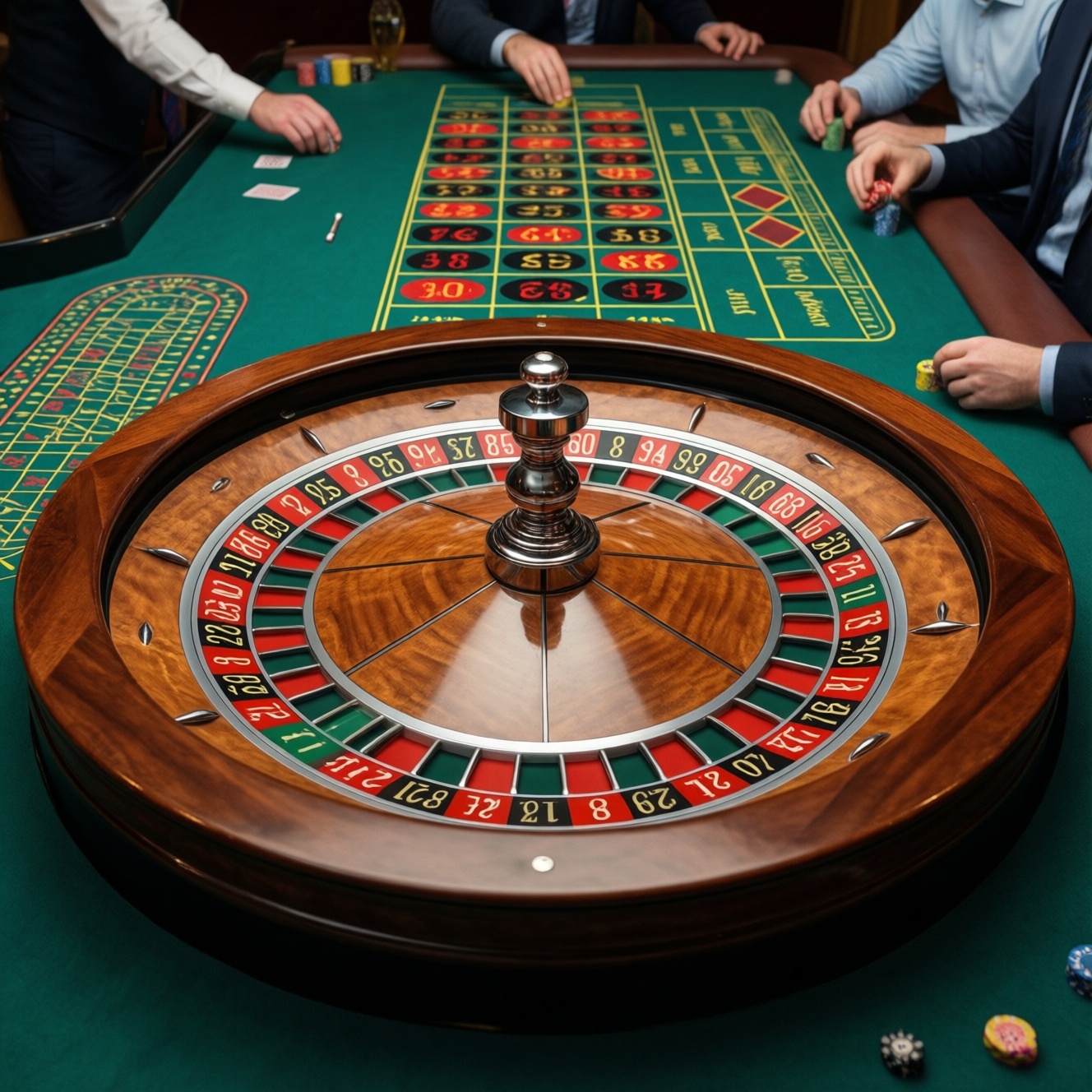
If your goal is to minimize the real cost of the casino while keeping standard roulette gameplay, choose a single‑zero wheel (European) and, when available, a French layout with zero-protection rules (la partage or en prison). A double‑zero wheel (American) is usually the most expensive to play in expected losses over time.
Probability Snapshot: what the numbers mean
- Wheel design drives outcomes: adding an extra zero increases the casino's advantage without improving payouts.
- On most bets, payout schedules are broadly similar across wheel types; what changes is how often the zero disrupts your bet.
- European roulette odds generally outperform American roulette odds because there is only one zero.
- French roulette rules can further reduce the effective cost on even‑money bets by softening the impact of zero.
- "House edge" is an average cost over many spins; short sessions can still swing either way.
Wheel mechanics and why zeros change everything
- Zero count (single vs double zero): More zeros means more losing outcomes that don't pay players but still keep the same payout table.
- Rule set attached to the wheel: Some tables are "French-style" in rules even if the wheel is single-zero; confirm la partage/en prison availability.
- Even-money bet handling on zero: This is where French roulette rules matter most; it can be the deciding factor for low-volatility players.
- Table limits (min/max): Limits shape your bankroll risk more than tiny differences in bet selection; tight max limits reduce your ability to press an edge-free recovery pattern.
- Bet menu availability: Some venues restrict call bets/announced bets or offer side bets; side bets often carry higher built-in cost.
- Spin speed and dealer procedures: Faster spin cycles increase hourly variance and the rate at which the house edge is realized.
- Device type (live vs RNG): RNG tables can be faster; live tables can offer clearer rule signage and consistent procedures.
- Rule transparency: The best roulette wheel to play is the one that clearly discloses zero rules and payout handling before you place a chip.
Exact odds and payouts: single-number to outside bets (table included)
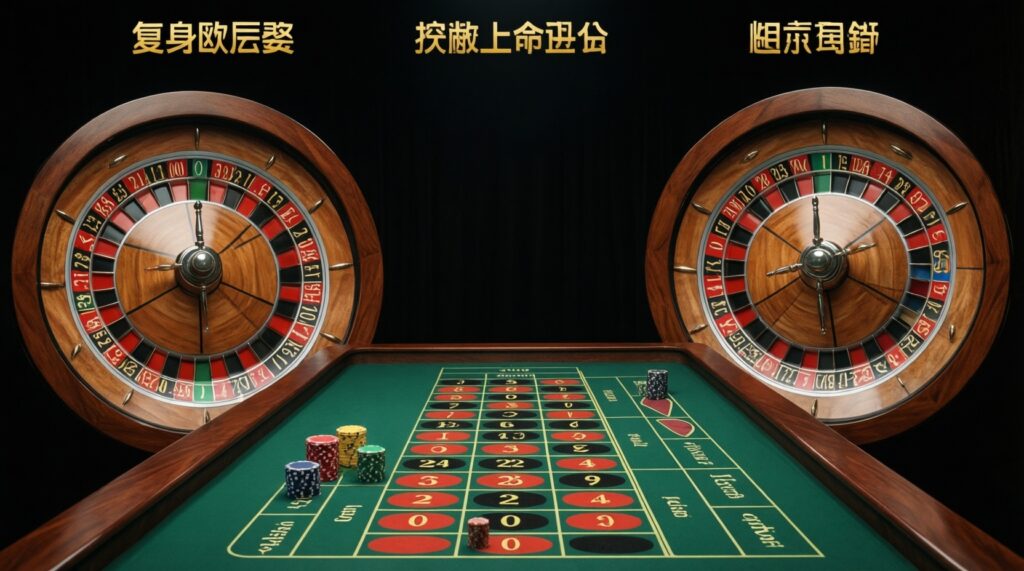
Across European, American, and French wheels, the familiar bet types (straight, split, street, corner, six-line, dozens/columns, red/black, odd/even, high/low) typically keep the same stated payouts. The practical difference is frequency of interruption by zero(s): that's the core of European roulette odds versus American roulette odds, and where French roulette rules can add extra protection.
| Variant | Who it suits | Pros | Cons | When to choose |
|---|---|---|---|---|
| European wheel (single zero), standard rules | Most intermediate players wanting lower expected cost | Lower disruption from zero; simpler to compare bets; usually better than American roulette odds | No special relief on even-money zero outcomes | Default choice when you want straightforward play with a smaller built-in disadvantage |
| American wheel (double zero), standard rules | Players prioritizing availability, familiar US layouts, or specific table vibe | Common in some venues; sometimes higher table limits and more tables running | Extra zero increases the long-run cost; worse roulette house edge explained by more non-paying outcomes | Only when it's the only option, or you accept higher expected cost for convenience/limits |
| French wheel (single zero) with la partage | Risk-averse and balanced players focusing on even-money bets | Softens zero impact on even-money bets; excellent for long sessions on outside bets | Usually limited to specific tables; may have different chip procedures | When you plan to play red/black, odd/even, high/low and want the lowest effective cost |
| French wheel (single zero) with en prison | Methodical players comfortable tracking "imprisoned" bets | Zero doesn't always end the bet immediately on even-money wagers; can reduce effective losses | Rules vary by venue (release conditions); can slow pace and confuse mixed groups | When you can confirm the exact en prison procedure posted at the table |
| European wheel + "outside-bet only" approach | Conservative bankrolls and low-variance preference | Smoother swings; easy session control; simple staking | You still pay the underlying edge; low volatility can mask long-run drift until later | When your goal is entertainment time and reduced variance rather than big hits |
| Any wheel + "inside-bet focus" (straights/splits/streets) | Aggressive, high-variance seekers | Higher short-run payout spikes; more excitement per spin | Faster bankroll swings; requires disciplined sizing; zero(s) still apply to expected value | When you explicitly accept volatility and keep stakes small relative to bankroll |
House edge decomposed: European vs American vs French
- If you have a choice between single-zero and double-zero, then pick single-zero first; it improves outcomes across the whole bet menu by reducing zero frequency.
- If you mainly place even-money bets, then prioritize a French table offering la partage or en prison; this is where roulette house edge explained becomes actionable.
- If you mainly play inside bets and accept volatility, then wheel type still matters, but rule add-ons are less impactful than bankroll discipline and pace control.
- If you are choosing by convenience (more tables, faster seats), then use American only knowingly: the added zero is a persistent cost per spin, not a one-time fee.
- If the venue labels a table "European" but posts special zero handling, then treat it like French-style value for even-money betting after you verify the wording.
How betting rules (en prison, la partage) alter expected value
- Decide your primary bet category for the session: mostly even-money, mostly outside (dozens/columns), or mostly inside.
- Ask or read signage for zero handling on even-money bets: standard loss vs la partage vs en prison.
- If it's la partage, treat it as best-in-class for even-money sessions; keep your plan simple and repeatable.
- If it's en prison, confirm the exact release rule (what happens on the next spin and whether a win releases fully or partially).
- If neither applies, compare wheel type next: single-zero over double-zero is the main lever.
- Only after rules and wheel type, pick your staking approach (flat, mild progression, or capped aggression) based on your variance tolerance.
- Re-check when you change tables; properties sometimes mix rule sets across pits even with similar felt designs.
Persona-driven strategies: conservative, neutral, and aggressive approaches
- Conservative (time-on-table focus): Overusing progressions on even-money bets without a hard stop; this converts a smooth session into a cliff event.
- Conservative: Choosing double-zero because the minimum is lower, then compensating by playing more spins; the cost compounds with volume.
- Balanced (structured entertainment): Mixing too many bet types at once, making it harder to notice how zeros are impacting your results.
- Balanced: Ignoring table rules signage; many players compare European roulette odds vs American roulette odds but forget that French roulette rules can dominate the decision for outside bets.
- Aggressive (high-variance): Betting inside numbers while emotionally anchoring to "near hits"; near outcomes don't change the math.
- Aggressive: Increasing unit size after losses on a double-zero wheel; volatility plus higher house cost accelerates bankroll depletion.
- All personas: Treating "best roulette wheel to play" as a universal answer; it depends on whether your main exposure is even-money bets or inside bets.
- All personas: Switching tables mid-session without re-validating zero rules; expected cost can change instantly.
Bankroll modeling and long-run cost of the house edge
For risk-averse players in Thailand who want steadier sessions, a single-zero wheel with la partage (or clearly defined en prison) is typically the best fit. For balanced players, a standard European single-zero table is usually the cleanest choice. For high-variance players, wheel choice still matters, but disciplined sizing and limits often dominate outcomes spin-to-spin.
Practical clarifications and uncommon edge cases
Is French roulette always better than European roulette?
Not automatically. It's better when the table actually applies la partage or en prison; without those, it behaves like a standard single-zero game.
Do European roulette odds change by bet type?
The stated payouts differ by bet type, but the wheel's zero count impacts them all. The key difference versus American roulette odds is how often zero(s) appear relative to non-zero outcomes.
Can a "European" table still have French roulette rules?
Yes. Casinos sometimes use a European-style wheel while posting la partage or en prison for even-money bets; rely on the written rule, not the label.
Does en prison always return my full stake if I win next spin?
Rules vary by venue. Some release fully on a win, others have partial-return mechanics; confirm before betting because it changes the effective value.
Are outside bets the safest way to beat the house edge?
They reduce volatility, not the underlying disadvantage. Outside bets can feel smoother while still drifting downward over many spins.
Do side bets change which wheel is the best roulette wheel to play?
They can. Side bets often add extra built-in cost, so the "best" wheel choice can be undermined if most of your wagering shifts to side markets.