

Roulette "patterns" are usually normal randomness, not a repeatable signal you can exploit. Hot/cold lists and roulette streaks happen naturally in independent spins, while betting as if the wheel "must" correct itself is the gambler's fallacy roulette players fall into. Use patterns only for tracking volatility and bankroll limits, not for predicting outcomes.
Essential Concepts for Interpreting Roulette Patterns
- Each spin is (effectively) independent; past results don't change the next probability.
- "Hot" and "cold" labels describe recent history, not a proven edge.
- Streaks are expected in random sequences; they feel meaningful because humans over-detect structure.
- Most player mistakes come from confusing description (what happened) with prediction (what will happen).
- The only reliable long-run advantage is the house edge; your control is risk sizing and stopping rules.
How Roulette Actually Works: Wheel Design, Bets, and House Edge
Roulette outcomes come from a wheel with numbered pockets and a ball. A spin resolves to exactly one pocket; all bets are just different ways of mapping that single result into a payout.
When players talk about roulette patterns, they usually mean visible sequences on the display board (recent numbers, colors, odd/even). Those sequences are real as a record, but they are not automatically a mechanism that changes future odds.
The practical boundary: pattern-watching can help you describe recent variance (how "swingy" the session is), but it does not remove the house edge or create a dependable forecasting rule.
Randomness and Independence: Why Spins Don't Carry Memory
In a fair, well-run game, the wheel doesn't "remember" what happened. Independence is the key reason most pattern-based betting systems fail.
- One spin, one resolution: the ball lands once; the next spin resets the physical process.
- Past outcomes don't modify pocket chances: a number showing up recently does not make it more or less likely next spin.
- Short runs mislead: small samples naturally fluctuate; humans treat that noise as information.
- Selection bias: you notice "weird" sequences and forget ordinary ones, so patterns feel more frequent than they are.
- Independence ≠ equal spacing: randomness allows clumps; it does not promise alternation or balance in the short term.
- Displays amplify belief: recent-results boards encourage narrative thinking ("it's due"), even though they're just history.
Hot and Cold Numbers: Definitions, Statistical Tests, and Pitfalls
Hot and cold numbers roulette talk is simply ranking outcomes by recent frequency. It can be used to organize observations, but players often misuse it as a prediction tool without enough data or a valid test.
Common scenarios where players try to apply hot/cold logic-and where the quick failure modes are:
- Chasing a "hot" number: "It hit twice, so it's hot." Pitfall: you're mistaking a short burst for a repeatable signal.
- Betting a "cold" number as "due": Pitfall: "due-ness" is not a property of independent trials.
- Switching systems mid-session: hot-chasing turns into cold-chasing after losses. Pitfall: you're optimizing on noise.
- Over-trusting the screen's top-5 list: Pitfall: the window is small and arbitrary; different windows give different "hot" sets.
- Using frequency without context: Pitfall: without a pre-defined sample size and threshold, any "test" becomes hindsight storytelling.
If you want a disciplined approach, define the observation window before you start and treat the output as a descriptive dashboard, not a betting trigger.
Streaks and Clustering: Expected Runs Versus Perceived Patterns
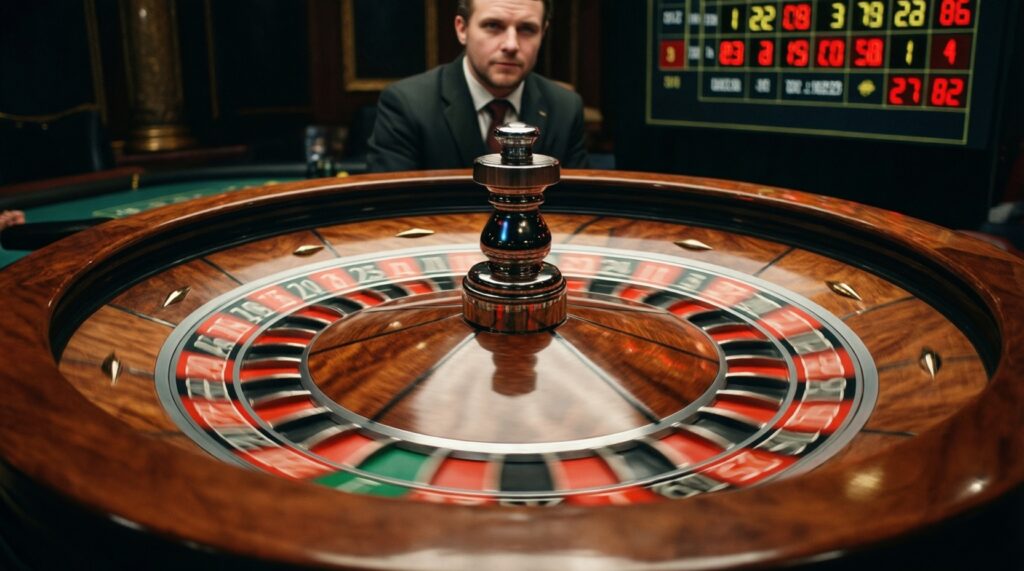
Roulette streaks (like multiple reds in a row) are not evidence that the wheel is biased. Runs and clusters are a normal feature of random sequences.
What streaks are good for (limited but real)
- Volatility awareness: streaky sessions can stress your bankroll faster than alternating sessions.
- Stop-loss and stop-win discipline: streaks can be a cue to follow your pre-set limits, not to "press" harder.
- Reality check: seeing runs reminds you that "balance" is not guaranteed in the short term.
Where streak logic breaks (the usual traps)
- Assuming reversal: "After 7 reds, black is next." That's a classic prediction error.
- Assuming continuation: "Red is hot, it will keep going." Same problem, opposite story.
- Martingale-style escalation: doubling into a streak can exceed table limits or your bankroll before any "correction" appears.
- Reframing losses as information: a losing streak does not validate a theory; it may only show variance plus negative expectation.
Cognitive Biases Behind Pattern-Seeking: Gambler's Fallacy and Related Errors
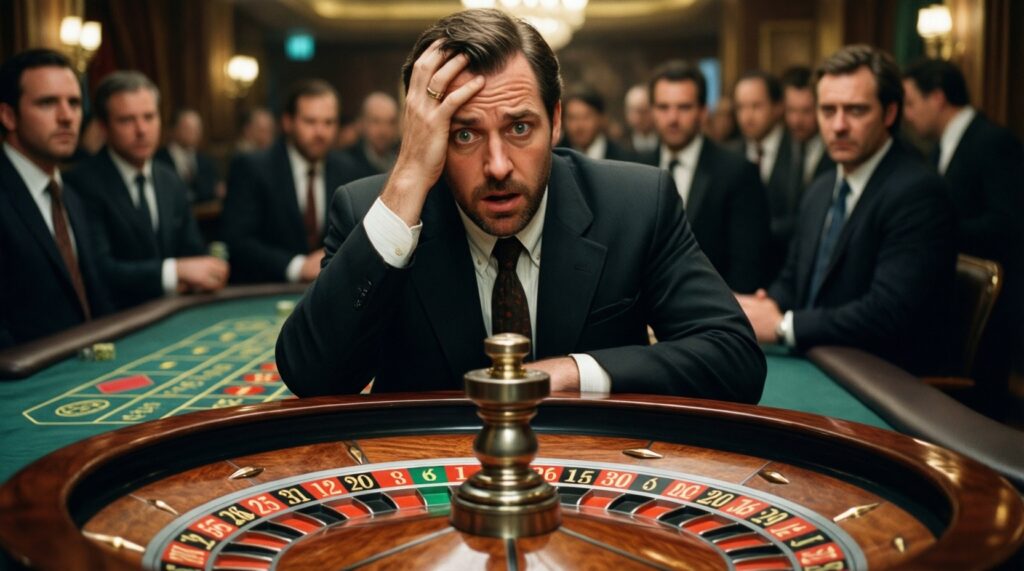
Most "pattern" mistakes are predictable thinking errors. Once you can name them, you can interrupt them quickly.
- Gambler's fallacy: believing outcomes must "even out soon." In gambler's fallacy roulette thinking, long runs feel impossible, so players bet against them.
- Hot-hand fallacy: believing a recent run will continue because it has a "momentum."
- Confirmation bias: remembering the times your pattern "worked" and forgetting the times it didn't.
- Clustering illusion: treating natural clumps as proof of a hidden rule.
- Recency overweighting: giving the last 10-20 spins more meaning than they deserve.
- Sunk-cost chasing: increasing risk to "justify" earlier losses rather than to maximize decision quality.
Practical Implications for Players: Risk, Bankroll Rules, and Evidence-Based Choices
The best roulette strategy is usually not about predicting numbers; it's about controlling exposure in a negative-expectation game. If you still want to use pattern displays, use them only as a risk-management aid (session pace, bet sizing discipline), not as a signal.
Mini-case: a fast way to prevent pattern-driven escalation
Situation: you see "cold" numbers and decide they are due; after several misses you feel pressure to increase stakes. Replace that impulse with a fixed rule set you can follow in seconds:
- Pre-commit: choose a flat unit size and a maximum number of bets on any single idea.
- Cap escalation: no doubling; only 0-1 step increase, and only after a win (not after a loss).
- Time-box: end the session when you hit a stop-loss or a time limit, whichever comes first.
Actionable self-check (use before you place the next bet)
- Am I treating recent results as a prediction signal rather than a history log?
- Would I place the same bet if the display board were hidden?
- Is my next stake size driven by my plan, not by frustration or "due" thinking?
- Do I have a hard stop (loss/time) that I will actually follow?
- Can I explain my bet without using the words "must," "due," or "hot"?
Player Questions Decoded About Patterns and Streaks
Do roulette patterns let you predict the next number?
No. What people call roulette patterns are typically short-run clustering in independent spins, which is descriptive but not predictive.
Are hot and cold numbers roulette lists ever useful?
They're useful for tracking what happened, not for proving what will happen. If you use them, use them to monitor variance and keep your betting consistent.
What should I do during long roulette streaks of one color?
Follow your pre-set bankroll and stopping rules. Don't escalate stakes to "force" a reversal or to ride momentum.
Is the gambler's fallacy roulette players talk about the same as "due numbers"?
Yes. "Due" thinking is a common form of the gambler's fallacy: assuming probability changes because of recent history.
Can I find the best roulette strategy by combining patterns and a system?
A system can organize bets, but it doesn't change the underlying odds. The most robust "strategy" is risk control: flat sizing, limits, and disciplined session ends.
When should I suspect the wheel is biased rather than random?
Only if you have strong, repeatable evidence across a large, consistent sample under the same conditions. Short-term hot/cold observations are not enough.