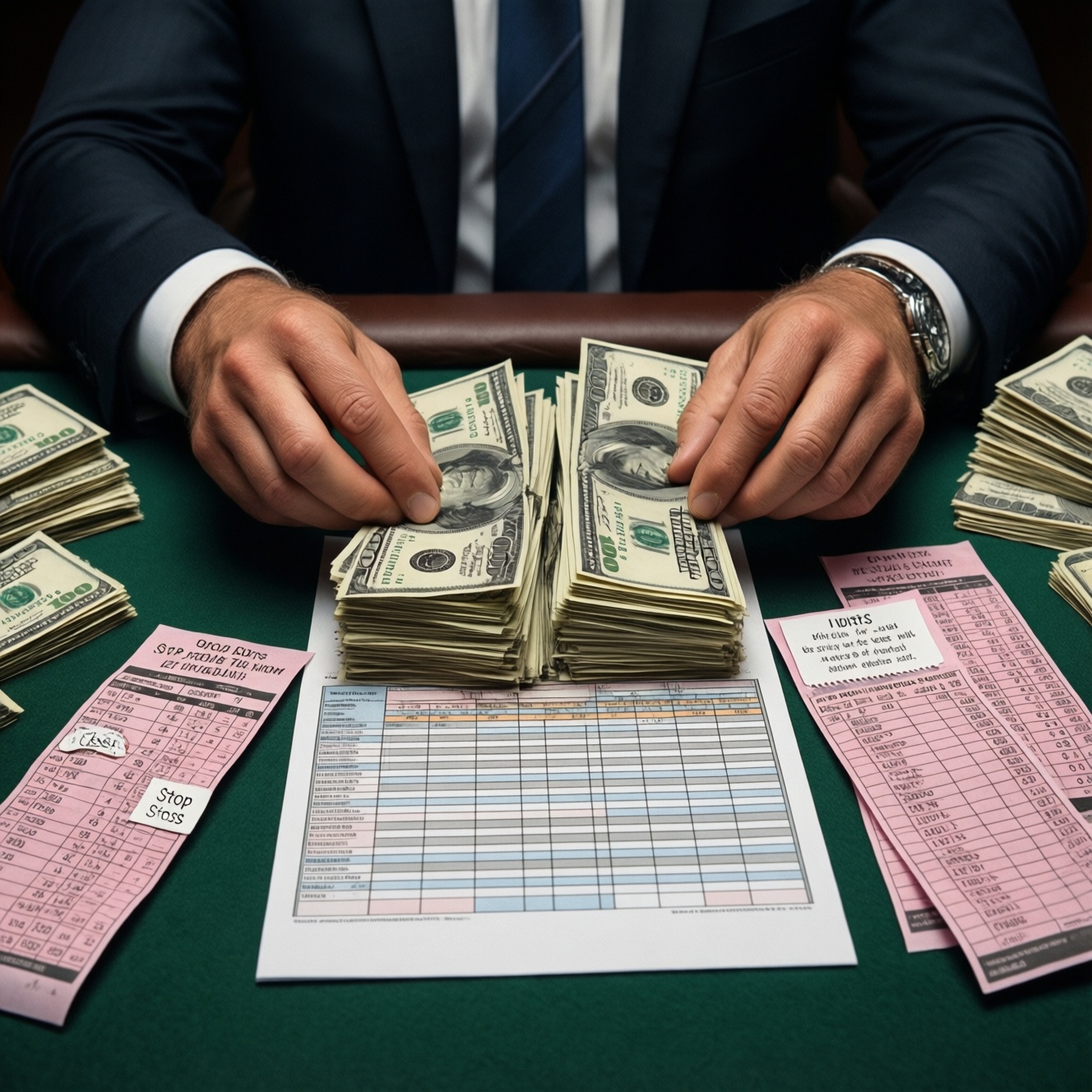

Blackjack side bets are optional wagers placed alongside the main blackjack hand, usually on specific card patterns or table events, with separate payouts and separate math. They feel exciting because wins are vivid and paytables look generous, but most are designed with higher volatility and a tougher long-run expectation than the main game.
Essential conclusions on blackjack side bets

- Side bets are separate games: your perfect basic strategy on the main hand does not "fix" a weak side wager.
- Paytables are not probabilities; a rare hit with a big payoff can still be negative expectation.
- Variance is the product: swings are larger, so "I was up" is not evidence of advantage.
- House edge differs by rule set and paytable, so reading the exact felt/layout matters more than the name.
- "Best blackjack side bets" usually means "least bad" for entertainment, not reliably profitable.
- Safety comes from limits (bet sizing, stop rules, frequency caps), not from chasing "due" outcomes.
Debunking common myths about blackjack side bets
Myth 1: A good run means the side bet is beatable. A short-term streak is normal under high volatility. A simple way to think about it is: Expected Value (EV) = (average win per hit × hit rate) − (average loss rate). Even if you hit twice in a short session, EV can still be negative if the hit rate is low relative to the paytable.
Myth 2: Basic strategy changes are a "blackjack side bets strategy." Most side wagers resolve from the first two cards, a dealer upcard, or a fixed pattern. Your hit/stand/double decisions often do not change the side bet's outcome at all, so "playing differently to help the side bet" is usually just sacrificing main-game EV.
Myth 3: The paytable tells you the true odds. The displayed payout is only one input; the other is how often the event happens under the exact rules (deck count, whether dealer peeks, what qualifies, and whether pushes exist). That's why players arguing about blackjack side bets odds without the full rule text usually talk past each other.
Illustrative example (hypothetical): If a side event pays 20:1 but happens, on average, less often than 1 time in 21 trials, the EV is negative even though the payout sounds large.
Anatomy of side bets: rules, payouts and trigger conditions
Most blackjack side bets are mini-lotteries stapled to a blackjack table. They have their own "win conditions," their own settlement timing, and their own paytable that may differ between venues in Thailand-facing online lobbies or in international casinos.
- Trigger: What cards/events qualify (player's first two cards, dealer upcard, suitedness, pairs, totals, sequences, specific ranks).
- Timing: When it settles (immediately after the deal, after dealer checks, after the hand ends, or after multiple hands).
- Pay units: Whether payouts are "to 1" (profit only) or "for 1" (profit plus stake), and whether there are multiple tiers.
- Push/void rules: Whether ties return the stake, lose, or re-qualify; whether blackjack on the main hand affects it.
- Deck/rule dependence: Number of decks, cut card depth, whether dealer peeks, and any side-bet-specific removal/reshuffle rules.
- Max/min limits: Often much smaller than the main bet; this matters for bankroll planning and "damage control."
Illustrative example (hypothetical): Two tables can both advertise a "pair" side wager, but one may pay only on exact pairs (same rank), while another pays extra for suited pairs; the payout schedule changes the long-run expectation even if the name is identical.
Quantifying the odds: house edge, variance and expected return
When people ask about blackjack side bets house edge, they're asking: "How costly is this entertainment, per unit bet, in the long run?" You rarely need exact percentages to make good decisions; you need to compare expected return and volatility to your goals and bankroll.
- Entertainment mode: You accept negative EV and treat side bets as a fixed "show budget," with a strict cap per session.
- Bankroll preservation: You avoid high-variance wagers because they amplify drawdowns and can force suboptimal main-game decisions later.
- Shot-taking: You allocate a tiny, predefined fraction of total action to side bets, expecting long droughts between hits.
- Rule-shopping: You only consider a side bet after confirming the exact paytable and settlement rules; same name ≠ same math.
- Promotion hunting: You evaluate comps/bonuses separately from the game math; the promo must be strong enough to offset negative EV.
Illustrative example (hypothetical): If you bet 1 unit on a side wager each hand, your long-run result gravitates toward EV × number of bets. High variance means the path is jagged, but the "gravity" remains unless something changes the underlying probabilities.
Behavioral and commercial reasons side bets lure players
Side bets are attractive because they compress excitement into a single decision and create memorable "jackpot-like" moments. Casinos and providers like them because they increase average wager and keep engagement high without changing the base blackjack rules.
Why players find them compelling

- Salience: Big payouts are easy to imagine; long losing stretches are easy to discount.
- Near-miss effect: "Almost hit" outcomes feel like progress even though probability did not improve.
- Story value: A rare hit becomes a narrative anchor that outweighs many small losses.
- Control illusion: Players believe reading the table or changing play can influence an event that is mostly fixed at the deal.
Why operators and game designers push them

- Higher revenue per hand: More total money wagered without needing faster dealing.
- Marketing simplicity: A single headline payout is easier to promote than a fraction of a percent change in main-game rules.
- Segmented pricing: The base game can stay competitive while side bets carry extra margin.
- Behavior shaping: Frequent small "teaser" wins can keep players seated even when the main game runs cold.
Illustrative example (hypothetical): A player who would normally bet 1 unit may add a 0.5-unit side wager "just for fun." That increases total exposure by 50% while the player feels they made only a minor change.
Structural features that make most side bets unbeatable
Most side bets are hard to beat because they rely on rare events with payouts that do not fully compensate for rarity, and because players cannot materially influence the outcome after placing the wager. This is why "best blackjack side bets" discussions should start with reading the exact rules, not with anecdotes.
- Low hit frequency: The win condition is uncommon, so losing streaks are normal and long.
- Paytable compression: Many outcomes pay small amounts while the true cost sits in the long tail of misses.
- Limited decision leverage: Outcomes often lock in on the initial deal, leaving no meaningful skill edge.
- Rule volatility: Small rule tweaks (decks, qualifiers, dealer peek, suitedness definitions) can change expectation materially.
- Betting-system trap: Progressions (martingale variants) shift risk forward; they do not change EV and can create ruin-level swings.
Illustrative example (hypothetical): If a side bet only depends on the first two player cards, no "timing," "flow," or hit/stand choice can improve it-so any claimed edge must come from information (e.g., composition changes) rather than play style.
Edge cases and disciplined approaches where side bets can work
"Work" should mean one of two things: (1) you control downside tightly while buying entertainment, or (2) a specific, verifiable condition temporarily improves EV (rare). For most intermediate players, the safe win is structural: limit frequency, limit size, and never sacrifice the main game.
Safe-limit checklist for a controlled experiment
- Set a side-bet budget: A fixed amount you can lose without affecting your main-game bankroll.
- Cap per-hand size: Keep side bets small relative to the main wager to prevent volatility spikes.
- Cap frequency: Do not bet it every hand; choose a maximum number of attempts per session.
- Use a stop rule: Stop side betting after a predefined loss limit or after one meaningful win.
- Do not distort main play: Keep basic strategy unchanged unless you have a proven, quantified reason.
- Verify paytable each session: Treat a different layout as a different game.
Mini-case: a disciplined "only if" filter (pseudocode)
if (sideBetPaytableVerified == true)
  and (sideBetSpendToday + sideBetStake <= sideBetDailyBudget)
  and (sideBetAttemptsToday < maxAttempts)
  and (mainGameDecisionsFollowBasicStrategy == true)
then
  placeSideBetStake
else
  skipSideBet
Illustrative example (hypothetical): If your daily side-bet budget is 20 units and your stake is 1 unit, you can precommit to at most 20 attempts-then stop, even if you "feel close."
Clarifications on recurring uncertainties
Do blackjack side bets change how I should play my main hand?
Usually no, because most side wagers settle from the initial deal or a fixed condition. Changing main-hand decisions typically reduces your main-game expectation without improving the side bet.
Are there any best blackjack side bets for value?
Without a specific paytable and rules, "best" is undefined. In practice it often means the least negative and least volatile option, not a reliably profitable one.
Why do blackjack side bets odds feel better than they are?
Humans overweight vivid rare wins and underweight long sequences of small losses. The paytable highlights the win amount, not the hit frequency required for break-even.
Is blackjack side bets house edge always higher than the main bet?
Often it is, but it depends on the exact side wager and paytable. You should assume it is higher until you can verify otherwise for that specific table.
Can card counting help a side bet?
Sometimes a side wager can be more sensitive to deck composition than the main game, but it requires precise rules, accurate tracking, and disciplined bet sizing. Without those, it is guesswork.
What is a practical blackjack side bets strategy for safety?
Use a fixed budget, small stakes, limited attempts, and a hard stop rule. Treat the side bet as entertainment spend unless you have a quantified, table-specific reason to believe otherwise.