

Blackjack card counting is a method for estimating when the remaining shoe is rich in high cards, then adjusting bets and (sometimes) a few play decisions accordingly. It is not a way to predict specific next cards or "beat" any ruleset automatically. Casinos may restrict or remove suspected counters, so safe steps focus on legality, behavior, and risk control.
Essential Concepts of Blackjack Card Counting
- Card counting tracks the changing composition of undealt cards, not individual card sequences.
- A count only has value when paired with correct basic strategy and controlled bet sizing.
- Most systems convert a running count into a true count (normalized by decks remaining) for decisions.
- The practical edge is small and noisy; variance dominates short sessions.
- Casinos respond to patterns (bet ramps, focus, table selection) more than "perfect counting."
- "Safe" counting is about minimizing attention and respecting house rules and local law.
What Card Counting Actually Measures

In blackjack card counting, you maintain a simple score that rises when low cards (which help the dealer) are removed and falls when high cards (which help the player via blackjacks and dealer bust pressure) are removed. The count is a proxy for the expected value (EV) of playing the next hands under the current shoe composition.
Most practical counters use a running count updated per card, then convert it to a true count by dividing by an estimate of decks remaining. The true count is what ties the composition estimate to actionable thresholds (mainly bet sizing, sometimes a few deviations from basic strategy).
What counting does not measure: it does not identify the next card, does not "track" exact clumps unless you add advanced methods, and does not overcome bad rules, poor penetration, or frequent shuffles. It's an advantage technique whose usefulness depends on game conditions and execution discipline.
Common Misconceptions and Legal Boundaries
- Misconception: counting is cheating. Mentally tracking exposed cards is generally not the same as using devices or collusion. However, property owners can still refuse service or restrict play.
- Misconception: you must memorize every card. A blackjack card counting system uses categories (e.g., low/neutral/high) and a running sum, not full recall.
- Misconception: you win "because the count is high." A high true count improves EV, but any single hand remains volatile; long-run results require volume and bankroll.
- Boundary: no external aids. Using a blackjack card counting app while playing is a fast path to trouble and may violate venue rules or local regulations; treat it as a training tool only.
- Boundary: do not interfere with the game. Touching cards in a shoe game, signaling others, delaying play, or distracting dealers increases scrutiny regardless of legality.
- House rights matter. In Thailand-context travel play and international casinos, assume venues may back you off, bar you, or flat-bet you even without alleging wrongdoing.
Popular Counting Systems and Their Trade-offs
Where each approach fits depends on how much mental load you can handle, the speed of the game, and whether you also plan to learn deviations.
- Busy tables and fast dealers: choose a low-complexity count (commonly Hi-Lo) so you can keep the running count stable while playing perfect basic strategy. This is often what people mean by how to count cards in blackjack in a practical sense.
- Higher penetration games (more cards dealt before shuffle): stronger payoff from any system; complexity helps less than penetration and accurate true-count conversion.
- Single-deck or double-deck (where allowed): true-count resolution and playing deviations matter more; some players use level-2 systems, but errors can erase theoretical gains.
- Shoe games with frequent shuffles or CSMs: counting value collapses; even the best card counting system for blackjack cannot create edge if composition doesn't persist hand-to-hand.
- Training and skill-building: a blackjack card counting app can be useful for drills (speed, deck estimation, error tracking), but should be kept away from live tables.
Bankroll, Variance, and Practical Edge Estimation
- Advantages: when conditions are favorable and execution is clean, counting can shift EV positive, especially via bet sizing during high true counts.
- Skill-driven: improvements come from fewer count errors, accurate decks-remaining estimates, consistent basic strategy, and controlled bet ramps.
- Scalable within limits: larger bankroll supports higher bets, but higher bets amplify heat and risk of short-term drawdowns.
- Limitations: variance is large; you can do everything right and still lose for long stretches.
- Edge is conditional: rule set, penetration, shuffle frequency, and table speed can eliminate your advantage.
- Execution drag: a small rate of mistakes (miscounts, wrong true count, basic-strategy slips) can erase the theoretical edge.
- Operational risk: even correct play can trigger countermeasures (backoffs, barring), limiting time on good games.
Casino Detection Techniques and Behavioral Triggers
- Bet spread behavior: sharp ramps (small at negative/neutral counts, large at positive counts) are more detectable than the count itself.
- Table-hopping with timing: entering only mid-shoe and leaving quickly after a few bad rounds looks like count-based selection.
- Over-focus: staring at discard trays, lips moving, finger counting, or delayed decisions are common "tells."
- Deviations at the wrong time: unusual plays (e.g., big doubles/stands) without consistent rationale can draw attention, especially if correlated with high bets.
- Chip handling patterns: repeatedly sizing bets with identical stacking rituals or long pauses before placing chips can stand out on review.
Countermeasures, House Responses, and Adaptive Play
Casinos typically respond by reducing the value of counting (procedural changes) or reducing your ability to capitalize (player management). "Safe steps" prioritize staying within rules, minimizing disruptive patterns, and accepting that the venue can still refuse action.
Typical house responses you should expect
- Shuffle earlier (reduced penetration) or change dealers/shoe timing.
- Limit options (no mid-shoe entry, restricted spreading, reduced max bet, flat-bet requests).
- Backoff or barring (asked to stop blackjack or leave; sometimes issued a trespass notice).
- Increased observation (pit attention, surveillance review, player-tracking scrutiny).
Practical, lower-risk operating rules (still not risk-free)
- Prioritize correctness: basic strategy first, count second. If you can't do both at speed, you don't yet have a usable advantage.
- Use conservative bet logic: avoid dramatic jumps; prefer smoother ramps tied to true count, and accept fewer max-bet hands.
- Keep tempo natural: decide at the same speed regardless of count; avoid staring at discards and avoid visible counting habits.
- Respect procedures immediately: if told "no mid-shoe entry," "flat bet," or "no more blackjack," comply and leave calmly.
- Never use tools at the table: keep any blackjack card counting app for off-table drills only.
Mini decision logic example (conceptual)
Maintain RunningCount each exposed card.
Estimate DecksRemaining (roughly).
TrueCount = RunningCount / DecksRemaining.

BetSizing:
- If TrueCount <= 0: bet minimum (or sit out if allowed and low-heat).
- If TrueCount is moderately positive: increase in small steps.
- If TrueCount is strongly positive: cap at a preplanned maximum that fits bankroll and heat tolerance.

Plays:
- Use basic strategy always.
- Add only a small, memorized set of true-count deviations after bet sizing is consistent.
Player Questions and Short Answers
Is blackjack card counting the same as predicting the next card?
No. It estimates whether high cards are more likely overall in the remaining shoe, not the identity of the next card.
How to count cards in blackjack without getting lost during fast games?
Pick a simple count, drill until you can keep the running count while playing perfect basic strategy, and practice true-count conversion with rough deck estimation.
What makes a blackjack card counting system "good" in practice?
Low error rate at real table speed. A slightly "weaker" system executed accurately usually beats a complex system executed poorly.
What is the best card counting system for blackjack for an intermediate player?
For most intermediates, a simple balanced count with true-count conversion is the most practical starting point, because it supports reliable bet sizing with manageable mental load.
Can I use a blackjack card counting app while playing?
You should not. Casinos treat devices and assistance tools as a major red flag; use apps only for training away from the table.
What are the most common casino countermeasures against counters?
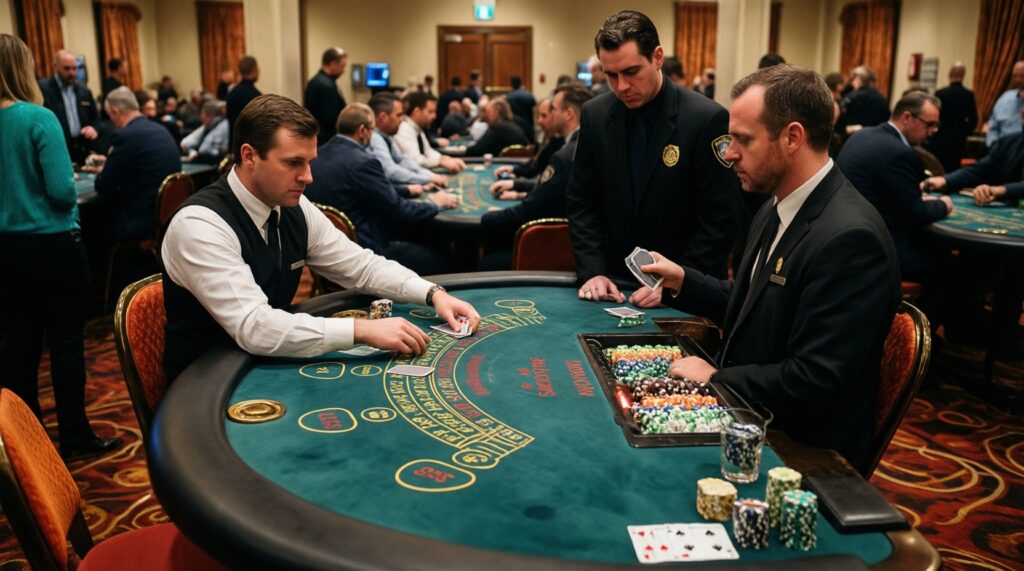
Earlier shuffles, betting restrictions, barring/backoffs, and increased surveillance attention are the most common operational responses.