
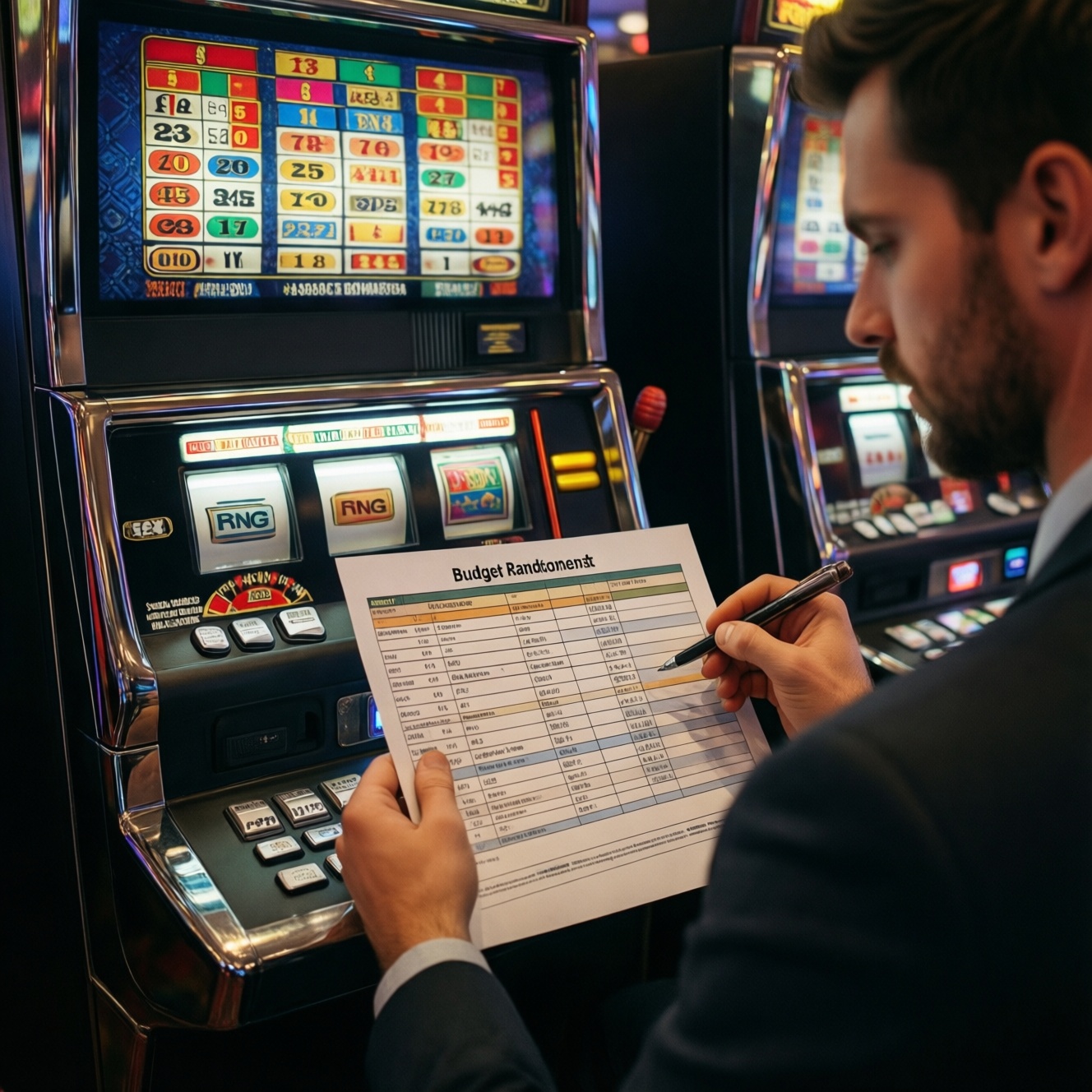
Slot "strategies" don't change outcomes because each spin is determined independently by the game's Random Number Generator (RNG), not by patterns, timing, or rituals. What you can influence is risk management: bankroll size, volatility choice, bet sizing, and session limits. Treat "slot machine strategies" as decision rules for budgeting, not methods to predict wins.
Core Conclusions on Slot Strategy Myths
- There is no best slot strategy to win in the sense of improving the game's expected value; you can only control variance exposure and loss limits.
- The most common slots patterns myth is believing recent outcomes influence the next spin; modern slots are designed to avoid this predictability.
- If you're asking do slot machine timing strategies work, the practical answer is no: time-of-day, "wait 10 seconds," or "change after a loss" does not alter RNG selection.
- Rituals (lucky seats, tapping, "warming up") can reduce anxiety, but they don't affect probabilities and can increase overconfidence.
- What helps most is a pre-commitment plan: budget, stop rules, volatility fit, and bet sizing consistent with your goal.
How Modern Slots Actually Determine Outcomes
Modern slot outcomes are determined at the moment you initiate a spin: the game samples the RNG state and maps it to a result. Reels are a visual representation of an underlying selection process, not a physical system that "remembers" prior spins.
This is why "how to win at slots" is best reframed as: how to avoid avoidable mistakes (chasing losses, oversizing bets, ignoring volatility). You can choose games and control your session behavior, but you cannot influence which symbol combination the RNG selects.
Boundaries matter. None of this says wins can't cluster visually; it says clusters are not something you can reliably trigger with player actions. Any approach claiming you can "force" a bonus or time a jackpot is describing a story, not a mechanism.
Random Number Generators: Mechanics and Misconceptions
An RNG is an algorithmic system that produces a fast-changing stream of values. The game converts those values into outcomes using internal mappings (for example, selecting virtual reel stops). Key implications for intermediate players:
- Independence: each spin is effectively independent; previous results do not "prime" the next one.
- Sampling moment: the outcome is determined when the spin is triggered, not when reels stop animating.
- Speed: RNG values cycle far faster than human timing, so "pressing at the right millisecond" is not a usable control.
- Mapping layer: virtual reel strips and weighting make some outcomes rarer, but player timing doesn't change those weights.
- Volatility vs. hit frequency: a game can pay small wins often or rare wins big; neither implies it's "due."
- Expected value (EV): the long-run average return is built into the paytable/math model; no betting pattern changes the game's EV.
Practical takeaway: stop searching for "system" play; instead, decide what variance you can tolerate and size your bets so a normal downswing doesn't wipe your session.
Why Perceived Patterns and 'Hot Streaks' Fail Statistical Tests
Before discussing rituals and timing, it helps to see how pattern beliefs show up in real play. These scenarios feel convincing because humans are good at spotting structure, even in randomness.
- The "due bonus" scenario: you track spins and conclude a feature "must" trigger soon. In RNG slots, features are chance events per spin; "overdue" is not a valid state variable for the next spin.
- The "hot machine" scenario: you see two decent hits close together and label the slot hot. Clusters occur naturally in random sequences; noticing them doesn't mean you've found a controllable edge.
- The "cold streak must end" scenario: after a dry run, you increase bet size to "catch the turn." This is a classic way to amplify losses without improving win probability.
- The "patterned reels" scenario: you believe certain symbol sequences foreshadow a payout. The animation can repeat motifs, but the next outcome is still a fresh RNG sample.
- The "switch games to reset luck" scenario: you assume changing machines refreshes your odds. Switching can change volatility and bankroll burn rate, not the fairness of the next random selection.
Practical takeaway: if you want structure, track only what you can control (budget, time, bet size, volatility), not symbol "signals."
Timing, Rituals, and Superstitions: Cognitive Biases at Work
Timing rules and rituals persist because they can feel calming and create a sense of agency. The problem is that they often increase risk-taking by making you believe you're playing more skillfully than you are.
Common myths (and what they really change)
- "Stop-start timing" (wait 5-10 seconds, spin on a beat): changes your pace, not your probability.
- "Bet cycling" (raise after losses, drop after wins): changes variance and bankroll depletion rate, not EV.
- "Rituals" (lucky seat, tapping the screen, specific times): can reduce anxiety; can also reinforce illusion of control.
- "Machine scouting" (play the one that just paid): may select for recent visible wins, but does not make the next spin more favorable.
Approaches compared by adoption ease and risk
| Approach players try | Ease to implement | Main risk | What it can legitimately affect |
|---|---|---|---|
| Timing "systems" (pressing at certain moments) | Easy | Encourages false confidence and longer sessions | Pace of play only |
| Pattern tracking (counting spins, "due" logic) | Medium | Chasing losses; escalation when "it must hit" | Nothing about odds; only your attention |
| Rituals and superstition | Easy | Illusion of control; can justify overspending | Mood and perceived control |
| Bankroll rules (budget, stop-loss, stop-win) | Medium | Too-tight limits may reduce enjoyment; too-loose limits don't protect | Downside protection; session duration |
| Volatility/game selection + bet sizing | Medium | Mis-match can create uncomfortable swings | Variance profile; likelihood of short-run swings |
Practical takeaway: if you want a "routine," choose one that limits losses (bankroll rules) rather than one that claims to control outcomes (timing/patterns).
What Really Helps: Bankroll, Volatility, and Session Design
Players often label these as "unsexy" compared to systems, but they're the only levers that reliably change your experience. Common errors to avoid:
- No predefined loss limit: without a stop rule, variance dictates your spend, not your plan.
- Oversized bets relative to bankroll: this makes ordinary downswings feel like "bad luck," pushing you into chasing behavior.
- Volatility mismatch: picking high-volatility slots while expecting frequent small wins leads to frustration and erratic bet changes.
- "Recover mode" betting: increasing bet size after losses to "get back to even" is not a probability edge; it's a risk multiplier.
- Confusing entertainment goals with profit goals: treating slots as income encourages you to search for non-existent predictive edges.
Practical takeaway: decide your objective for the session (time-on-device, volatility tolerance, maximum loss) and design bet size and stop rules around that objective.
Translating Evidence into Practice: Simple, Effective Habits
Use a lightweight "pre-commitment script" before you start. It won't increase win probability, but it will reduce predictable mistakes that masquerade as slot machine strategies.
- Set a session budget: choose an amount you can lose without consequences, and treat it as the cost of entertainment.
- Pick a volatility level intentionally: select a game that matches your tolerance for long dry spells versus frequent small hits.
- Size the bet to survive variance: choose a base bet you can sustain through a normal downswing without "recovery mode."
- Write two stop rules: a stop-loss (hard cap) and a time cap (end the session even if you're up).
- One change only: if you adjust anything mid-session, change only one variable (game or bet size or duration), then reassess.
Mini pseudo-rule: If you catch yourself thinking "it's due" or "this timing will hit," pause for 60 seconds and re-check your stop rules. That moment is where most bankroll damage begins-not in the RNG.
Addressing Typical Doubts About Slot Play
Do slot machine timing strategies work if I can "sync" my button press?
No. RNG values change far faster than human reaction time, and the outcome is determined at spin initiation, not by reel animation timing.
Is there any best slot strategy to win consistently?
No consistent-winning strategy exists for RNG slots. The closest practical "strategy" is budgeting and choosing volatility that fits your risk tolerance.
How to win at slots-what's the only actionable approach?

Control what you can: bankroll, bet sizing, session duration, and game selection. These don't change EV, but they strongly affect how long your money lasts and how wild swings feel.
Are "hot" and "cold" machines real or just a slots patterns myth?
They're a perception effect: random streaks cluster naturally. A recent win doesn't make the next spin more likely to win.
Do betting patterns (raise after losses, lower after wins) improve odds?
No. Betting patterns only change how quickly you experience wins/losses and how fast you can reach your stop-loss; they do not improve probabilities.
Can rituals help in any legitimate way?

They can help you feel calmer, which may reduce impulsive decisions. They cannot affect outcomes, so they should never justify higher stakes or longer sessions.