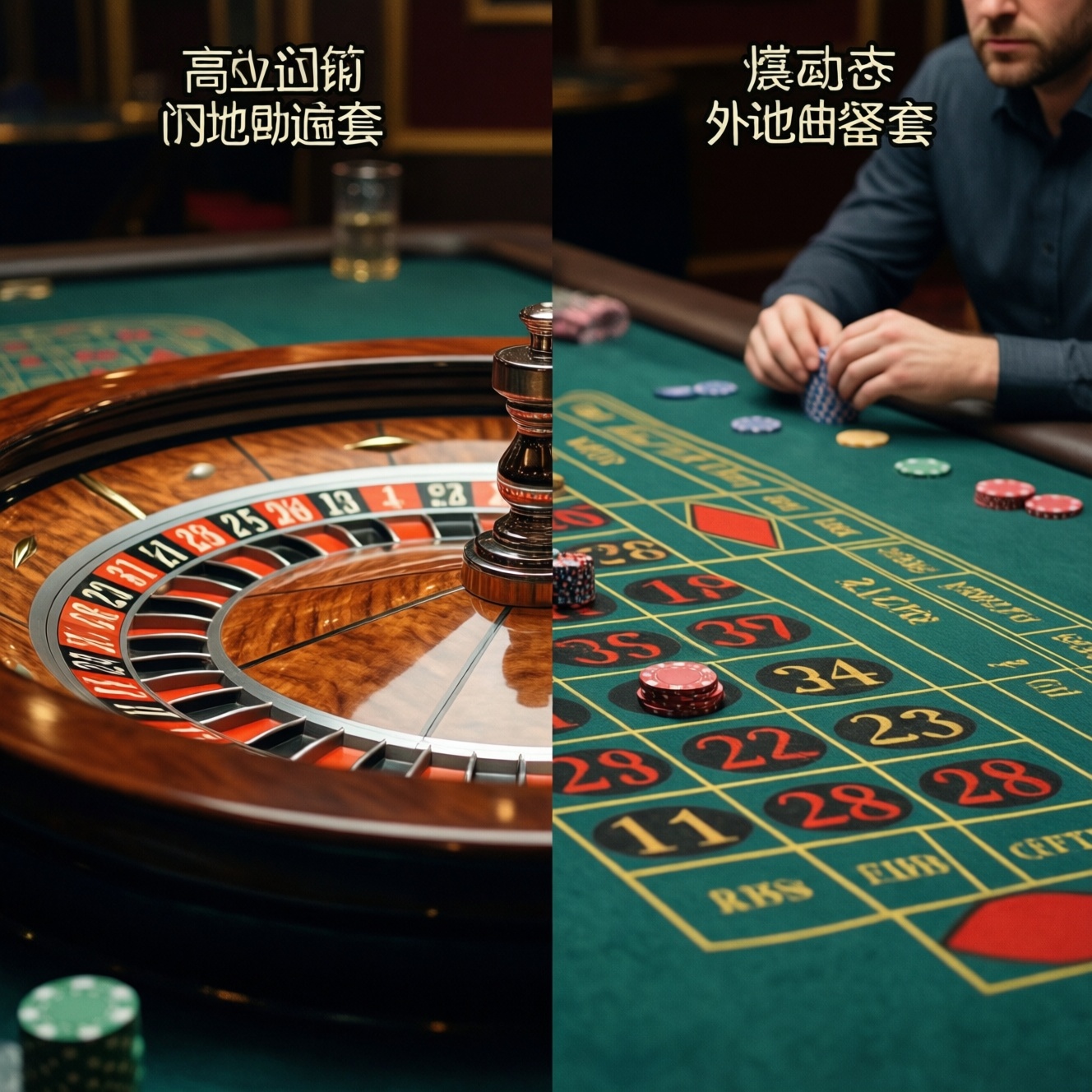
For standard roulette on the same wheel type, inside and outside bets have essentially the same expected value; the real difference is volatility and how quickly your bankroll swings. Use inside bets when you're optimizing for larger single-hit payouts and short-session targets; use outside bets when you need steadier hit frequency, tighter drawdowns, and cleaner bankroll control.
Summary of expected value, volatility, and practical trade-offs
- Expected value: across standard bets on the same wheel, EV is effectively identical; selection mainly changes variance, not edge.
- Inside bets: lower hit rate, higher payout per hit, sharper streaks, and faster bankroll swings.
- Outside bets: higher hit rate, lower payout per hit, smoother equity curve, and easier bet-sizing.
- Session fit matters: short sessions favor "one good hit" structures; long sessions favor "many small hits" structures.
- Player fit: conservative players usually align with outside bets strategy; opportunistic players lean to inside; professional-style control blends both with strict stop rules.
Inside bets: probability, expected value, and payout math
If you're weighing roulette inside vs outside bets, inside bets are chosen less for EV and more for how they concentrate outcomes. Use these criteria to decide which inside structure makes sense for your goal and temperament (this is the practical core of roulette strategy inside bets at intermediate level):
- Target outcome size: choose inside when you need a single hit to meaningfully change the session result.
- Hit-frequency tolerance: choose inside only if you can handle longer miss streaks without "chasing."
- Coverage width: single-number style concentrates risk; split/street/corner-style spreads it while keeping inside-like volatility.
- Table limit interaction: inside bets can reach meaningful payout without large base units, but repeated misses can still stress limits via progression.
- Discipline load: inside play demands pre-commitment to attempt count (how many spins you'll try before stopping).
- Information use: if you rely on wheel observation or dealer-section heuristics, inside bets are where players usually try to "express" that view (even if the edge is unproven).
- Drawdown acceptance: if a fast drawdown would tilt your decisions, you're mismatched to heavy inside concentration.
- Persona fit: opportunistic players often prefer inside because it aligns with short-session "spike" objectives; conservative players should treat it as an occasional satellite, not a base plan.
Outside bets: probability, expected value, and payout math

Outside bets typically have simpler roulette bet odds and payouts: lower payout per win but more frequent resolution. This makes an roulette outside bets strategy easier to execute consistently, especially when you're managing time at the table, distractions, and emotional variance.
| Variant | Who it suits | Pros | Cons | When to choose |
|---|---|---|---|---|
| Red/Black (color) | Conservative players building a steady cadence | High hit frequency; simple tracking and stop rules | Low per-hit payout; vulnerable to overbetting during streak narratives | When you want stable rhythm and minimal decision load |
| Even/Odd (parity) | Conservative to professional-style control players | Clean structure for flat betting and loss caps | Similar profile to color; can feel "slow" if you're chasing a big finish | When your main goal is variance suppression over many spins |
| High/Low (range) | Players who want simple coverage without "pattern" bias | Easy to standardize; good for bankroll-protection protocols | Low per-hit payout; boredom can trigger bad switches | When you're committing to a time-based session plan |
| Dozens | Opportunistic players who still want outside-style structure | Higher payout than even-money options; still broad coverage | More miss streaks than even-money bets; switching dozens mid-session often becomes guesswork | When you want a middle ground between inside spikes and outside stability |
| Columns | Professional-style players who predefine attempt counts | Similar to dozens; works well with fixed "sets" of spins | Can invite "system hopping" after short negative runs | When you can stick to a repeatable decision rule (e.g., fixed selection and duration) |
Compact comparison: EV, variance, hit rate, and typical payout (qualitative)
| Bet family | Expected value (same wheel) | Variance | Hit rate | Typical payout per hit |
|---|---|---|---|---|
| Inside (single-number style) | Same baseline EV as other standard bets | Very high | Low | Very high |
| Inside (multi-number: split/street/corner family) | Same baseline EV as other standard bets | High | Low to medium | High |
| Outside (even-money family: color/parity/range) | Same baseline EV as other standard bets | Low | High | Low |
| Outside (dozens/columns) | Same baseline EV as other standard bets | Medium | Medium | Medium |
Comparative volatility: variance, streak behavior, and risk of ruin
Volatility is the practical divider in the "best roulette bets expected value" conversation: EV doesn't meaningfully pick winners, but variance picks who survives their own decision errors. Use these scenario rules:
- If you're a conservative player and your main failure mode is raising stakes after losses, then prioritize even-money outside bets with a hard loss cap per session.
- If you're opportunistic and your goal is a short session with a defined profit target, then use a limited number of inside attempts (pre-set spins) and stop immediately after the first meaningful hit.
- If you notice your decision quality degrades after consecutive misses, then avoid single-number concentration; use dozens/columns or even-money bets to reduce miss streak density.
- If you play longer runs (more spins) and want the smallest drawdowns, then stay outside and keep selection stable; switching bets to "follow streaks" usually increases variance without improving EV.
- If you are a professional-style player optimizing process over excitement, then treat inside bets as a capped "satellite" allocation and keep the core bankroll on lower-variance outside structures.
Bankroll management and bet sizing for inside vs outside plays
- Choose your session objective: "steady survival" (outside) or "single-hit upside" (inside).
- Set a maximum loss for the session in units, and treat it as non-negotiable.
- Pick your bet family: even-money outside, dozens/columns, or inside (single-number vs multi-number inside).
- Define attempt count: number of spins you will commit before stopping or reassessing (inside requires stricter attempt limits).
- Fix your base unit so that the worst-case miss sequence you're willing to tolerate stays within the session loss cap.
- Decide your only allowed adjustment: either no adjustment (flat), or one preplanned step-down/stop rule after a drawdown-never ad-hoc increases.
- Write a stop rule for wins: after a meaningful hit (inside) or after reaching a modest target (outside), lock the result and end the session.
Situational play: when inside bets outperform in short sessions
Inside bets can "make sense" in short sessions because they can convert a single favorable outcome into a complete session result. The main ways intermediate players misuse them are decision-process errors, not math errors:
- Using inside bets without a fixed attempt count, then extending the session until the bankroll forces a stop.
- Picking single numbers randomly after losses, which is just volatility amplification without a plan.
- Confusing a near-miss narrative (neighbors, almost-hit patterns) with a reason to increase stake size.
- Over-covering many inside positions "to feel safer," creating a high total stake with mediocre payout impact.
- Mixing inside and outside bets in the same spin with no defined role (core vs satellite), making results hard to audit.
- Chasing a previous spin outcome (last-number bias) instead of following a precommitted selection rule.
- Letting a single hit trigger "house money" thinking and escalating into higher variance than planned.
- Ignoring table limits that cap recovery attempts and force worse decisions late in a miss sequence.
Situational play: when outside bets are superior for longer runs
For longer runs, outside bets are usually best for conservative and professional-style players who want fewer extreme swings and cleaner execution, while inside bets are best for opportunistic players running short, capped attempts where one hit can finish the plan. Many intermediate players do best by anchoring outside and using limited inside "shots" only when the session rules explicitly allow it.
Player questions and concise expert answers
Do inside bets have a better expected value than outside bets?
No-on the same roulette wheel type, standard inside and outside bets share essentially the same expected value; the house edge is baked into the payout structure. The choice is mainly about volatility and hit frequency.
What does "roulette inside vs outside bets" really change for my results?
It changes the distribution of outcomes: inside bets concentrate results into rarer, larger wins, while outside bets produce more frequent, smaller wins. Your bankroll swings and tilt risk are usually the practical differences.
Which are the best roulette bets expected value-wise?

Within standard bets on the same wheel, EV is broadly the same. "Best" typically means the bet family whose variance you can execute without breaking your bankroll rules.
How should I think about roulette bet odds and payouts without overcomplicating it?
Higher payout per hit usually implies a lower hit rate and higher variance. Pick the payout/hit-rate mix that matches your session length and your ability to stick to a stop plan.
Is there a reliable roulette strategy inside bets players can follow?
A practical approach is to cap the number of spins you'll try, keep stake sizing fixed, and stop after a meaningful hit. Without attempt limits, inside betting often turns into uncontrolled chasing.
What is a solid roulette outside bets strategy for longer sessions?
Use a simple even-money or dozen/column structure with flat betting, a strict session loss cap, and minimal switching. Stability is the point; frequent selection changes usually just add noise.
Should I mix inside and outside bets on the same spin?
Only if each bet has a defined role (outside as core stability, inside as a capped satellite). If you can't explain how the mix changes your risk limits, don't mix.