
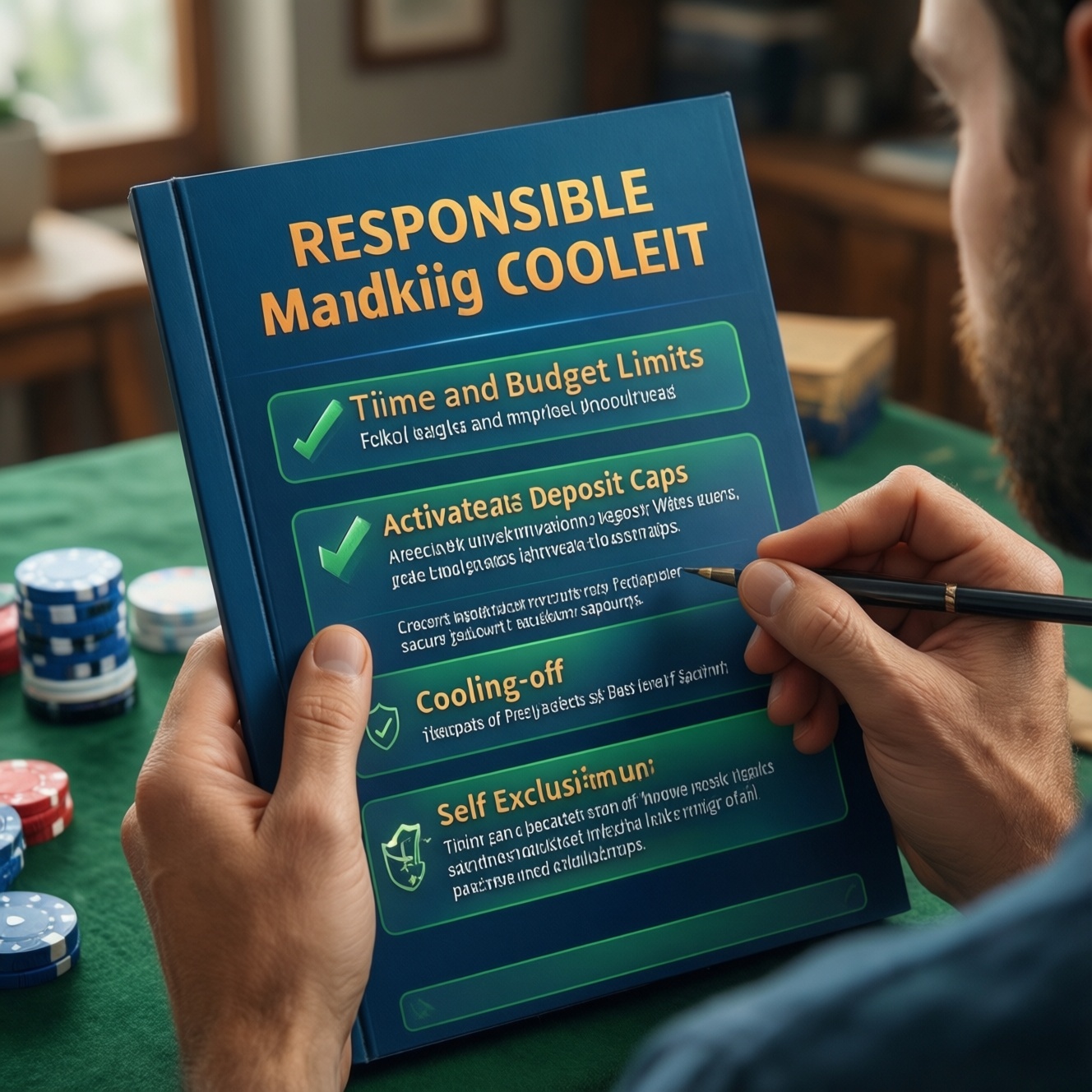
A responsible gambling toolkit is a set of practical rules, limits, and safeguards that reduce impulsive play and protect your time and money. You'll use responsible gambling tools to set gambling limits (time and budget), apply deposit limits gambling features, recognize tilt early, and activate cooling-off or gambling self exclusion when control slips.
Core Strategies at a Glance
- Pre-commit to a session length and a hard stop time; never extend "to recover."
- Use separate bankroll and payment methods; lock in deposit limits gambling settings before you play.
- Track tilt signals (thoughts, emotions, behaviours) and exit at the first red flag.
- Run a short interruption routine: stand up, disconnect, and delay decisions.
- Automate guardrails: blocking apps, cooling-off periods, and gambling self exclusion where available.
- Build accountability and recovery habits; know where to seek gambling addiction help early.
Designing Time and Session Limits for Consistent Control
Who this fits: anyone who tends to lose track of time, chases losses, or notices play bleeding into work/sleep. It's especially useful when you play online, where sessions can extend without natural stopping points.
When not to rely on time limits alone: if you repeatedly break limits, hide play, borrow money to gamble, or feel unable to stop once you start. In those cases, move immediately to stronger responsible gambling tools (blocking, cooling-off, gambling self exclusion) and consider gambling addiction help.
Session limit micro-protocol (simple and enforceable)
- Set a fixed session window (start time and end time) and treat the end time as non-negotiable.
- Define a maximum number of sessions per day/week to prevent "just one more" sessions.
- Attach a physical interrupt at the end time (leave the room, shower, walk, meal). It must be incompatible with gambling.
Practical Methods to Set and Enforce Monetary Caps
To set gambling limits that you actually follow, prepare these items before opening any gambling app or site:
- A separate bankroll account or e-wallet used only for gambling (no salary, no savings access).
- Payment controls (bank/e-wallet spending caps, card freeze features, or merchant blocks if offered).
- Operator account access so you can configure deposit limits gambling settings, loss limits, wagering limits, and cooling-off.
- A written limit rule (notes app is fine): deposit cap, max loss per session, and "no top-ups."
- A trusted contact (optional but powerful) who can hold you to your plan or help you activate gambling self exclusion if needed.
Two money-cap setups (choose one)
- Hard-cap (recommended for most): set a strict deposit limit, keep only the bankroll accessible, and remove/lock other payment methods from the device.
- Soft-cap (only if you reliably comply): set a deposit limit plus a written rule that you stop at a fixed loss amount. Upgrade to hard-cap the first time you break the rule.
Recognizing Tilt: Cognitive, Emotional and Behavioural Signs
- Scan for "permission thoughts" (your mind arguing for more play).
- Replace with one sentence: "Chasing is a cost, not a strategy. I stop now."
- Rate your emotional heat (0-10) before and during play.
- Fast reset: drink water, slow breathing for one minute, then log out.
- Check behavioural speed-ups (tempo is a tell).
- If you notice speeding up: pause immediately and do a 10-minute delay before any next bet.
- Identify "rule bending" in real time.
- Action: close the app and activate a cooling-off period (or blocking) the same day.
- Run a post-session reality check.
Typical tilt thoughts include: "I'm due," "I can win it back," "Just one more bet," or "I'll stop after I'm even." Treat any of these as a stop signal, not a debate.
If you hit 6/10 or higher (irritated, anxious, restless, euphoric), you're more likely to abandon limits. Your rule: at 6+, you end the session.
Tilt often shows as faster clicks, bigger stakes without planning, switching games quickly, or extending sessions past the stop time.
Rule bending includes topping up, raising limits, borrowing, using credit, or moving money from bills/savings. The moment you consider it, you are already past your safety boundary.
Write two lines: what you planned (time/money) and what happened. If there's a gap, treat it as a process failure and tighten controls (not a willpower issue).
Fast-track mode
- Before: set end time + deposit limit; remove extra payment methods.
- During: watch for permission thoughts or heat ≥ 6/10.
- At first red flag: log out, stand up, 10-minute delay, no exceptions.
- If you break a rule: enable cooling-off or gambling self exclusion immediately.
Immediate Interventions: Scripts and Routines to Stop Escalation
Use this checklist to confirm the intervention worked. If you can't tick most items, escalate to stronger controls (blocking, cooling-off, gambling self exclusion) and seek gambling addiction help.
- I logged out and closed the app/site (not just minimized it).
- I physically changed location (left the gambling spot) within 2 minutes.
- I delayed any further decision by at least 10 minutes.
- I did not deposit more or raise limits after feeling urge/tilt.
- I messaged a trusted contact or wrote a short note of what triggered the urge.
- I completed a replacement activity for at least 15 minutes (walk, shower, meal, call).
- I can state my limit rule out loud and confirm I stayed within it.
- I set a next-step barrier (cooling-off, block, or device restriction) if I felt out of control.
Two scripts you can use verbatim
- Stop script (to yourself): "This is tilt. I stop now. Any next bet is chasing. I will decide tomorrow."
- Accountability text (to a friend): "I'm getting the urge to chase. I've logged out. Please check in with me in 30 minutes."
Automation and Technology: Tools for Blocking, Cooling-Off and Self-Exclusion
Automation reduces reliance on willpower. These are common mistakes that make responsible gambling tools ineffective:
- Setting limits after you start playing instead of beforehand, when your judgment is clearer.
- Choosing limits that are easy to override (or leaving the option to increase limits instantly).
- Keeping multiple funding paths (saved cards, multiple e-wallets, easy bank transfer) that bypass deposit limits gambling controls.
- Using "cooling-off" as a short pause but returning immediately without changing triggers or access.
- Not removing apps/bookmarks, which keeps cues and temptation constant.
- Relying on one layer (only operator limits) instead of stacking: operator limits + device block + payment control.
- Failing to act after a breach; if you break a limit once, plan on breaking it again unless you tighten controls.
- Delaying gambling self exclusion even when you repeatedly chase, hide play, or can't stop once you start.
Layered protection setup (minimum effective stack)
- Operator layer: enable deposit limits gambling settings and session/time reminders; turn on cooling-off if available.
- Payment layer: restrict gambling spend at the bank/e-wallet level where possible; keep only the bankroll accessible.
- Device layer: use blocking tools or OS restrictions to reduce access during vulnerable hours.
Long-Term Habits: Recovery, Accountability and Relapse Prevention
If limits and tools aren't enough, use alternatives that reduce exposure and decision fatigue. Choose what fits your risk level and history:
- Full abstinence period (weeks to months) when you repeatedly chase, can't stop after starting, or gambling is affecting sleep, work, or relationships.
- Structured accountability (weekly check-in with a trusted person, shared budget visibility) when secrecy or "private relapses" are a pattern.
- Trigger redesign (remove gambling content, unfollow tipsters, change routines around payday/evenings) when urges are tied to specific times, places, or emotions.
- Professional support when you feel stuck, anxious/depressed around gambling, or you've tried limits and still escalate-seek gambling addiction help early rather than after a crisis.
Operational Questions and Common Concerns
Which limit should I set first: time or money?

Set money first (deposit limit and max loss), then add a session end time. Money limits stop financial damage; time limits reduce the chance you override money rules while fatigued.
How low should my deposit limit be?
Set it low enough that you can lose it without affecting bills, debt payments, or savings. If you've ever chased, choose a hard-cap and remove top-up options.
What if I keep increasing my limits?
That's a sign your current controls are too easy to override. Switch to stronger responsible gambling tools: lock payments, add device blocking, and consider gambling self exclusion.
How do I know I'm on tilt and not just "having fun"?
Tilt shows up as urgency, rule bending, or chasing thoughts, not enjoyment. If you feel pressure to continue or to recover losses, treat it as tilt and end the session.
Does self-exclusion mean I've failed?
No-gambling self exclusion is a safety control, like disabling an app you can't use safely. Use it when you repeatedly break limits or feel unable to stop once you start.
Can I rely on willpower if I'm experienced?

Experience doesn't protect you from fatigue, stress, or emotional triggers. Use automation and pre-commitment to set gambling limits consistently.
When should I seek outside support?
Seek gambling addiction help if gambling is harming finances, relationships, mental health, or if you can't follow limits despite trying. Getting support earlier makes control easier.