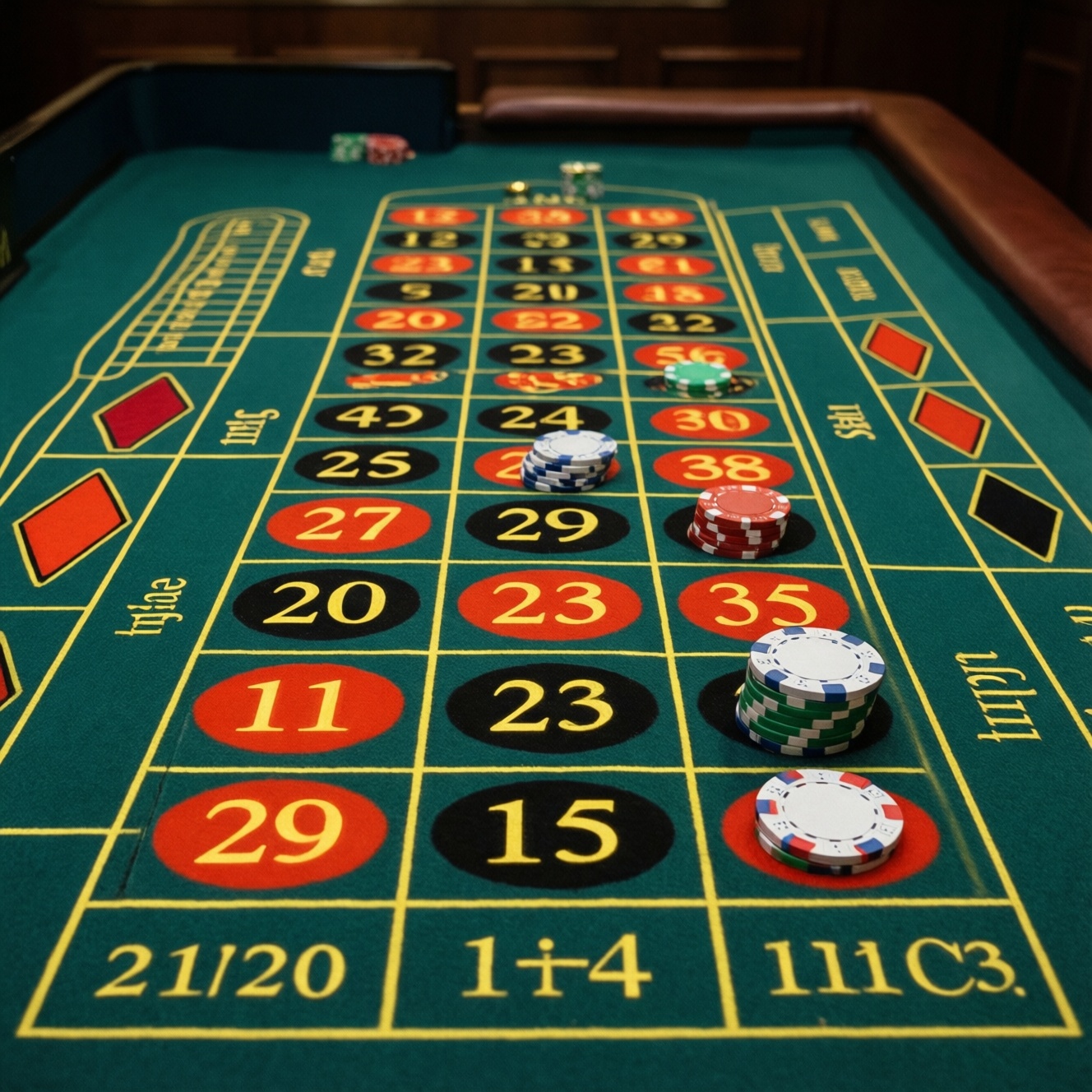

The Fibonacci betting system in roulette is a loss-recovery progression that increases stakes following Fibonacci numbers (1, 1, 2, 3, 5, 8, 13...) and steps back after a win. Practically, it's best treated as a session-management tool: define unit size, entry rules, and forced resets to limit drawdowns. It does not overcome the house edge.
Session Snapshot: Fibonacci Essentials
- Use Fibonacci only on even-chance bets (Red/Black, Odd/Even, High/Low) to keep variance manageable.
- Define a fixed unit and a hard stop-loss before the first spin; do not resize the unit mid-session.
- After each win, step back two Fibonacci levels (or reset to level 1 if you prefer stricter control).
- Forced resets (time-based or level-based) are the simplest way to cap exposure during losing runs.
- Track drawdowns by "max level reached" and "peak-to-trough units," not by vibes.
Understanding Fibonacci Mechanics in Roulette

In the fibonacci betting system roulette, you stake amounts that follow the Fibonacci sequence when you lose, aiming for a small net gain after a win. In practice, it's a staking plan, not an advantage play: every spin remains independent and the house edge still applies.
Suitable for:
- Intermediate players who can follow strict rules and stop conditions.
- Short, structured sessions on even-chance bets where outcomes are near 50/50 (excluding zero).
- Players who want a repeatable protocol for drawdowns and resets.
Do not use it when:
- You cannot accept long losing streaks or you feel pressure to "get even."
- Table limits are tight relative to your bankroll (you'll hit caps during a drawdown).
- You plan to apply it to high-volatility bets (straight-ups) while expecting "smooth" recovery.
Setting Bankroll, Unit Size and Risk Limits
This fibonacci roulette strategy works only if your unit is small enough to survive a bad run without touching emotional or financial limits. Decide these numbers before you play.
Core parameters (practical defaults)
- Choose your bet type: stick to one even-chance market per session (e.g., Red/Black).
- Pick a unit size: example: 100 THB per unit. Your first two bets are 100, 100; then 200, 300, 500...
- Set a maximum Fibonacci level: example: stop at level 8 (sequence stake 13 units). If you lose at level 8, end the session.
- Set a stop-loss: example: -40 units for the session, whichever comes first (stop-loss or max level reached).
- Set a stop-win: example: +10 units for the session (bank profits; do not "press" because you're up).
Minimum tools and access
- Bankroll separated from daily spending (a dedicated session amount).
- Notes app or paper to record: bet, outcome, level, and current drawdown.
- Rules for table limits (min/max) and whether you're on European (single-zero) or American (double-zero) roulette.
- If playing an online casino roulette fibonacci system: stable connection and a clear view of bet history/last results (for logging only, not prediction).
Preparation Checklist and Table for a Live Session

Mini prep-checklist (do this first):
- Confirm table limits fit your planned max level stake.
- Write your unit size, max level, stop-loss, and stop-win on one line.
- Decide your reset rule (two-steps-back or full reset).
- Choose one even-chance bet and commit to it for the session.
- Open a simple log (Spin #, Level, Stake, Result, Units P/L).
| Item | Acceptable threshold | Required action |
|---|---|---|
| Table max vs planned max stake | Max stake ≤ 20% of table max | If not met, lower unit size or reduce max level; otherwise do not start |
| Stop-loss written and agreed | Fixed before first spin | End session immediately when hit; no exceptions |
| Session length | Time cap chosen (e.g., 30-60 minutes) | Stop on time even if "close to recovery" |
| Bet selection | One even-chance only | No switching to chase patterns |
-
Define your Fibonacci ladder and cap it.
Write the sequence in units up to your max level, e.g.: 1, 1, 2, 3, 5, 8, 13 (levels 1-7).- In money (100 THB unit): 100, 100, 200, 300, 500, 800, 1300.
- Do not exceed your pre-set cap even if the next step "would fix it."
-
Choose your stepping rule after wins.
Use "step back two levels after a win" as the default; it's the classic control mechanism in roulette betting systems fibonacci.- Example: if you win at level 6, next bet is level 4.
- Conservative option: full reset to level 1 after any win.
-
Set forced reset triggers.
Decide when to reset regardless of results to reduce runaway exposure.- Level-based: reset to level 1 after any bet at level 6+ (win or lose).
- Time-based: every 20 spins, reset to level 1 and reassess.
-
Run a 10-spin dry simulation.
Without money, flip a coin 10 times and move through levels exactly as you would at the table.- If you make mistakes, simplify: full reset after wins and a lower max level.
-
Start live with a strict logging rhythm.
For each spin, record: level, stake, win/loss, next level, and session units P/L.- Logging prevents accidental over-betting and makes drawdowns visible early.
Executing the Sequence: Entries, Progression and Forced Resets
Execution is where most "best roulette strategy fibonacci system" claims fail: the rules get bent mid-session. Use this checklist during play.
- Start at level 1 (1 unit) and remain on the same even-chance bet for the entire session.
- After a loss, move one level forward (add the last two unit values to get the next).
- After a win, move back two levels (or reset to level 1 if that's your chosen rule).
- If you hit your max level, stop the session (do not "try one more" at a higher stake).
- Apply forced resets exactly as written (time-based and/or level-based).
- Do not increase unit size when down; do not increase max level when "confident."
- When you hit stop-win, end the session and lock the result.
- If your bet is voided/misclicked (common in online casino roulette fibonacci system play), treat it as a session interruption: pause and reset to level 1.
Detecting, Measuring and Responding to Drawdowns
Drawdowns are normal in any progression. Your job is to detect them early, measure them consistently, and respond with pre-defined actions.
Common drawdown mistakes to avoid
- Chasing with bet switching: changing from Red/Black to Odd/Even mid-run increases randomness without improving recovery odds.
- Removing the cap: extending to the next Fibonacci level because it "almost" recovers is how sessions blow up.
- Unit creep: raising the unit after losses turns a controlled progression into uncontrolled martingale behavior.
- Ignoring table limits: you may be forced to under-bet at high levels, breaking the recovery logic.
- Measuring only cash, not units: you lose comparability across sessions when you change currency amounts.
- Recovery obsession: continuing past time cap because you're "one win away" is a predictable failure mode.
- No reset discipline: skipping a forced reset when tilted usually escalates the drawdown.
Simple drawdown metrics (use at the table)
- Max level reached: highest Fibonacci level touched this session.
- Peak-to-trough units: largest drop from your best session point to your worst.
- Consecutive losses on the same market: track streak length; use it only to trigger stops/resets, not to predict a reversal.
Response protocol (safe, mechanical)
- At level 5-6: activate your forced reset rule at the next decision point (per your plan).
- At max level or stop-loss: stop immediately. Log the outcome and end the session.
- After any rule break: stop for the day. A broken rule means your risk assumptions are no longer valid.
Review, Metrics and Adjustments for Next Sessions
Use the review to reduce operational errors and keep risk stable. If you want alternatives, switch the risk controls, not the belief that a system can beat roulette.
Post-session protocol (5 minutes)
- Record results in units: net units, max level reached, peak-to-trough units.
- Mark rule compliance: any bet switching, unit changes, or cap violations.
- Identify the failure point: was it table limits, emotional tilt, or incorrect stepping?
Alternatives to consider (when they fit)
- Flat betting: best when your goal is simplest control and minimal operational error; same unit every spin.
- Paroli (positive progression): suitable if you prefer to press only after wins and cap exposure after losses.
- 1-3-2-6 progression: useful when you want a short, bounded sequence with automatic resets.
- Stop-and-review sessions: not a new staking system-just shorter sessions with stricter time caps to limit drawdown duration.
Practical Concerns, Short Answers and Troubleshooting
Is the Fibonacci betting system roulette profitable long-term?

No. It's a staking method that can shape session volatility, but it doesn't remove the house edge or change independent spin probabilities.
Which bets should I use for a fibonacci roulette strategy?
Use even-chance bets (Red/Black, Odd/Even, High/Low). They keep the progression more predictable than high-variance inside bets.
How many Fibonacci levels should I allow in roulette betting systems fibonacci?
Set a fixed cap you can afford to lose without chasing. Many players choose a modest cap (e.g., 6-8 levels) and stop immediately when it's hit.
What is the safest reset rule for the best roulette strategy fibonacci system style play?
Full reset to level 1 after any win is the safest operationally. It reduces the chance you drift into high levels during choppy sequences.
How do I handle table limits in an online casino roulette fibonacci system?
Ensure your planned max stake is comfortably below the table maximum before starting. If a limit forces you to under-bet at higher levels, stop and redesign your unit/cap.
Should I switch from Red to Black after several losses?
No. Switching is a form of chasing patterns and usually worsens discipline. Treat streaks as a trigger for stops/resets, not for prediction.
What's a clear sign I should stop immediately?
Hitting stop-loss, reaching your max level, or breaking any written rule (unit size, cap, or bet switching) should end the session on the spot.