

Choosing between European and American roulette comes down to how the single zero versus double zero changes your expected value, streak behavior, and bankroll stress. For most intermediate players trying to maximize time-on-table and reduce long-run drag, European wheels are the default pick; American wheels demand tighter session rules and more conservative bet sizing.
Strategic overview: single-zero vs double-zero implications
- European wheels generally impose a smaller structural disadvantage than American wheels, so your losses tend to accumulate more slowly over many spins.
- The extra pocket on American wheels slightly dilutes hit rates across all bets, which makes short-run swings feel harsher at the same stake.
- On both wheels, payout tables are fixed; the wheel type changes probabilities, not payouts, so the same "system" performs differently.
- If you care about longevity and steadier sessions, prioritize wheel selection before you optimize bet selection.
- If your goal is excitement and faster resolution, American wheels can fit-but only with stricter stop rules.
House edge mechanics and impact on expected value
When comparing European roulette vs American roulette, focus on decision criteria that directly affect expected value (EV) and how quickly variance can hurt your bankroll. Use these to choose a wheel before you choose a pattern.
- Zero structure: single zero slightly improves your EV versus double zero because fewer pockets compete with your chosen outcomes.
- Rule set on even-money bets: check whether the table uses favorable zero-handling rules (common on some single-zero tables) or full loss on zero.
- Bet availability: confirm whether the bets you actually use (even-money, dozens, columns, splits) are offered with standard payouts.
- Table limits: maximum bet caps can break progression systems; minimums determine whether flat betting is practical for your bankroll.
- Spin speed and session length: faster games amplify the long-run disadvantage per hour even if your per-spin stake is unchanged.
- RNG vs live wheel conditions: live wheels can support observation-based discipline (dealer speed, your own tilt control) even if they do not create a true edge.
- Variance tolerance: your comfort with drawdowns matters more than chasing a mythical guaranteed win method.
- Execution quality: simpler plans (flat betting, capped sessions) are easier to follow under pressure and usually outperform abandoned progressions.
Minimal EV framing: EV per spin depends on fixed payouts and probabilities. Wheel type changes the winProbability and lossProbability; payouts stay the same. Variance is driven mainly by payout size and hit frequency, which the extra zero worsens slightly across the board.
Bet-sizing, volatility and bankroll rules per wheel

Below are practical bet-sizing "variants" you can run on either wheel. The key difference is that the double-zero wheel punishes aggressive sizing faster, so you should downshift risk when using an American roulette strategy double zero.
| Variant | Who it fits | Pros | Cons | When to choose |
|---|---|---|---|---|
| Flat stake on even-money bets | Conservative; bankroll-conscious; beginners moving to intermediate discipline | Lowest execution risk; predictable drawdowns; easy to cap sessions | Slow wins; boredom can trigger impulsive upsizing | Default for a European roulette strategy single zero focused on longevity |
| Flat stake on dozens/columns | Recreational; pattern-seekers who want moderate swings | Clear math; fewer decision points; decent "hit rhythm" | Long dry spells still happen; tilt risk after misses | When you can stick to a strict stop-loss and avoid chasing |
| Capped step-up after wins (Paroli-style) | Risk-taker who wants controlled upside without infinite martingale exposure | Losses stay bounded; wins can compound during streaks | Feels great until it doesn't; encourages overconfidence | Better on single-zero; on double-zero keep the win ladder short and preplanned |
| Capped step-up after losses (anti-martingale hybrid) | Intermediate who insists on a progression but wants guardrails | Provides structure; prevents "one more double" spirals if capped | Still amplifies variance; caps must be obeyed or it becomes pure martingale | Only if you accept frequent resets and set a hard loss cap before starting |
| Fractional bankroll staking (Kelly-lite mindset) | Advantage seeker in attitude (not claiming a true edge) who values survival and consistency | Automatically scales down after losses; reduces ruin risk; disciplined | Requires tracking; may feel "too small" after a downswing | When playing higher limits or longer sessions, especially on American wheels |
| Session budgeting with stop-loss and stop-win | All personas; especially tilt-prone players | Prevents the common trap of giving back wins; makes outcomes repeatable | Stops can feel arbitrary; you may quit during a good run | Mandatory if you plan online European roulette real money sessions where pacing is faster |
Persona examples:
- Conservative: flat stake on even-money bets; end the session after a predefined drawdown; prefer European wheels for lower structural drag.
- Risk-taker: Paroli-style step-up with a strict cap; switch back to flat stakes immediately after a reset; avoid doing this on double-zero unless the stakes are small.
- Advantage seeker: fractional bankroll staking plus session budgeting; track results by wheel type and quit when discipline degrades, not when "due."
Short-term tactics: favored bets and scenario play
Short-term tactics are about controlling decisions, not defeating the wheel. Use "if..., then..." rules that reduce impulsive changes. This is where many players misapply the best roulette strategy European wheel idea by overfitting to tiny samples.
- If you are switching between wheels during a trip, then keep the same stake size but shorten session length on American wheels to reduce exposure.
- If the table offers favorable zero handling on even-money bets, then lean on even-money bets more heavily and avoid complex progressions; your edge is still negative, but the drag is reduced.
- If you feel the urge to "cover more numbers" after losses, then move to a single simple bet type (even-money or a single dozen) for the rest of the session and do not add side bets.
- If you just hit a big win on an inside bet, then bank part of the profit by reducing stake for a fixed number of spins; don't instantly increase volatility.
- If you are on a perceived streak (color, odd/even), then treat it as entertainment only: keep stakes flat and cap the number of spins you will follow that narrative.
- If you are playing live roulette and distractions rise, then switch to fewer decisions per spin (even-money) or end the session; execution errors are a bigger leak than bet selection.
Persona examples:
- Conservative: default to even-money; apply a "no chase" rule when a run goes against you; end early instead of changing systems.
- Risk-taker: allow inside-bet "shots," but only inside a fixed budget slice; when it's gone, revert to flat even-money or quit.
- Advantage seeker: standardize a small set of allowed bets and document when you broke rules; improvements come from fewer deviations, not new patterns.
Long-run performance: ROI, variance and session length

Use this fast selection algorithm to align wheel choice, staking, and session design with how roulette actually behaves over time.
- Decide your primary goal: longer playtime, higher excitement, or strict budget entertainment.
- Pick the wheel that best supports that goal: prefer European for lower structural disadvantage; accept American only if you enforce tighter limits.
- Choose one bet family for the whole session (even-money, dozens/columns, or a small inside-bet set) and commit in advance.
- Set a stop-loss and a stop-win that you will follow without negotiation; write them down before you buy chips.
- Select a stake method: flat or fractional bankroll for stability; capped step methods only if you can obey caps.
- Fix session length by spins or time; shorter is safer on double-zero, longer is more tolerable on single-zero.
- After the session, evaluate only rule adherence and exposure time; do not "optimize" based on a small sample of outcomes.
Persona playbooks: conservative, recreational, and advantage players
Most wheel-choice mistakes are behavioral. These are the failures that make a good plan collapse, especially when moving from European to American layouts.
- Assuming payouts change with the wheel: payouts stay fixed; only probabilities shift, so the double-zero wheel quietly worsens the same bets.
- Using aggressive loss progressions on American wheels: the added pocket increases the chance that a losing run reaches your cap sooner.
- Changing bet types mid-session: jumping from even-money to inside bets is usually chasing, not strategy.
- Letting a quick win redefine the plan: a hot start often triggers stake creep and later give-back.
- Overweighting "dealer signatures" or "wheel bias" without evidence: treat observations as entertainment unless you can document a stable, repeatable anomaly.
- Ignoring table limits: many progressions fail because the maximum bet stops you before recovery-then you are stuck at peak risk with no room.
- Playing too fast online: rapid spins compress losses into minutes; when doing online European roulette real money, slow down deliberately or set shorter sessions.
- Confusing volatility with skill: high-variance bets can produce dramatic wins, but they do not improve EV.
Persona examples:
- Conservative: your biggest leak is staying too long after small losses; fix it with a strict session stop and stick to single-zero tables when possible.
- Recreational: your leak is "mixing everything"; pick one fun bet type and one simple constraint (time or spins) and stop improvising.
- Advantage seeker: your leak is over-analysis of noise; focus on decision hygiene, tracking, and minimizing exposure on double-zero games.
Comparative table and decision matrix for real-table choices
| Decision factor | European (single zero) | American (double zero) | Practical implication |
|---|---|---|---|
| Structural disadvantage | Lower | Higher | European typically preserves bankroll longer at the same pace and stake. |
| Hit rate on any fixed bet | Slightly better | Slightly worse | American sessions tend to feel "swingier" even with identical bet selection. |
| Variance feel at equal stakes | More manageable | More punishing | On American wheels, prefer flatter sizing and shorter sessions. |
| EV (sample expression, same stake) | EV = stake × (payout × winProbability − lossProbability), with better probabilities | EV = stake × (payout × winProbability − lossProbability), with worse probabilities | Wheel choice shifts probability inputs; "systems" do not cancel that. |
| Best fit persona | Conservative and advantage-minded | Thrill-seeking recreational | Match the wheel to your discipline level, not your optimism level. |
Best fit in most cases: European single-zero for players optimizing value, steadier variance, and rule-following consistency. Best fit for high-excitement, short-burst play: American double-zero, but only when you deliberately reduce exposure with smaller stakes, stricter stops, and fewer spins per session.
Common practical doubts and concise answers
Is European roulette always the better choice for expected value?
Usually yes because the single zero changes probabilities in your favor compared with the double zero. "Better" still means negative EV, so discipline and session limits remain essential.
Does any system overcome the double-zero disadvantage?
No betting system changes the underlying probabilities and fixed payouts. A system can only reshape volatility and how quickly you reach your stop rules.
What is a sensible European roulette strategy single zero for intermediate players?
Use flat or fractional staking on even-money bets or dozens, plus strict stop-loss and stop-win rules. Keep one bet family per session to avoid chasing.
What American roulette strategy double zero is least harmful?
Flat stakes, shorter sessions, and tighter stop-loss thresholds. Avoid aggressive loss progressions because the extra pocket accelerates bankroll stress.
What is the best roulette strategy European wheel if I want more action than even-money bets?
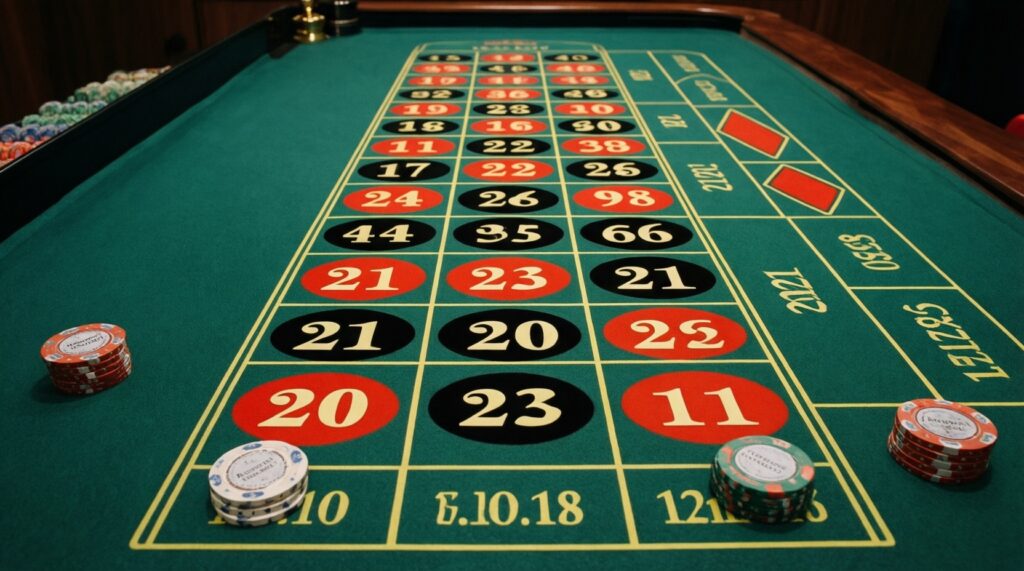
Dozens/columns with flat stakes and a fixed session budget offers more movement without jumping to the highest volatility bets. Add inside bets only as pre-budgeted "shots," not as recovery.
Is online European roulette real money safer than playing American roulette live?
Wheel type matters more than channel, but online speed can increase exposure quickly. If you play online, slow your pace and shorten sessions to keep the advantage from compounding against you.