

If your goal is to choose the better long-term roulette option, prioritize European roulette because its single-zero wheel creates a lower built-in disadvantage than the double-zero American version. Over many spins, that structural difference compounds into faster bankroll erosion on American tables, especially for even-money play and any "system" that relies on surviving variance.
Quick Comparative Summary for Strategy Planning
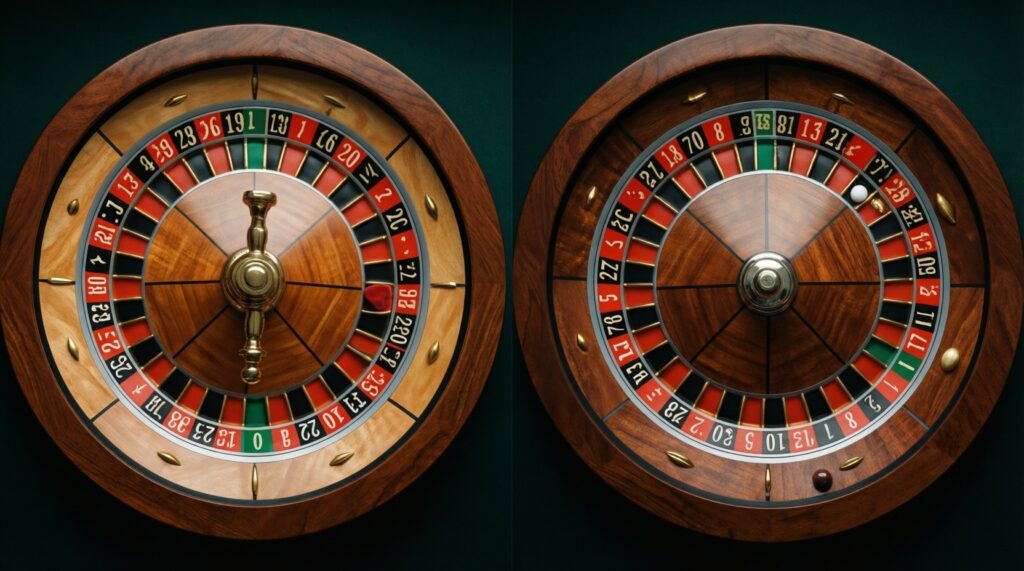
- In European roulette vs American roulette, the extra pocket on the American wheel is the core reason the edge is tougher to beat over time.
- The European roulette house edge is lower because the wheel has fewer losing outcomes relative to winning payouts.
- The American roulette house edge is higher on every bet type because the additional pocket affects all probabilities equally.
- Most betting systems do not change expected loss; they mainly change volatility and how quickly you hit table limits.
- Rule tweaks on even-money bets (when offered) can materially improve the European side, but you must confirm the exact rule before committing.
- If you mainly play digitally, your best roulette odds European vs American usually come from selecting verified single-zero lobbies and avoiding "American" labeled tables.
Wheel Anatomy and Bet Layout: Single vs Double Zero
Use these criteria to choose between wheels quickly, especially when comparing tables in Thailand-facing casinos or international online lobbies:
- Zero structure: Single-zero (European) vs double-zero (American) is the primary driver of long-run cost.
- Even-money rules: Check whether the table offers a protective rule on even-money bets (common on some European-style tables, uncommon on American).
- Table labeling accuracy: "European" in the lobby should match the actual wheel (single-zero) and rules; verify in the help/rules panel.
- Bet layout familiarity: The felt layout looks similar, which can hide the risk difference; don't assume "same game, same cost."
- Speed and spin volume: Faster games increase hourly exposure to the edge; the higher-edge wheel punishes fast play more.
- Dealer and procedure consistency: In live games, consistent procedures reduce confusion and accidental misbets (which effectively increase your loss rate).
- Side bets availability: Optional side bets are usually higher-cost than main bets, regardless of wheel type.
- Limits and flexibility: Higher minimums make it harder to manage variance; this matters more on the higher-edge wheel.
Mathematical House Edge: Probabilities and Expected Value
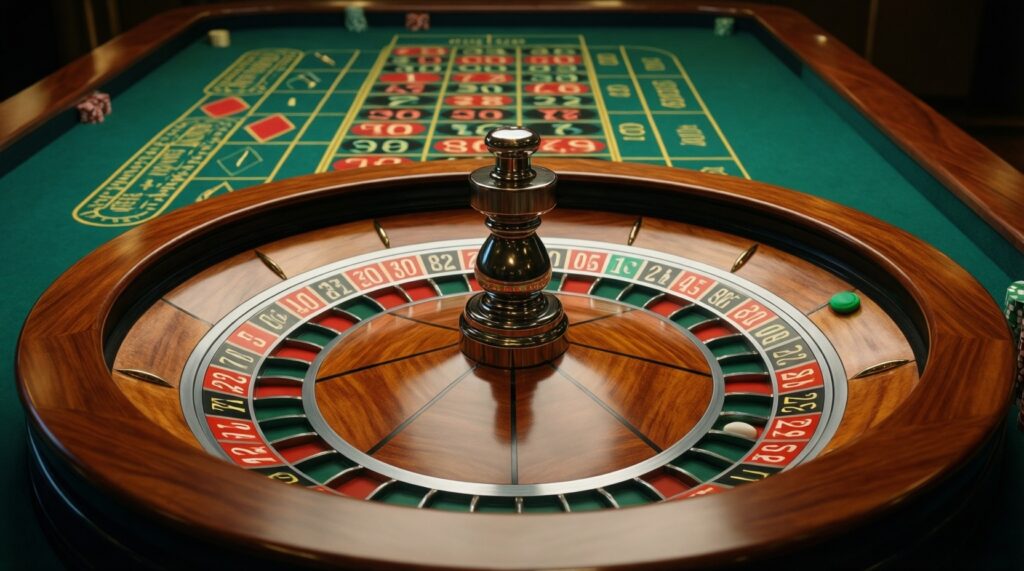
The expected value difference comes from the count of losing outcomes relative to fixed payouts. Payout schedules are typically identical across European and American tables, so the wheel composition determines which game "charges" you more for the same bet types. That's why the European roulette house edge stays lower, while the American roulette house edge stays higher, across the board.
| Variant | Who it fits | Pros | Cons | When to choose |
|---|---|---|---|---|
| European (single-zero) standard rules | Most intermediate players; casual to systematic | Lower built-in disadvantage; same familiar bet menu | Still negative expectation long-term; fast play still drains bankroll | Default pick when you can choose between single-zero and double-zero |
| American (double-zero) standard rules | Players optimizing for table availability rather than value | Often widely available in some venues; familiar for US-style rooms | Higher built-in disadvantage on every bet; harsher long-run outcomes | Only when European is not available or when non-math factors dominate (social table, comp policy, specific event) |
| European with La Partage (even-money protection) | Even-money focused players (red/black, odd/even, high/low) | Reduces the cost of even-money play; improves bankroll survival | Does not improve non-even-money bets; not offered everywhere | If your plan is mostly even-money wagers and the rule is clearly stated for single-zero |
| European with En Prison (even-money protection) | Disciplined players who can follow conditional-resolution rules | Can reduce even-money losses versus standard rules in practice | Rule handling varies by casino; misunderstandings are common | If the dealer/casino explains it clearly and you are comfortable with the "imprisoned" stake flow |
| Online European RNG / live dealer (single-zero) | Players who prefer to play European roulette online | Easier access to single-zero; easier rule verification in the UI | Session speed can be high; multitabling increases exposure | If you can confirm wheel type, rules, limits, and you will control spin volume |
| American-style online / live dealer (double-zero) | Players locked into a specific provider or lobby selection | Availability; sometimes lower minimums (varies by operator) | Higher built-in disadvantage; systems bleed faster | Only when you cannot access single-zero and you accept the long-term cost |
How to read this table without getting lost in math: payouts are generally the same across wheels, so the only lever you can reliably control is selecting the wheel/rule set with fewer losing outcomes for the same payouts.
Impact on Common Bets: Even-Money to Straights
Use scenario rules that match how you actually bet (not how you wish you bet):
- If you mostly place even-money bets (red/black, odd/even, high/low), then prioritize European tables and actively look for La Partage or En Prison before you consider any betting progression.
- If you frequently play dozens/columns to "smooth results," then the wheel choice still dominates; choose single-zero first, then manage stakes for volatility, not for "beating" the game.
- If you like straight-up and split bets for big hits, then avoid double-zero whenever possible because the extra pocket reduces hit frequency while payouts typically do not improve to compensate.
- If you mix many bet types in one spin (inside + outside), then treat it as increasing total exposure per spin; pick European first and cap total chips per spin to control drawdown.
- If you are comparing European roulette vs American roulette in a casino where one table is faster, then the faster table effectively increases your hourly cost; prefer the lower-edge wheel and slower pace if bankroll longevity matters.
Bankroll Longevity: Simulations and Long-Term Outcomes
A simple simulation outline you can apply (spreadsheet or notes) is: fix your stake size, fix your bet type, run many spins conceptually, and track drawdowns. Then compare the same plan on single-zero vs double-zero. Use this fast selection algorithm:
- Decide your primary bet family for the session (even-money, dozens/columns, inside bets, or mixed).
- Pick the wheel with the structurally lower disadvantage (single-zero) unless you have a specific constraint you cannot change.
- Check for even-money protection rules (La Partage / En Prison) and only count them if they are explicitly stated for that table.
- Set a fixed "chips per spin" ceiling to prevent accidental overexposure when you add coverage bets.
- Choose a session stop rule based on time or loss cap; avoid "must recover" logic because it increases spin volume under stress.
- Control game speed: fewer spins per hour is a real risk reducer on any negative-expectation game.
Practical Strategy Adjustments by Player Persona

Common selection mistakes differ by persona; fix the one that matches you:
- Recreational/social player: Choosing the loudest or busiest table without checking whether it's single-zero or double-zero.
- Recreational/social player: Increasing stakes after losses "to make the trip worth it," which amplifies drawdowns on the higher-edge wheel.
- Systematic bettor (progressions, patterns): Treating a progression as an edge substitute; it changes variance, not the underlying expected loss.
- Systematic bettor: Testing a system on European rules but playing it on American rules in practice (the most common mismatch when traveling or switching lobbies).
- Advantage-seeker mindset: Spending effort on micro-optimizations (bet selection tweaks) before locking in the major edge driver (wheel type and even-money rules).
- Advantage-seeker mindset: Overplaying speed online (rapid spins, multitabling), which compounds losses even when you correctly choose single-zero.
- Online-first player in TH: Not verifying the rule card; "European" branding can coexist with side bets and features that raise the effective cost of play.
- Any persona: Ignoring limits; table maximums can break progressions and force suboptimal bet sizing at the worst time.
Casino Practices and Rule Variations That Shift the Edge
For most players aiming at better long-term value, European roulette (single-zero) is the better default, and it becomes even more attractive when even-money protection rules are present and clearly applied. For players who prioritize availability, a specific venue experience, or constraints where only double-zero is offered, American roulette can be a practical choice-just treat it as a higher-cost version and tighten bankroll controls accordingly.
Common Concerns Players Ask About the Edge
Does any betting system overcome the wheel disadvantage long-term?
No. Systems mainly redistribute variance and risk of ruin; the built-in disadvantage remains. Your most meaningful lever is choosing the lower-cost wheel and rules.
Why do European tables feel "luckier" to some players?
Because the single-zero structure reduces the frequency of pure losing outcomes relative to the same payouts. Over long sessions, that can look like smoother bankroll performance.
Are payouts different in European roulette vs American roulette?
Usually the payout schedule is the same for the same bet types. The difference is the probability of winning, not a better payout on the American wheel.
Is it always correct to pick even-money bets on European rules?
Even-money bets often have lower volatility, which can help session management. They are still negative expectation, so the key is using them with strict limits and, when available, even-money protection rules.
When I play European roulette online, what should I verify first?
Confirm the wheel is single-zero, then read the rule panel for even-money handling and side-bet conditions. Also check game speed and limits to control spin volume.
Do side bets change the comparison between wheels?
They can make the overall game costlier regardless of wheel type. If you want the best roulette odds European vs American, minimize optional side bets and focus on the main game on a single-zero wheel.