
If your goal is better long-term results, European roulette is usually the stronger choice because the single-zero wheel creates a lower house edge than American roulette's double-zero wheel. That difference compounds over time: you lose less per bet, your bankroll lasts longer, and short-term swings become easier to survive-especially on even-money bets.
At-a-glance differences between European and American roulette
- European wheel: 37 pockets (0-36); American wheel: 38 pockets (0-36, 0, 00).
- The extra 00 raises the American roulette house edge compared with the European roulette house edge.
- Even-money bets (red/black, odd/even, 1-18/19-36) are where special rules (La Partage / En Prison) can further cut the edge in European games.
- Over many spins, a higher house edge primarily means a faster expected bankroll drain, not "more bad luck."
- The "best roulette version for odds European vs American" depends on wheel type and rules, limits, and speed of play.
Wheel geometry and payout mechanics: single zero versus double zero
Use these criteria to decide what matters for your play style and risk tolerance:
- Number of pockets: 37 (European) vs 38 (American). More pockets with the same payouts increases the house edge.
- Zero structure: one 0 vs 0 + 00. The extra 00 is the entire reason the American edge is higher in standard rules.
- Even-money rule set: check whether the table offers La Partage or En Prison (common in European variants, rare elsewhere).
- Bet types you actually use: the relevant edge is the one on your most frequent bets (often even-money or dozens/columns).
- Table limits: min/max bets determine how long you can hold variance without going broke.
- Spin speed: faster games increase expected loss per hour even if the edge is identical.
- Single-zero "European" branding vs reality: some "European-style" tables still have rules that change outcomes (always verify the wheel and rules panel).
- Online vs land-based handling: live dealer, RNG, and auto-roulette can differ in pace and limit structure, affecting long-run cost.
Computing house edge: step-by-step formulas with numeric examples
The clean way to compare European roulette vs American roulette house edge is to compute expected value (EV) from the wheel probabilities and the payout. For a 1-unit bet:
- Find win probability p (depends on pockets that win).
- Find loss probability q = 1 − p.
- Use the payout: even-money pays +1 on win, −1 on loss (net of stake).
- Compute EV: EV = p·(+1) + q·(−1) = 2p − 1.
- House edge (for that bet) = −EV.
Example (even-money bet, e.g., red):
- European (37 pockets): p = 18/37, q = 19/37 → EV = (18/37) − (19/37) = −1/37 → house edge = 1/37.
- American (38 pockets): p = 18/38, q = 20/38 → EV = (18/38) − (20/38) = −2/38 = −1/19 → house edge = 1/19.
Expected loss per hour is then a simple budgeting tool, not a promise:
Expected loss/hour ≈ (average bet) × (spins per hour) × (house edge). You can plug in your own pace and bet size.
| Variant | Who it suits | Pros | Cons | When to choose |
|---|---|---|---|---|
| European (single-zero, standard rules) | Most intermediate players optimizing cost per spin | Lower edge than double-zero; widely available in live and RNG | Still negative EV; variance can feel brutal in short sessions | Choose when you want solid baseline odds and predictable rules |
| American (double-zero, standard rules) | Players who value availability or specific table limits/side bets | Common in some venues; sometimes higher max limits | Higher house edge; faster expected bankroll drain | Choose only if limits, game speed, or conditions compensate for the higher edge |
| European + La Partage (even-money only) | Even-money bettors (red/black, odd/even, low/high) | Cuts the edge on even-money bets by returning half on zero outcomes | Benefit applies only to even-money bets; not universal | Choose when your core strategy is mostly even-money and the rule is explicitly listed |
| European + En Prison (even-money only) | Even-money bettors comfortable with "pending" outcomes | Improves even-money EV relative to standard single-zero by reducing zero damage | Mechanic can slow play; rules differ by casino (read the exact wording) | Choose when you want improved even-money odds and can follow the rule precisely |
| American with surrender / "callable" rules (where offered) | Players who confirm a specific rule set and play mostly even-money | Can reduce the effective penalty of 0/00 on some bets | Rare; easy to misunderstand; may come with constraints | Choose only after verifying the rule text in the help panel or table signage |
If you're choosing online European roulette real money, treat "single-zero" and "La Partage/En Prison" as separate checkboxes: you want both when your play is heavy on even-money bets, but single-zero alone is already a meaningful step down in cost versus double-zero.
Variance and volatility: what expected value conceals
House edge tells you the long-run slope of your bankroll; variance determines how jagged the path feels. Use these scenario rules:
- If you play short sessions, then variance dominates what you experience; pick the lower-edge wheel anyway because it buys you more time to "realize" your strategy without changing volatility.
- If you use even-money bets heavily, then prioritize European single-zero with La Partage/En Prison, because it directly reduces the most frequent "zero tax."
- If you bet higher relative to bankroll, then American double-zero becomes punishing faster; lower edge helps, but reducing bet size matters more than switching systems.
- If you chase high hit-rate systems (e.g., flat betting red), then remember that a high hit rate can still have negative EV; the wheel type determines how quickly losses accumulate.
- If your goal is entertainment time per budget, then favor the lowest edge and slowest spin speed you can tolerate; expected loss per hour is what your wallet feels.
Simulations and long-run outcomes: interpreting sample paths
To think like a simulation without running one, follow this quick selection checklist:
- Define your main bet mix (even-money vs dozens/columns vs inside bets).
- Write down the wheel type and any even-money rules (standard, La Partage, En Prison).
- Compute (or look up from the rule text) the house edge for your main bet type on that table.
- Estimate expected loss per hour using your average bet and realistic spin pace for that format (live dealer is usually slower than auto/RNG).
- Stress-test bankroll: ask whether you can tolerate a long losing stretch without raising stakes or changing plans.
- Pick the game where your plan remains stable under stress (limits + edge + pace), not the one that "feels luckier."
One short sample-path vignette (illustrative, not a prediction): Two players flat-bet the same even-money stake for many spins. The American player may show similar short-term upswings, but the long-run drift trends down faster because each spin carries a larger built-in loss. The European player's chart can look just as choppy, yet it typically takes longer for the same budget to erode.
Practical strategies: bankroll sizing, bet sizing, and system limits
These are the common mistakes that make a "good" wheel choice irrelevant:
- Ignoring the wheel type and assuming "roulette is roulette" (single-zero vs double-zero is the first-order difference).
- Confusing payout layout with probability: the payout table doesn't change between European and American, but the extra pocket changes odds.
- Choosing by recent outcomes (hot/cold numbers) instead of by edge and limits.
- Using progression systems (martingale variants) without checking max limits and bankroll depth; limits end the system at the worst time.
- Bet sizing too large relative to bankroll, making normal variance look like "the casino is rigged."
- Underestimating game speed: faster spins multiply the house edge into a larger hourly cost.
- Not reading the rules panel for La Partage/En Prison/surrender details; small wording differences change outcomes.
- Mixing in high-edge side bets that dominate your total expected loss even if the base wheel is favorable.
Choosing where to play: rule variants, table limits, and expected loss per hour
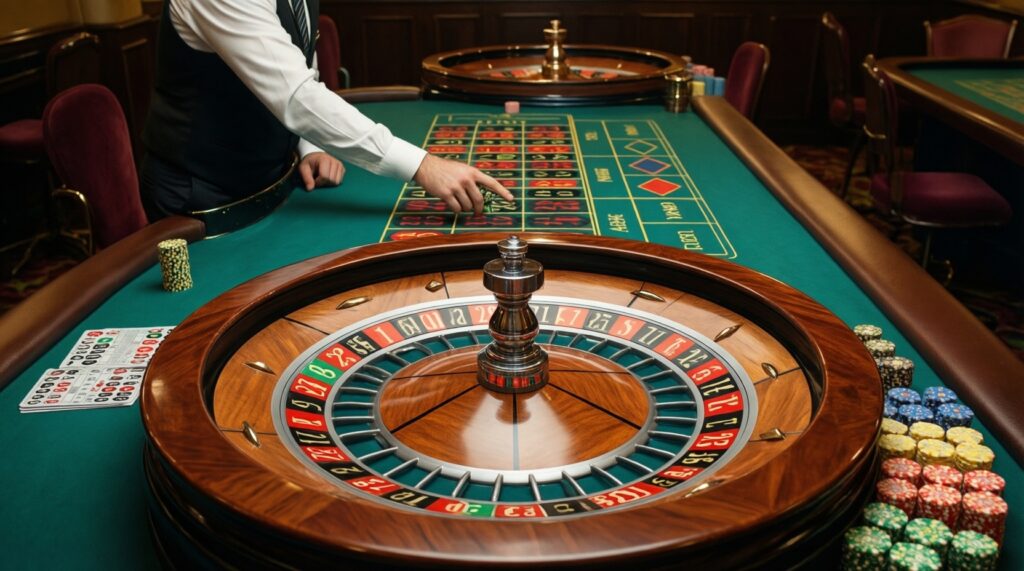
- If your priority is lowest cost per spin, choose: single-zero European; add La Partage/En Prison if you mostly bet even-money.
- If your priority is specific limits or availability, compare: an American table with favorable limits/pacing versus a European table with worse limits/pacing-then decide by expected loss per hour, not by the label.
- If you want predictable budgeting, choose: the table where you can keep stakes steady and the rule set is clearly stated.
- If you can't verify the rules, skip the table and find one that explicitly states wheel type and even-money handling.
- If you play online, select the exact game entry that confirms single-zero; many players searching "online European roulette real money" should verify the wheel graphic and rules tab before depositing.
For long-term odds, European single-zero is typically best for players optimizing expected loss, while American double-zero can be acceptable when it offers materially better limits, pace, or conditions you value enough to pay for. The "right" choice is the table where your main bet mix faces the smallest verified edge at a speed and stake you can sustain.
Practical questions players commonly raise about odds and outcomes
Is European roulette always better than American roulette?
For standard rules, the single-zero wheel usually has a lower edge than double-zero. A specific American table could still be "better for you" if its limits, pace, or rule tweaks reduce your expected loss per hour.
What exactly is the European roulette house edge on even-money bets?
On a standard single-zero wheel, the even-money EV is −1/37 per unit bet, so the house edge is 1/37. If La Partage or En Prison is active, the even-money edge is lower than standard.
What exactly is the American roulette house edge on even-money bets?
On a standard double-zero wheel, the even-money EV is −1/19 per unit bet, so the house edge is 1/19. The extra 00 pocket is what increases the edge versus European.
How should I interpret "European roulette vs American roulette house edge" in real money terms?
Multiply your average stake by spins per hour and the house edge to estimate expected loss per hour. It won't predict a session, but it helps compare tables and set a budget.
Does betting only on red/black reduce the house edge?
No-bet choice affects variance and hit rate, but standard roulette payouts keep EV negative. Even-money bets become meaningfully better only when the table uses La Partage or En Prison.
What is the best roulette version for odds European vs American if I play mostly online?
Pick single-zero European first, then prefer La Partage/En Prison when you mainly place even-money bets. Before playing online European roulette real money, confirm the wheel is single-zero and read the rule text for zero handling.