
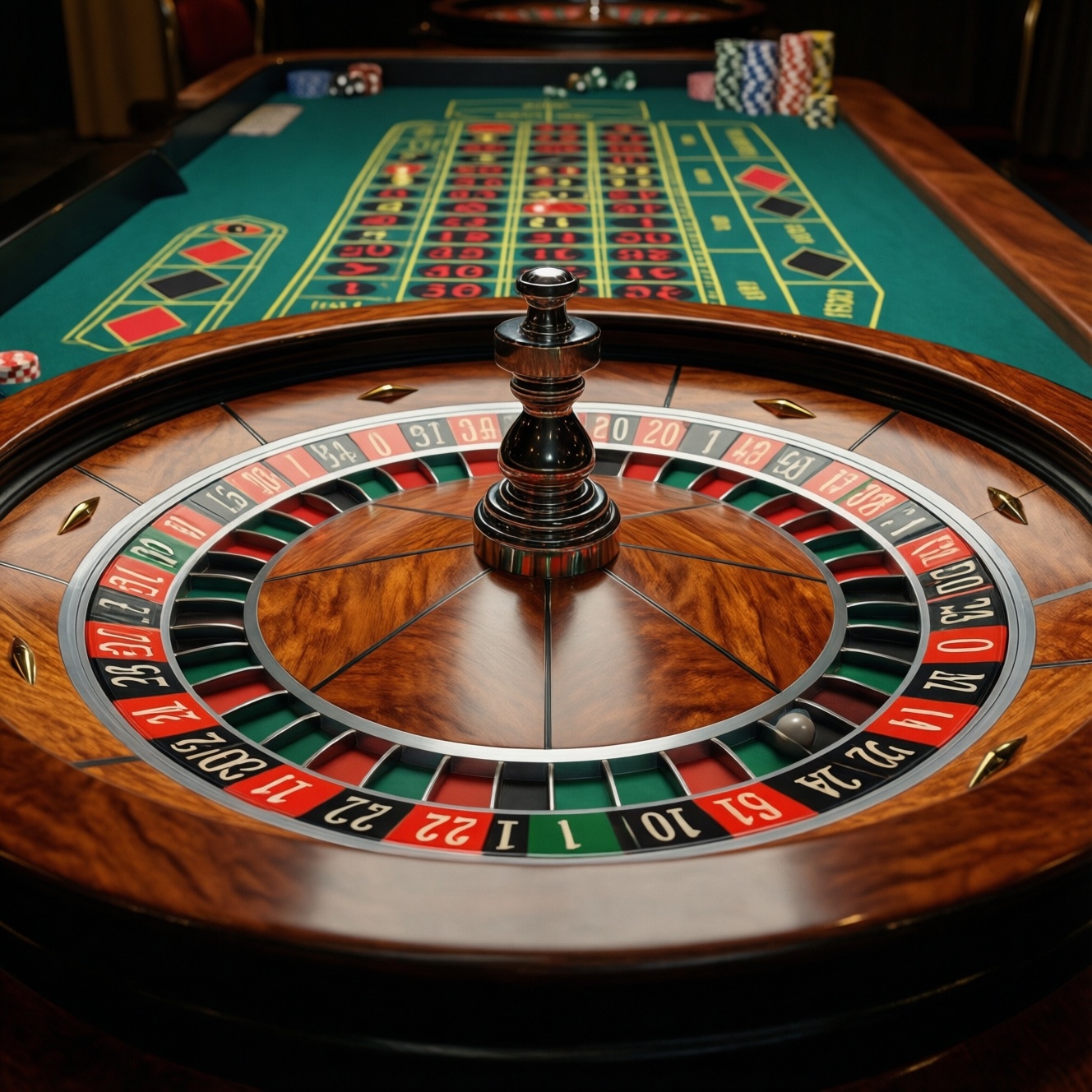
If you're choosing between European vs American roulette for any betting system, pick the wheel with fewer zero pockets: single-zero European (or French with special even‑money rules) will mathematically leak less from your bankroll over time. American double‑zero adds an extra loss state that makes streak-based systems fail sooner and forces tighter session control.
Core Differences in House Edge That Shape Any System
- Single-zero wheels reduce the built-in disadvantage compared with double-zero wheels, so the same strategy "bleeds" slower.
- Even-money bets are where rule differences matter most; special rules can partially offset losses on zero outcomes.
- Short sessions can look similar on either wheel, but long-run drift is harsher when the edge is higher.
- Progressions (Martingale-style) are mainly punished by table limits and rare but inevitable losing streaks; higher edge accelerates the crash.
- Volatility features (multipliers/side bets/multi-wheel) can dominate outcomes, making "system performance" look better or worse than the base wheel warrants.
- Game selection (rules + limits + speed) usually matters more than micro-optimizing a staking pattern.
Wheel Design and Odds: Single Zero vs Double Zero Explained
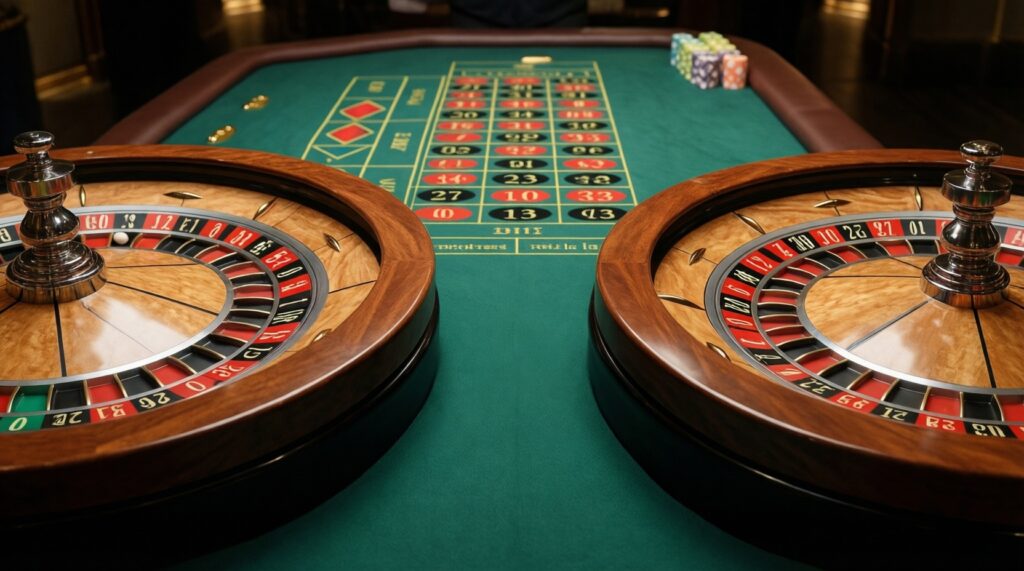
The wheel layout is the core driver of why the European roulette house edge is lower than on the American layout. Use these criteria to choose a table that fits your goals.
- Zero pockets: single-zero (0) vs double-zero (0 and 00). More zeros mean more outcomes that break many "cover most numbers" approaches.
- Even-money rule on zero: check whether the table uses La Partage or En Prison, which can soften zero losses on red/black, odd/even, high/low.
- Bet types you actually use: if you mostly play even-money, rule differences matter more than if you mostly play straight-ups.
- Table limits (min/max): these are the real "stop signs" for progression systems; ensure your bankroll can survive worst-case steps within the max.
- Game speed: faster spins (especially RNG) compress variance and bankroll swings into less time, increasing the chance you hit your stop-loss quickly.
- Rule transparency: prefer tables that clearly publish wheel type, zero rules, and payout structure; ambiguity is a red flag.
- Dealer/live vs RNG: live tables add practical pacing and sometimes bet timing constraints; RNG often enables rapid-fire staking mistakes.
- Optional features: multipliers, side bets, or multi-wheel formats can change your risk profile even if the base roulette looks "European."
Quantifying the Edge: EV, Variance and Long‑Run Loss Rates
Expected value (EV) on roulette is negative for players; the wheel type determines how negative it is. Variance is driven by what you bet (even-money vs straight-up) and by speed and limits, not just by the wheel. The American roulette house edge is higher because the extra zero adds another house-favored outcome.
| Variant | Who it suits | Pros | Cons | When to choose |
|---|---|---|---|---|
| European roulette (single-zero, standard rules) | Most intermediate players aiming to reduce long-run drift | Lower house disadvantage; cleaner math for evaluating a system | Still negative EV; progressions still fail under limits | When you want the baseline "best available" wheel in regular casinos and many platforms |
| American roulette (double-zero) | Players optimizing for availability rather than edge | Widely offered; familiar layout in some venues | Higher built-in disadvantage; bankroll erosion and system breakdown happen sooner | When it's the only table available, and you compensate with shorter sessions and stricter stop rules |
| French roulette (single-zero with La Partage/En Prison on even-money) | Conservative even-money players (red/black-focused) | Even-money zero outcomes are partially softened; smoother bankroll path for simple flat betting | Rules vary by table; not always available | When you primarily play even-money and can confirm the exact zero rule |
| Online European roulette (single-zero live dealer) | Thailand-based players who prefer pacing and visibility | Usually slower than RNG; easier to enforce disciplined bet sizing; often single-zero | Can have higher minimums; occasional bet timing pressure | When you want "online European roulette" with a controlled tempo and clear wheel type |
| Online European roulette (single-zero RNG) | Analytical players who can follow rigid session rules | Fast; easy staking; clear record-keeping if the platform provides history | Speed magnifies mistakes; rapid loss cycles for progression systems | When you will cap spins/time, not just money, and you can avoid impulse re-buys |
| European-style "feature" roulette (multipliers/side features) | Risk-seeking players who accept higher volatility | More entertainment variance; big-hit potential | Effective cost can be worse than standard roulette; system results become hard to interpret | When your goal is excitement, not optimizing the base edge; verify rules before assuming it's "European" in value |
Practical EV framing (no heavy math): if two wheels pay the same payouts but one has more zero pockets, the extra zero acts like an extra "tax" on every bet type. That tax shows up as more frequent sessions where your system cannot recover before limits or stop-loss rules end the attempt.
How a Small Edge Distorts Betting Systems Over Time
Betting systems don't change the underlying EV; they mainly change the path you take to reach wins and losses. Use these scenario rules to decide how (and whether) to adapt a system to wheel type.
- If you insist on a progression system (e.g., Martingale variants), then prefer single-zero and set a hard progression cap (steps) before you ever start; double-zero makes the "cap hit" arrive sooner.
- If your system depends on frequent small wins (grind style), then avoid American wheels; the higher edge increases the rate at which small-win sessions flip into wipeouts.
- If you play mostly even-money bets, then prioritize French/La Partage-style rules where available; it reduces the damage of zero outcomes relative to standard rules.
- If you mostly play straight-ups or high-payout bets, then wheel choice still matters, but bankroll volatility will dominate; choose the wheel with the lowest disadvantage and lower game speed so you don't over-cycle your bankroll.
- If you want the best roulette system for European roulette, then start with flat betting + strict session stops; only add mild staking tweaks (not aggressive progressions) after you prove you can follow the discipline.
Empirical Comparison: Table of Simulated Outcomes by Wheel and Strategy
- Confirm the wheel: identify single-zero vs double-zero before you think about any system.
- Confirm the zero rule: for even-money play, check whether the table uses La Partage/En Prison or standard loss-on-zero.
- Choose your bet family: even-money (lower variance) vs dozens/columns vs straight-ups (higher variance). Don't mix families mid-session to "chase."
- Set session constraints in advance: a stop-loss, a stop-win, and a maximum number of spins (speed matters online).
- Pick staking: flat stake by default; if you use a progression, cap steps and verify the max bet won't be exceeded before you start.
- Run a sanity check with a short trial: track results for a fixed number of spins; if you can't follow rules in a trial, you won't follow them under pressure.
- Re-evaluate only after a fixed sample: change one variable at a time (wheel/rules, bet type, staking), not all at once.
Behavioral and Bankroll Considerations for Different Player Types
- Risk-seeking persona: treating multipliers/feature roulette as "still European" and applying the same bankroll plan; volatility can invalidate your stop rules fast.
- Analytical persona: overfitting to short-term results and calling it proof a system "works," especially when switching between American and European layouts.
- Conservative persona: using an aggressive progression because it "wins often," while ignoring that rare streaks plus table limits define the long-run outcome.
- Failing to verify whether the table is European or American when playing online; UI themes can be misleading.
- Ignoring game speed (RNG vs live) and letting rapid spins multiply the number of negative-EV decisions per hour.
- Mixing bet sizes after losses ("just this once")-this is effectively an uncontrolled progression.
- Chasing break-even after hitting your stop-loss; this is where higher-edge games punish hardest.
- Confusing "lower house edge" with "safe"; lower is better, but roulette remains a losing game in expectation.
Practical Recommendations: Table Selection and System Adjustments
For most players in Thailand trying to choose the better option, single-zero European is the sensible default because it minimizes the built-in disadvantage versus American. For conservative even-money grinders, prefer French/La Partage-style rules when available. For analytical players, online European roulette works best when you also cap spins/time. For risk-seeking players, use feature tables only with a separate, smaller bankroll and simpler flat stakes.
Common Practical Concerns and Quick Clarifications
Is European roulette always better than American roulette?
In terms of built-in disadvantage, yes: the single-zero layout is more favorable than double-zero. "Better" still depends on limits, rules, and whether you can access the table type you want.
What exactly is the European roulette house edge?
It's the built-in mathematical disadvantage created by payouts that don't fully reflect the true odds on a single-zero wheel. You don't need the exact percentage to act on it: lower edge means slower expected loss for the same betting pattern.
What exactly is the American roulette house edge?
It's higher than on European roulette because the 00 adds an extra losing outcome while payouts stay the same. That extra zero makes many systems reach their failure point sooner.
Does any betting system overcome the house edge?
No-staking changes variance and the timing of wins/losses, not the underlying expectation. Systems can feel effective in short sessions but don't remove the long-run drift.
What's the best roulette system for European roulette if I want lower risk?
Flat betting on even-money bets with strict stop-loss/stop-win rules is the most controllable approach. If La Partage/En Prison is offered, it pairs naturally with even-money flat play.
Is online European roulette different from playing in a casino?

The core math is the same if the wheel and rules match. Practical differences are speed, limits, and your ability to stay disciplined without social friction.