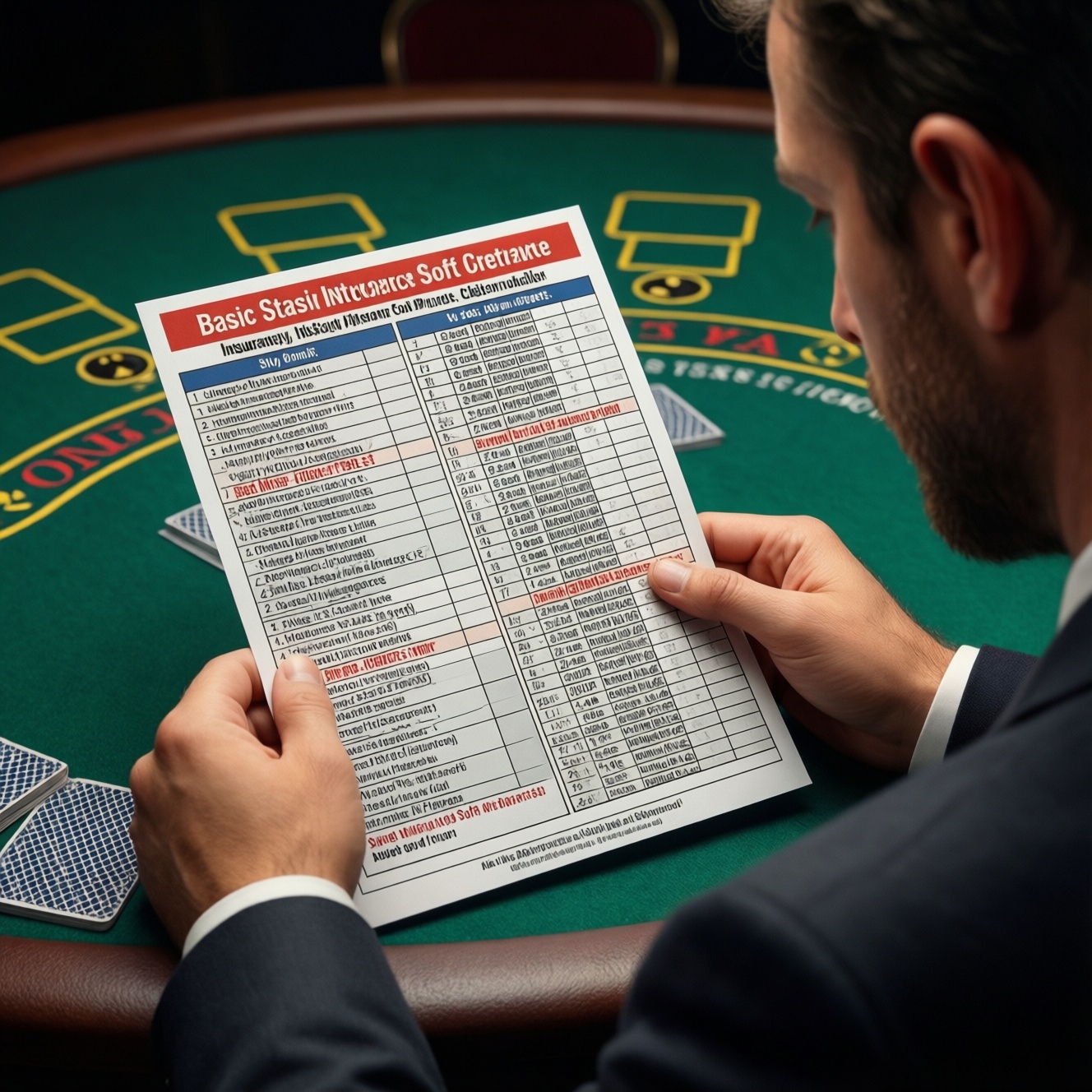
The fastest way to stop leaking money in blackjack is to remove three habits: taking the blackjack insurance bet, misplaying soft totals, and doubling in the wrong spots. Use a blackjack basic strategy chart matched to the table rules, then apply a simple decision routine for soft hands and for when to double down in blackjack. This online blackjack strategy guide focuses on those high-cost fixes.
High‑Cost Errors to Fix First
- Stop buying insurance by default; treat it as a specialized, rare play, not a safety belt.
- Play soft hands by dealer upcard, not by fear of busting (soft totals are flexible, use them).
- Double with a plan: correct hand + correct dealer upcard + correct table rules.
- Don't "make up" doubles after a losing streak; doubling is not a recovery tool.
- Lock your decisions to one strategy set per table; switching mid-session creates systematic mistakes.
Why Taking Insurance Is Almost Always a Trap
The blackjack insurance bet is usually a long-run loser for non-counters because it pays based on whether the dealer has blackjack, not on how strong your hand is. It can feel like risk control, but it often converts a manageable hand into an extra side wager with poor expectations.
- Who it tempts most: intermediate players who hate losing to dealer blackjack after a strong start.
- When you should usually skip it: any time you are not tracking the deck composition (no count/estimating tens).
- Also avoid "Even Money" as autopilot: it is functionally the same decision as taking insurance when you have blackjack.
Misplaying Soft Hands: When to Hit, Stand or Double
To apply correct decisions for how to play soft hands in blackjack, you need three things before the first hand is dealt:
- A rule-matched reference: a blackjack basic strategy chart that matches the table (dealer hits/stands soft 17, double rules, surrender availability).
- One-page soft-hand map: write down your most-missed soft totals (A,2 through A,7) versus dealer 2-A.
- A strict definition for yourself: "soft" means you can count the Ace as 1 without busting; use that flexibility to be aggressive (hit/double) when the chart says so.
| Situation | Costly reflex (avoid) | Better default (use) | Why it matters |
|---|---|---|---|
| Dealer shows Ace (insurance offered) | Take insurance automatically | Decline insurance unless you have a verified reason (e.g., skilled composition tracking) | Prevents repeated side-bet leakage over many shoes |
| Soft hand (e.g., A+x) vs dealer medium upcard | Stand "because I can't bust" | Follow the chart; many soft totals prefer hit or double to maximize value | Soft hands are designed for controlled aggression |
| Borderline double spot | Double to "pressure the dealer" or chase losses | Double only in chart-approved spots and only when doubling is allowed under current rules | Wrong doubles magnify variance and expected loss at once |
Doubling Mistakes That Drain Your Edge
-
Confirm the table's double rules before you sit.
In Thailand-facing online lobbies, rules vary by provider: some allow double on any two cards, others restrict to 9-11 or forbid doubling after a split.- Check: double on any two cards vs only 9-11
- Check: double after split (DAS) allowed or not
-
Anchor your doubling to a single chart for that exact ruleset.
Don't mix memory from another casino or app. Keep one blackjack basic strategy chart open (or memorized) that matches the current game. -
Use a three-question gate for every double decision.
Ask in this order: (1) Is doubling allowed here? (2) Does my total qualify per the chart? (3) Is the dealer upcard in-range for doubling?- If any answer is "no", do not double-take the chart's hit/stand alternative.
-
Separate "correct double" from "good feeling".
When to double down in blackjack is not about confidence; it's about leveraging a mathematical advantage against specific upcards. If you're doubling because you're annoyed, stop and revert to the chart. -
Lock bet sizing before the hand starts.
Doubling changes your risk exposure instantly. Decide your base unit and maximum exposure per hand first, then only double when it stays inside that limit.
Fast-track mode: 20-second doubling algorithm
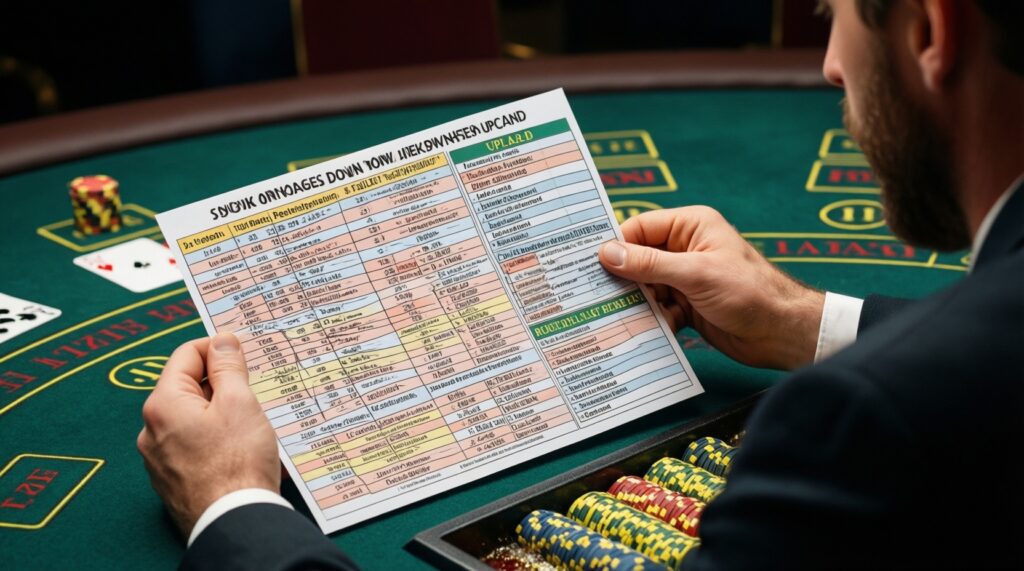
- Check if the table allows the double you want (any two / 9-11 / after split).
- Identify your total and whether it's soft or hard.
- Compare vs dealer upcard using the one correct chart for this table.
- If chart says double but doubling is restricted, take the chart's listed fallback (usually hit/stand).
Splitting and Surrender: Timing and Common Pitfalls
- I can state the rule set I'm playing (H17/S17, DAS, surrender yes/no) before I split or surrender.
- I never split or surrender "because last time it worked"; I do it only when my chart says so.
- I do not split just to "avoid a hard total" if the chart prefers standing or hitting.
- If surrender exists, I use it early (before taking cards) and only in chart-approved spots.
- I know whether re-splitting is allowed; if not, I adjust expectations and avoid emotional re-split chasing.
- After splitting, I re-evaluate each new hand independently (no autopilot doubling or standing).
- I do not add insurance on top of a split hand just because the pot is bigger.
Bankroll and Tilt: Behavioral Errors That Compound Losses

- Chasing via doubles: using doubling as a recovery tool instead of a chart decision.
- Rule blindness: forgetting that a different table means a different optimal line; your chart must match the rules.
- Session drift: starting disciplined, then "freestyling" soft hands after a few unlucky dealers.
- Overexposure per hand: splitting and then doubling both hands without a predefined max risk limit.
- Revenge insurance: taking insurance after getting hit by dealer blackjack earlier in the shoe.
- Speed tilt online: playing too fast; decisions degrade when you click on impulse (especially on mobile).
- Selective memory: remembering the one time insurance "saved" you and ignoring the many quiet losses.
- Chart swapping: using one chart for hard totals and a different source for soft totals; pick one consistent strategy set.
Table Conditions and Dealer Rules That Change Correct Play
Adjust your decisions when the environment changes, not when your emotions change. Practical alternatives:
- Switch to a table with clearer rules display. If you cannot easily confirm double restrictions, surrender availability, or H17/S17, you will misapply your strategy.
- Use a dedicated single-ruleset game in online lobbies. Many "quick" tables vary rules by provider; choose one stable ruleset and keep the matching chart on hand (good for an online blackjack strategy guide workflow).
- Prefer tables that allow doubling flexibility (when available). Your chart assumes certain options; if the game removes them, your best plays shift to fallback actions.
- Slow the pace or change device. If misclick risk is high on mobile, switch to desktop or a slower table to protect decision quality.
Quick Answers to Tactical Doubts
Is the blackjack insurance bet ever worth taking?
Only if you have a verified, skill-based reason to believe the dealer has blackjack more often than normal (e.g., accurate composition tracking). Otherwise, treat it as a long-run leak and decline.
Is "Even Money" the same choice as insurance?
Yes in practical terms: it's the insurance decision presented differently when you have blackjack. Decide using the same logic as the blackjack insurance bet.
What's the fastest rule for how to play soft hands in blackjack?
First label the hand soft (Ace can drop to 1), then follow your chart for that upcard. Don't stand just because you cannot bust on one hit.
When to double down in blackjack if the table restricts doubles?

If your chart says double but the rule forbids it, take the chart's fallback action for that ruleset (often hit or stand). Don't "force" a double by changing your plan mid-hand.
Can I rely on a generic blackjack basic strategy chart?
Only if it matches the exact rules you're playing. If H17/S17, DAS, or surrender differs, your correct actions can change.
What's the quickest way to reduce mistakes in online blackjack?
Use one consistent ruleset table, keep the matching chart available, and slow down decisions by one beat before every hit/double/split. This prevents impulse doubles and soft-hand autopilot errors.