

Use basic strategy triggers to decide quickly: Double Down mainly on strong totals (especially 9-11) when the dealer shows weakness, Split only the pairs that improve your expectation (always A,A and 8,8), Stand on made totals that are already likely to win, and Hit when you still need equity. Adjust for rules like dealer hits/stands on soft 17 (H17/S17).
Quick Decision Rules for Double Down, Split, Stand, and Hit
- Double Down when one card will likely push you to a strong finish (commonly 9-11 vs dealer 3-6; also some soft hands).
- Split A,A and 8,8 almost always; avoid splitting 10,10 and usually 5,5.
- Stand on hard 17+; also stand on 12-16 when the dealer shows 2-6 (dealer bust range is your friend).
- Hit hard 11 or less; hit most 12-16 versus dealer 7-A.
- Soft hands (A counted as 11): be more aggressive (hit or double) because you cannot bust on one hit.
- Rule check: decisions shift when the table uses H17 vs S17, Double-after-split (DAS), and surrender options.
When to Double Down: Probabilities and Clear Triggers
Double Down is for intermediate players who can keep discipline: you risk 2 units to maximize value when your hand is ahead and benefits most from exactly one more card. Avoid doubling when the dealer upcard is strong (often 7-A) or when your total is too fragile without clear edge.
Reliable Double Down triggers (fast, practical)
- Hard 11: Double against most dealer upcards (commonly 2-10). Versus Ace, many tables still double if rules are favorable; if not confident, prefer Hit.
- Hard 10: Double versus dealer 2-9; typically Hit versus 10 or Ace.
- Hard 9: Double versus dealer 3-6; otherwise Hit.
- Soft doubles (soft 13-18): Consider doubling when the dealer is weak (commonly 4-6, sometimes 3-6 depending on the exact soft total and rules).
When you should NOT Double Down (quick exclusions)
- When doubling is not allowed on your total (some tables restrict to 9-11 only).
- When bankroll or table limits make variance uncomfortable (doubling under pressure leads to mistakes).
- When the dealer shows 9-A and your hand is not in a standard double spot (e.g., hard 9 vs 9, hard 10 vs 10).
High-frequency double-down examples (exact actions)
- You: 10 (6+4), Dealer: 6 → Double Down. One strong card often puts you in a winning finish while dealer is likely to break.
- You: 9 (5+4), Dealer: 2 → Hit (many players over-double here).
- You: A+7 (soft 18), Dealer: 6 → Double Down if allowed; otherwise Stand.
Thai search intent note: this is the practical core of กลยุทธ์แบล็คแจ็ค Double Down Split Stand Hit-use these triggers first, then refine by table rules.
Splitting Pairs: Optimal Lines by Pair and Dealer Upcard
To split correctly, you need: (1) the table rule card (DAS? resplit limits? surrender?), (2) awareness of dealer H17/S17, and (3) enough bankroll to handle additional hands. This is the part most people look for when asking สูตรแบล็คแจ็ค Double Down เมื่อไหร่ Split เมื่อไหร่.
Pairs you almost always split
- A,A: Split. You're converting one mediocre hand into two high-upside hands.
- 8,8: Split. Hard 16 is a losing trap; splitting gives two chances to build.
Pairs you usually avoid splitting
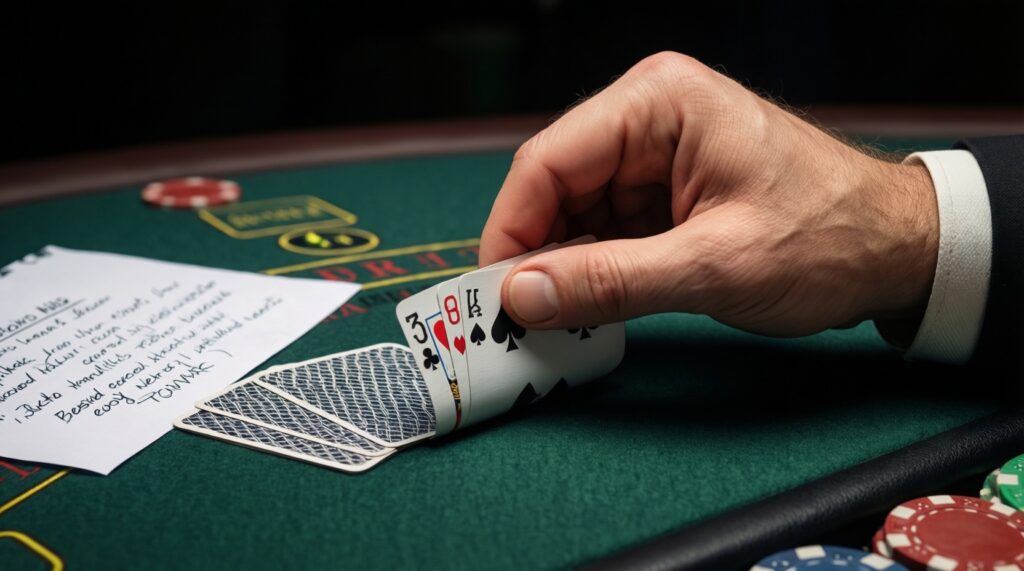
- 10,10: Stand. You already have a premium total (20).
- 5,5: Treat as hard 10 → usually Double Down vs 2-9, otherwise Hit.
- 4,4: Often Hit; split only in specific rule sets and dealer weaknesses (commonly vs 5-6 if DAS is allowed).
Everyday split scenarios at the table (exact actions)
- You: 8,8, Dealer: 10 → Split (still better than playing hard 16 straight).
- You: A,A, Dealer: 9 → Split.
- You: 9,9, Dealer: 7 → Stand (18 vs 7 is strong enough; splitting often overextends).
Concise strategy table (spot checks)

| Player hand | Dealer upcard | Action | Why this is the fast default |
|---|---|---|---|
| Hard 11 | 2-10 | Double Down | High chance to land a strong finishing total with one card. |
| Hard 10 | 2-9 | Double Down | Value spot versus dealer weakness. |
| Hard 9 | 3-6 | Double Down | Dealer bust-prone range plus your improving equity. |
| Hard 12-16 | 2-6 | Stand | Let the dealer take the bust risk. |
| Hard 12-16 | 7-A | Hit | You're behind; standing freezes a losing total. |
| Soft 18 (A+7) | 6 | Double Down (if allowed), else Stand | Strong upgrade chance without bust risk on one hit. |
| Pair A,A | Any | Split | Two strong starts beat one average hand. |
| Pair 8,8 | Any | Split | Escapes hard 16; increases playable outcomes. |
| Pair 10,10 | Any | Stand | Protect 20; splitting adds unnecessary variance. |
If you're searching for ตารางแบล็คแจ็ค Basic Strategy (Double Down/Split/Stand/Hit), treat the table above as a "spot-check" sheet, then apply the step-by-step process below for all other hands.
Stand vs Hit: Hard and Soft Hands Explained with Scenarios
-
Identify hard vs soft.
A hand is soft if it contains an Ace counted as 11 (e.g., A+6). Otherwise it's hard. Soft hands can take a hit with less risk because the Ace can fall back to 1.
-
Lock your "stand floor".
As a fast default: Stand on hard 17+. For hard 12-16, your decision depends on dealer upcard.
- Dealer 2-6: usually Stand (you want dealer to bust).
- Dealer 7-A: usually Hit (you need to improve).
-
Use the dealer upcard as the main switch.
Dealer 4-6 are "pressure cards" (dealer often must draw into bust risk). Dealer 9-A are "strength cards" (you often must take risk by hitting).
-
Apply soft-hand aggression rules.
With soft 13-17, you usually Hit (or Double in good spots) because improving is likely and immediate bust is impossible.
-
Stop after the decision, not after the emotion.
Once you choose Hit/Stand/Double/Split using your rule set, accept the result. Chasing outcomes is how intermediate players leak EV.
Quick mode (3-5 point algorithm)
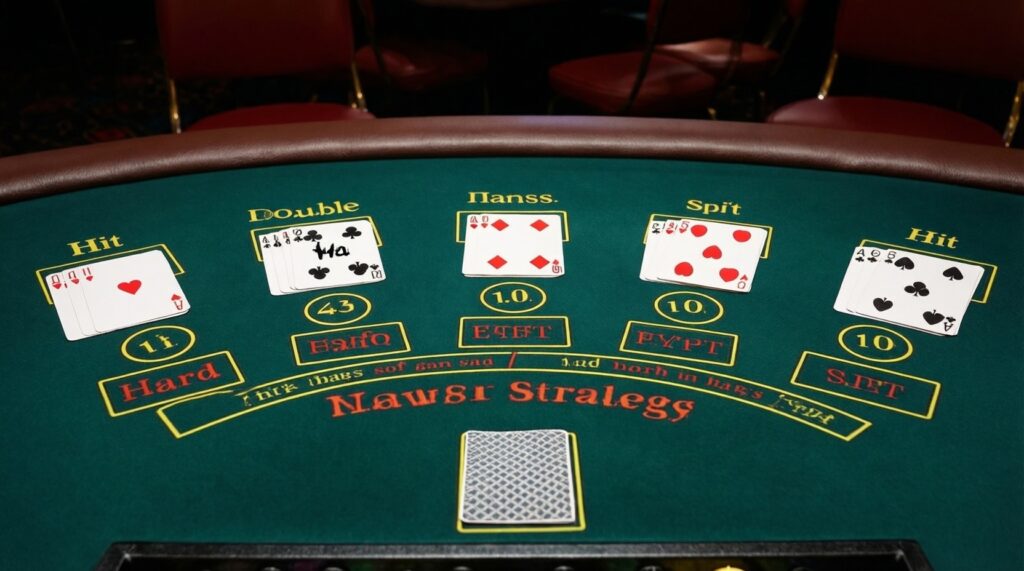
- Hard 17+ → Stand; hard 11− → Hit.
- Hard 12-16 → Stand vs dealer 2-6; Hit vs dealer 7-A.
- Hard 9-11 → Double in the common windows (9 vs 3-6, 10 vs 2-9, 11 vs 2-10).
- Always split A,A and 8,8; don't split 10,10; treat 5,5 as 10.
- Soft hands: be more aggressive-Hit/Double more often than you would with hard totals.
Stand-or-hit situations you will face often (exact actions)
- You: hard 16, Dealer: 6 → Stand (don't "fix" it; let dealer draw).
- You: hard 16, Dealer: 10 → Hit (standing usually locks in a losing position).
- You: A+6 (soft 17), Dealer: 2 → typically Hit; if rules are favorable, some tables allow a profitable Double in certain ranges.
This decision flow is the usable core of วิธีเล่นแบล็คแจ็คให้ชนะ เทคนิค Double Down และ Split: reduce choices to hard/soft + dealer strength, then only memorize a few double/split exceptions.
Common Exceptions: When Basic Rules Break Down
- Dealer hits soft 17 (H17): you generally become slightly more conservative with marginal doubles and some soft decisions compared with S17 tables.
- Double allowed only on 9-11: remove soft doubles and any off-window doubles; default to Hit instead.
- No Double After Split (no DAS): splitting becomes less attractive for some pairs (your split hands lose a key value option).
- Resplit limits (e.g., can't resplit Aces or only limited resplits): reduce aggressive split lines when the payoff is capped.
- Late/early surrender available: some hard 15/16 spots versus strong dealer upcards can shift to surrender (if the casino offers it).
- Blackjack payout variations: if payout is reduced, avoid over-committing with marginal doubles/splits; keep to the highest-confidence edges.
- Continuous shuffler / no penetration: card counting leverage is reduced; rely on pure basic decisions and bankroll control.
- Side bets present: they can distract timing and discipline-keep your main-hand strategy unchanged.
Bankroll and Rule Variations: Adjusting Decisions by Limits
- Doubling too wide: turning "maybe" doubles into habit (especially vs dealer 9-A) increases variance without clear edge.
- Splitting because it feels active: splitting 10,10 or weak pairs without rule support is a common leak.
- Ignoring table minimum/maximum impact: a correct split can create two bets you didn't plan for; pre-commit to a stop rule.
- Not confirming H17/S17: misreading the dealer soft-17 rule leads to repeated small mistakes that add up.
- Playing faster than your accuracy: speed causes misclassification of soft vs hard hands (especially with multiple Aces after splits).
- Tilting after a correct decision loses: judge decisions by correctness, not by the last outcome.
- Chasing losses with bigger doubles: doubling is a strategic tool, not a recovery plan.
- Online UI misclick risk: in เรียนแบล็คแจ็คออนไลน์ กลยุทธ์การเล่นและตารางเดินเกม contexts, confirm button placement and time limits before real stakes.
Example Playthroughs: Table Walkthroughs and Outcome Analysis
Use these as alternatives for "what to do next" in common live and online Thailand-facing tables. The point is the decision logic, not predicting a specific card.
Alternative A: Conservative line when rules restrict doubles
- Scenario: You have hard 10 vs dealer 9, but the table allows doubling only on 9-11 (ok) yet limits doubling after splits and has short timers online.
- Main line: Double Down (still within the classic window).
- Alternative when you're error-prone under timer: Hit once and reassess if you tend to misclick-better a small EV loss than repeated execution errors.
Alternative B: Variance-control line near your stop-loss
- Scenario: You're close to your session limit; you receive A+7 (soft 18) vs dealer 6.
- Main line: Double Down if allowed (high value spot).
- Alternative: Stand if doubling would break your bankroll plan for the session.
Alternative C: Split discipline under "fear of bust"
- Scenario: You get 8,8 vs dealer 10 and feel like splitting is "too risky".
- Main line: Split.
- Alternative: If re-splitting is not allowed and doubling after split is prohibited, keep the split but avoid forcing doubles later-play each resulting hand normally.
Common Player Doubts and Quick Clarifications
Should I always follow basic strategy even after a losing streak?
Yes. Strategy is about long-run expectation; streaks don't change the math of a single decision.
Is Double Down only for 10 and 11?
No. Hard 9 is a common double versus dealer 3-6, and several soft hands can be good doubles depending on rules.
Why is splitting 8,8 correct even against a dealer 10?
Because hard 16 is one of the worst totals to play as a single hand. Splitting creates two chances to build playable totals.
When should I stand on 12-16?
As a fast default, stand against dealer 2-6 and hit against 7-A, assuming no surrender option is used.
How does H17 (dealer hits soft 17) change my decisions?
It slightly strengthens the dealer, so marginal doubles and some soft-hand lines become less aggressive compared with S17.
Do online blackjack apps change the strategy?
The core decisions don't change, but execution does: time limits, UI layout, and rule variations make it essential to verify the table rules before relying on memorized charts.