

Blackjack basic strategy is the decision framework that tells you the best play (hit/stand/double/split) for each hand against each dealer upcard. If you learn it first, then any betting system you try later has a fair test; if you skip it, then your results are mostly noise from avoidable mistakes.
Core Principles to Memorize First
- If you cannot state your action for the common hands (hard 12-16, soft totals, pairs), then postpone any bankroll or betting system tweaks.
- If the dealer shows a strong upcard (often 7-A), then prioritize avoiding high-bust decisions and follow the chart, not your gut.
- If you have a soft hand (Ace counted as 11), then treat it as a "flexible" hand and use doubles more selectively per chart.
- If splitting increases your chance to build two strong hands, then split; if it mainly creates two weak hands, then don't.
- If your goal is long-run performance, then measure decision accuracy first; only after that, consider bet sizing.
Common Myths About Basic Strategy and Betting Systems
If you think basic strategy is a "secret trick," then you will misuse it; it's simply the mathematically preferred action for each decision given standard rules. It does not guarantee a winning session, but it reduces avoidable losses caused by systematic misplays.
If you believe a betting system can "override" bad decisions, then you will be disappointed: betting changes variance and risk, not the underlying value of a hand. If you regularly stand when you should hit (or vice versa), then no progression (Martingale-style or otherwise) fixes that leak.
If you assume one chart fits every table, then you'll get inconsistencies. House rules in Thailand-facing venues (and online tables used in TH) vary: number of decks, dealer hits/stands on soft 17, double options, and surrender rules change the correct play in some spots. If rules differ, then use the matching chart.
What Basic Strategy Is and How It Maps to Every Hand
Basic strategy is a complete mapping from your hand type to the best action versus the dealer upcard. If you can categorize your hand correctly, then the decision becomes mechanical.
- If your hand has an Ace that can be 11 without busting, then classify it as a soft total (e.g., A+6 = soft 17).
- If your hand has no usable Ace as 11, then classify it as a hard total (e.g., 10+6 = hard 16).
- If your first two cards are the same rank (or same value in some rule sets), then check the pair splitting rule before treating it as a hard total.
- If you can double and the chart says double, then double; if doubling is not allowed under that table's rules, then take the fallback action (usually hit/stand) specified for that ruleset.
- If surrender exists and the chart uses it, then surrender; if surrender is not offered, then follow the non-surrender alternative for that exact hand.
- If you are unsure mid-hand, then pause and re-identify: soft vs hard vs pair, and dealer upcard; guessing is where most EV is lost.
How Basic Strategy Lowers the House Edge: EV and Probability
Basic strategy improves expected value by avoiding decisions that systematically give the dealer extra advantage. If you treat every close spot as "50/50," then you miss that the dealer's upcard heavily shifts outcomes.
- Stiff hands (hard 12-16) versus strong dealer upcards: If the dealer shows 7-A, then basic strategy often prefers hitting some totals you "feel" like standing on, because standing loses too often when the dealer is likely to reach a strong total.
- Stiff hands versus weak dealer upcards: If the dealer shows 2-6, then basic strategy often prefers standing more, because the dealer has more ways to bust and you don't want to bust first.
- Soft totals and doubling: If you have a soft hand that cannot bust with one hit (Ace-flexibility), then doubling in the right windows increases payoff when you're favored to improve while the dealer is constrained by their upcard.
- Pair splitting for equity creation: If splitting converts a mediocre single hand into two hands with better average outcomes (e.g., creating more starts that can reach 18-21), then splitting raises EV; if it mostly creates two weak draws, then it doesn't.
- Rule-dependent edge preservation: If a table restricts doubling after splits, limits resplitting, or changes dealer soft-17 behavior, then the "best action" in a few marginal spots changes; using the wrong chart silently donates EV.
Practical Decision Table: Hit, Stand, Split, Double (compact reference)
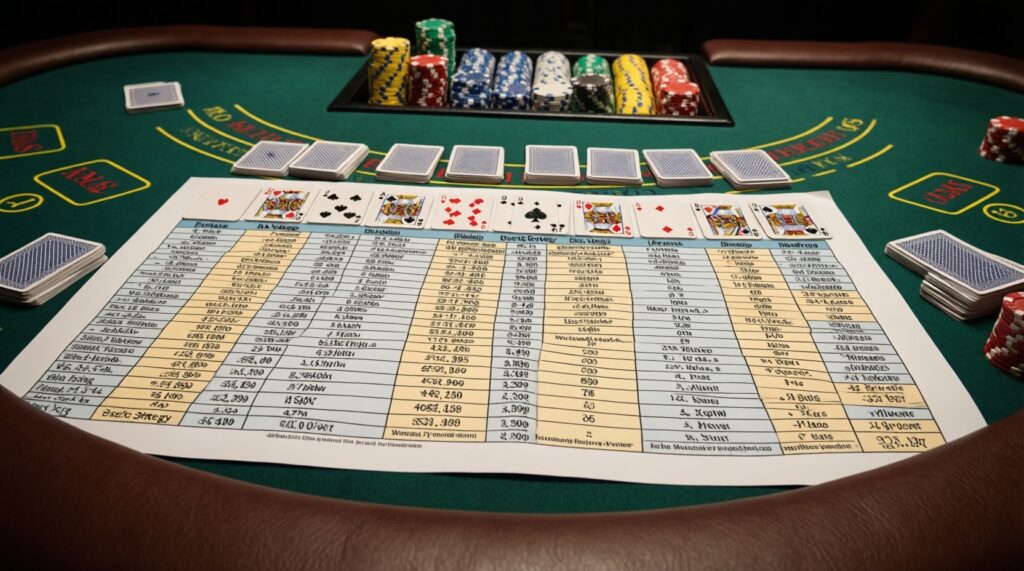
If you need a compact starting reference, then use the table below as a "triage chart" for common, high-impact decisions. It is intentionally compact: if a situation is not shown, then consult a full basic-strategy chart matched to the exact rules.
| Your hand (type) | Dealer upcard | If..., then... (recommended action) | Notes / limits |
|---|---|---|---|
| Hard 12 | 2-3 | If you have hard 12 vs 2-3, then Hit. | If rules differ, some charts vary on the margin; don't improvise. |
| Hard 12 | 4-6 | If you have hard 12 vs 4-6, then Stand. | Dealer "bust zone" upcards. |
| Hard 13-16 | 2-6 | If you have hard 13-16 vs 2-6, then Stand. | Exceptions exist by exact total in some rulesets; confirm with full chart. |
| Hard 13-16 | 7-A | If you have hard 13-16 vs 7-A, then Hit. | If surrender is offered, then some of these become surrender spots in full charts. |
| Hard 10 | 2-9 | If you have hard 10 vs 2-9 and doubling is allowed, then Double; otherwise Hit. | Do not double into 10/A in most rulesets. |
| Hard 11 | 2-10 | If you have hard 11 vs 2-10 and doubling is allowed, then Double; otherwise Hit. | Against Ace, some tables vary depending on rules; use your matched chart. |
| Soft 17 (A,6) | 3-6 | If you have soft 17 vs 3-6 and doubling is allowed, then Double; otherwise Hit. | Soft totals often double in "dealer weak" windows. |
| Soft 18 (A,7) | 2 / 7-8 | If you have soft 18 vs 2 or 7-8, then Stand. | This is a common misplay spot. |
| Soft 18 (A,7) | 3-6 | If you have soft 18 vs 3-6 and doubling is allowed, then Double; otherwise Stand. | Don't auto-stand; check upcard window. |
| Pair 8,8 | Any | If you have 8,8, then Split. | If resplitting limits apply, then still split initially in most rulesets. |
| Pair A,A | Any | If you have A,A, then Split. | If only one card is dealt to split aces (common), then accept it as rule constraint. |
| Pair 10,10 | Any | If you have 10,10, then Stand. | If you split tens "to be aggressive," then you usually trade a strong made hand for volatility. |
Where this compact table helps most
- If you repeatedly leak chips on hard 12-16 decisions, then memorize those rows first.
- If you are unsure about soft hands, then anchor on soft 17 and soft 18 rules before anything else.
- If you keep mis-splitting (especially 8,8 and 10,10), then drill the pair rules until automatic.
What this compact table does not cover
- If your table offers surrender, then you need a full chart that explicitly includes surrender choices.
- If the casino's rules differ (decks, double-after-split, dealer soft-17), then some close decisions shift; use the correct ruleset chart.
- If you want to optimize beyond basic strategy (e.g., counting), then treat that as a separate layer after decision accuracy is stable.
Why Betting Systems Fail Without Correct Play
- If your baseline play is wrong, then changing bet size mostly amplifies the cost of mistakes rather than fixing them.
- If your system relies on "recovering losses," then you're assuming future hands become more favorable; basic strategy does not make the next hand more likely to win.
- If you chase variance with aggressive progressions, then table limits and bankroll constraints will eventually stop the progression while the underlying disadvantage remains.
- If you judge a system by a short session, then you confuse variance with edge; first validate that your decisions match basic strategy over many hands.
- If you ignore rule constraints (no double, no DAS, limited resplits), then your system's assumptions break because the most profitable bet multipliers (doubles/splits) are part of correct play.
Drills and Metrics to Internalize Strategy and Track Improvement
If you want basic strategy to be usable under live-table pace, then practice like a recognition task, not like math. The goal is to eliminate "thinking time" and reduce unforced errors.
5-minute drill (recognition-first)
- If you sit down to practice, then start with one category only (hard totals, then soft totals, then pairs).
- If you draw a random scenario (your hand type + dealer upcard), then say the action out loud in an "if..., then..." sentence.
- If you hesitate, then mark it as a miss even if you eventually answer correctly; speed matters in real play.
- If you complete 30-50 scenarios, then review only the misses and build a personal "error set" for tomorrow.
Simple tracking metric (mini-case)
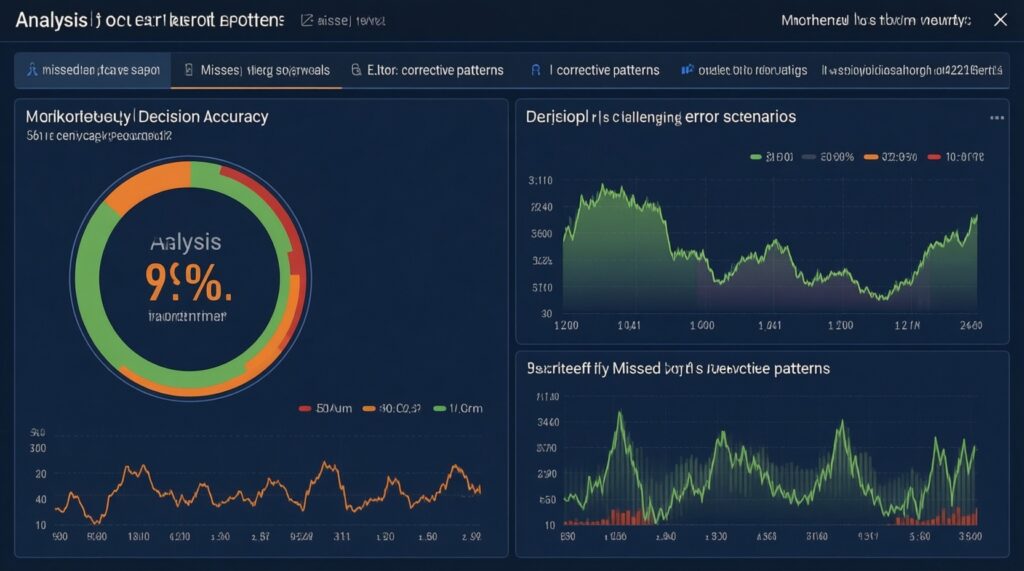
If you track only one number, then track Decision Accuracy % on your top error set (e.g., hard 12-16, soft 18, key pairs). For example: if you test 40 scenarios and miss 6, then your accuracy is 34/40 for that set; repeat until the miss count is consistently low.
if scenario in error_set:
  answer = choose_action(scenario)
  if answer != chart_action(scenario) or response_time > target_time:
    log_miss(scenario)
  else:
    log_hit(scenario)
Concise Answers to Practical Doubts
If basic strategy is "basic," why do intermediates still lose with it?
If you apply it inconsistently (especially on stiff hands and soft 18), then the edge you saved disappears. If your chart doesn't match the table rules, then you're effectively not using basic strategy.
If I'm up for the session, should I deviate to "lock profit"?
If you change decisions based on being up or down, then you replace EV-based play with emotion-based play. If you want to lock profit, then do it by stopping, not by misplaying hands.
If the table doesn't allow doubling after split, what should I do?

If a rule removes a profitable option, then your best action can change in a few spots. If you face this, then use a chart specifically built for "no DAS" rather than guessing.
If I don't know the full chart yet, what should I memorize first?
If you want the fastest improvement, then memorize hard 12-16 vs dealer upcards, soft 18, and the key pairs (A,A; 8,8; 10,10). If you nail these, then many costly errors disappear.
If I use a betting system, can I ignore splits and doubles?
If you ignore splits and doubles, then you give up major parts of correct blackjack play. If you still want a system, then first ensure your split/double decisions follow the chart for that ruleset.
If online blackjack in Thailand has different rules, does basic strategy still matter?
If the core mechanics are the same, then basic strategy still matters, but the exact chart can differ. If you play online, then confirm rules (decks, soft-17, double options, surrender) and use the matching version.