

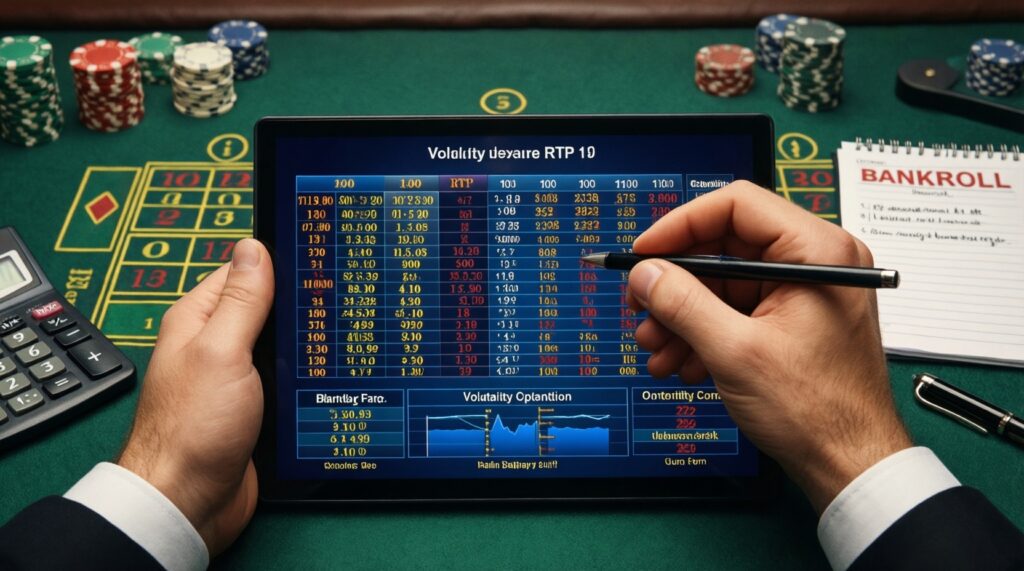
Rational slot play means selecting games and stakes based on measurable parameters (RTP, volatility, bankroll limits) rather than vibes. Use RTP to compare long-run return, volatility to control drawdowns and bonus frequency, then map both to your session goal. You won't control outcomes, but you can control risk, pacing, and game fit.
Core strategic principles for rational slot play
- Use RTP to compare similar games, not to predict your next session.
- Choose volatility to match your objective: steadier balance vs bigger swings and bonus chasing.
- Build a bankroll plan first; only then pick stake size and session length.
- Prefer transparent mechanics: clear paylines/ways, feature rules, and a readable paytable.
- Track a few session metrics consistently; stop decisions should be pre-committed.
Interpreting RTP: what the percentage really tells you
- What RTP is: an average long-run return rate under the game's intended rules (often including bonus modes). It is useful for comparing games in the same genre and similar volatility.
- What RTP is not: a promise for a single day, a single bonus, or a short session; short-term variance can dominate.
- When "high RTP" helps: when you are filtering options (e.g., looking for เกมสล็อต RTP สูง 96 ขึ้นไป) and want the best expected value among comparable titles.
- When not to over-focus on RTP: if your priority is entertainment pacing, bonus frequency, or limiting drawdown; volatility and features can matter more than a small RTP difference.
Volatility explained: matching risk profile to session goals
To use volatility well, you need a simple goal statement, a bankroll number you can lose, and access to the game info screen (paytable/rules). This is how you translate labels like สล็อตแตกง่าย ความผันผวนต่ำ or สล็อตความผันผวนสูง โบนัสแตกบ่อย into an actual session plan.
- Tools you need: (1) notes app or spreadsheet, (2) timer, (3) a way to check stake range and feature costs, (4) optional: demo mode for 5-10 minutes to confirm pacing.
- Access you need: the in-game info panel for RTP statement (if shown), volatility label (if provided), bonus rules, and bet sizing controls.
- Requirements: a hard stop-loss and stop-win, plus a maximum session time.
- Practical mapping: low volatility suits longer, steadier sessions; high volatility suits shorter, capped "shots" where you accept deep swings.
| Objective | RTP filter | Volatility target | Stake range (relative) | Target session length |
|---|---|---|---|---|
| Stretch playtime, smoother balance | Prefer higher RTP among options (e.g., สล็อตออนไลน์ RTP สูง) | Low to medium (often described as สล็อตแตกง่าย ความผันผวนต่ำ) | Low (comfortably repeatable) | Longer, with strict time cap |
| Bonus hunting with capped risk | High RTP helps but is secondary to feature rules | Medium to high | Low to mid (avoid auto-escalation) | Medium, split into checkpoints |
| High-swing "shots" for big outcomes | Filter for acceptable RTP; don't assume outcomes | High (sometimes marketed as สล็อตความผันผวนสูง โบนัสแตกบ่อย) | Pre-set, never chase losses | Short, pre-defined number of spins or minutes |
| Learn a new game safely | Any (use as comparison later) | Any (prefer lower while learning) | Minimum stake / demo | Short, focused on understanding rules |
Bankroll architecture: sizing bets and session limits
Prep checklist before you pick a stake
- Write your session objective in one line (example: "steady play for 45 minutes" or "20-minute bonus hunt").
- Set a fixed bankroll you can lose today (separate from other funds).
- Choose a volatility band (low/medium/high) that matches the objective.
- Decide your stop-loss, stop-win, and time limit before opening the game lobby.
- Confirm the game's stake range and whether bonus buys or feature spins exist.
-
Define a "session bankroll" and lock it
Pick one amount you are comfortable losing today. Do not top up mid-session; topping up destroys your risk control.
-
Set a stop-loss and stop-win (two numbers)
Stop-loss protects you from tilt; stop-win protects you from giving it back. Treat both as hard rules, not "guidelines".
- Stop-loss can be a percentage or a fixed amount of your session bankroll.
- Stop-win should be realistic for your volatility choice; the higher the volatility, the more you need to accept "no win" sessions.
-
Choose stake size from a risk budget, not from mood
Use a simple cap: stake should be small enough that you can handle a long downswing without breaking your stop-loss quickly.
- For higher volatility, use a smaller stake relative to bankroll to survive swings.
- If the game has bonus buys, only use them if they fit inside the same stop-loss (never "extra funds").
-
Pre-commit a session length and checkpoints
Set a timer and define review points (for example every 10-15 minutes). At each checkpoint you either continue unchanged or end the session-no stake ramping to "recover".
-
Run a short, numbers-based plan (worked example)
Example: bankroll = 2,000 THB; stop-loss = 600 THB; stop-win = 500 THB; time cap = 45 minutes. If your stake is 10 THB/spin, you can afford 60 net losing spins of 10 THB before hitting stop-loss (ignoring wins). If the game is high volatility, consider reducing to 5 THB/spin to slow drawdown and keep decision-making stable.
Game mechanics and bonus features that shift edge
- RTP statement location: verify it in the info screen (some games show multiple RTP profiles-pick the one you are actually playing).
- Volatility label: confirm whether it is low/medium/high, or infer from feature design (rare big bonuses usually implies higher volatility).
- Paytable clarity: understand the top symbol payouts and how wins are counted (lines vs ways vs clusters).
- Feature triggers: know what activates free spins/bonus rounds and whether there are retriggers.
- Bonus buy / feature buy: check cost, rules, and whether it changes your session risk (it usually increases swing intensity).
- Bet modifiers: confirm if you can enable "double chance", "extra bet", or similar options that alter hit rate and volatility.
- Max win / cap rules: note if the game has a hard cap that may affect your objective.
- Autoplay rules: if you use autoplay, set a strict spin limit and stop conditions; never leave it running unattended.
Practical selection matrix: choosing a machine by objective
Use วิธีเลือกเกมสล็อตให้เหมาะกับเป้าหมาย as a decision rule: objective first, then volatility, then RTP filter, then mechanics.
- Picking by theme or streamer hype and only later checking volatility and stake range.
- Assuming สล็อตออนไลน์ RTP สูง means "easy wins" in a short session.
- Chasing เกมสล็อต RTP สูง 96 ขึ้นไป while ignoring bet modifiers that quietly increase risk.
- Playing high volatility at a stake that makes your stop-loss reachable in just a few minutes.
- Using bonus buys as a "shortcut" without pricing them into the same stop-loss.
- Switching games mid-session to "reset luck" instead of reviewing your plan and ending the session.
- Raising stake after losses (loss-chasing), especially on สล็อตความผันผวนสูง โบนัสแตกบ่อย titles.
- Confusing frequent small wins with profitability; focus on whether the session fits your risk and time limits.
Session planning and tracking: metrics, tools, and rituals

These alternatives are useful depending on how much structure you want and how many games you rotate.
- Simple log (best for most players): write down game name, volatility, starting bankroll, stake, stop-loss/stop-win, and result. Use it when you want consistency without over-optimizing.
- Checkpoint method: evaluate only at timed intervals (e.g., every 10-15 minutes) to avoid emotional micro-decisions. Use it when you tilt easily or change stakes too often.
- Spin-budget method: pre-set a maximum number of spins and stop when it's reached. Use it when you play fast or prefer autoplay with strict limits.
- Category rotation: separate sessions by category (low-volatility "playtime" days vs high-volatility "shots" days). Use it when you keep mixing goals in one session.
Common player concerns and concise answers
Does higher RTP guarantee profit in a short session?

No. RTP is a long-run average; short sessions are dominated by volatility and random swings.
Is it smart to only play games labeled as low volatility?
Only if your goal is steadier pacing and lower drawdowns. Low volatility can still lose; it just tends to distribute outcomes more evenly.
How should I choose between low and high volatility for the same bankroll?
Decide based on your objective and tolerance for swings. If you pick high volatility, reduce stake and shorten the session to keep risk controlled.
Are bonus buys a good way to reach free spins faster?
They can reach features faster, but they usually increase session variance and can hit your stop-loss quickly. Treat a bonus buy as part of the same bankroll rules, not an add-on.
What's the fastest way to stop chasing losses?
Pre-commit a stop-loss and a time cap, and don't top up mid-session. Review only at checkpoints, not after every spin.
How do I evaluate whether a game fits my goal without overthinking?
Check three items: volatility label, stake range, and feature rules. Then apply your objective-based filter and play only if it fits your pre-set limits.