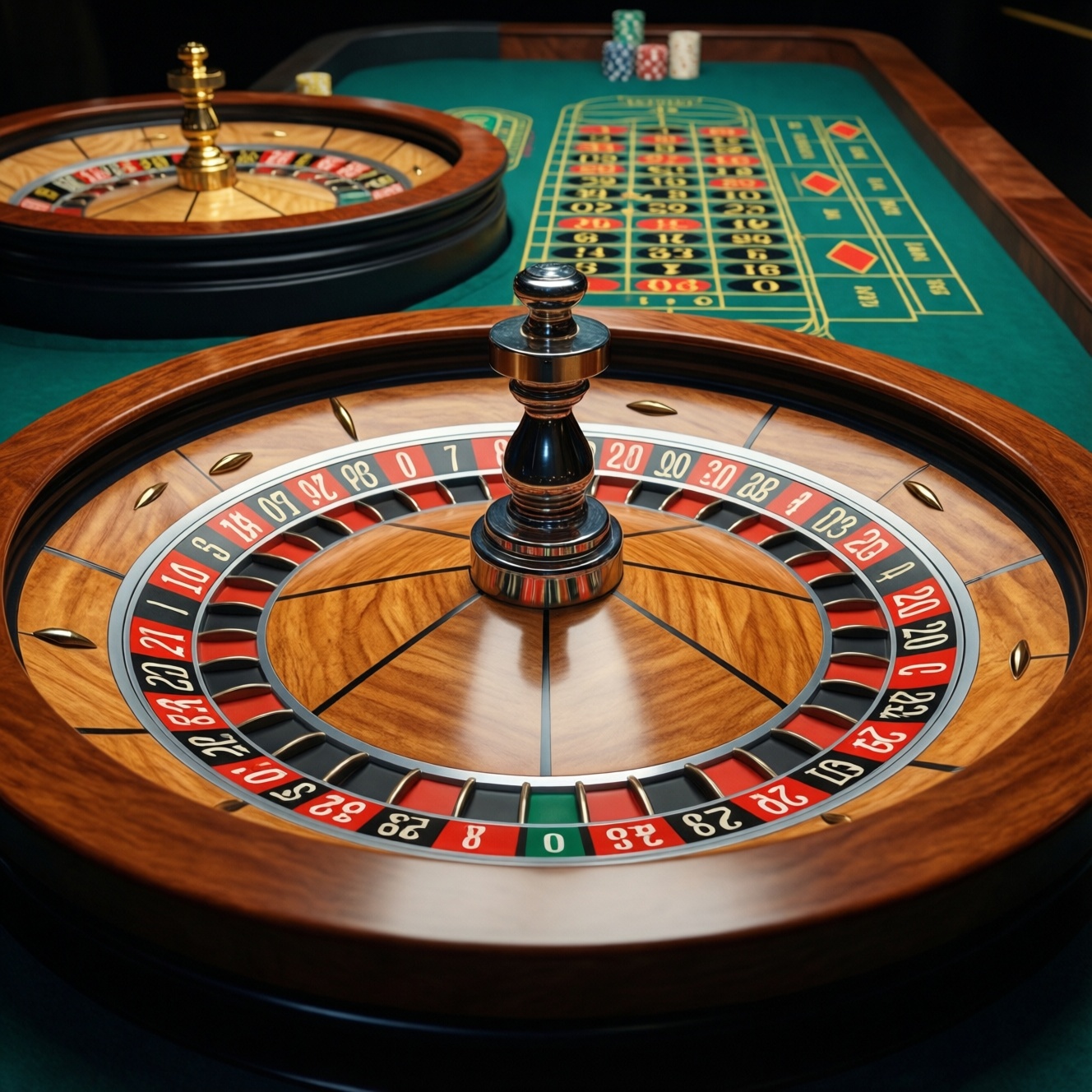
To pick the best roulette table, prioritize the rule set that minimizes the zero impact on your target bets. In practice, European (single-zero) usually beats American (double-zero), and European tables with La Partage or En Prison are strongest for even-money play. Your "best" choice depends on whether you value lower edge, lower variance, or higher payout volatility.
Essential strategic summary for table selection
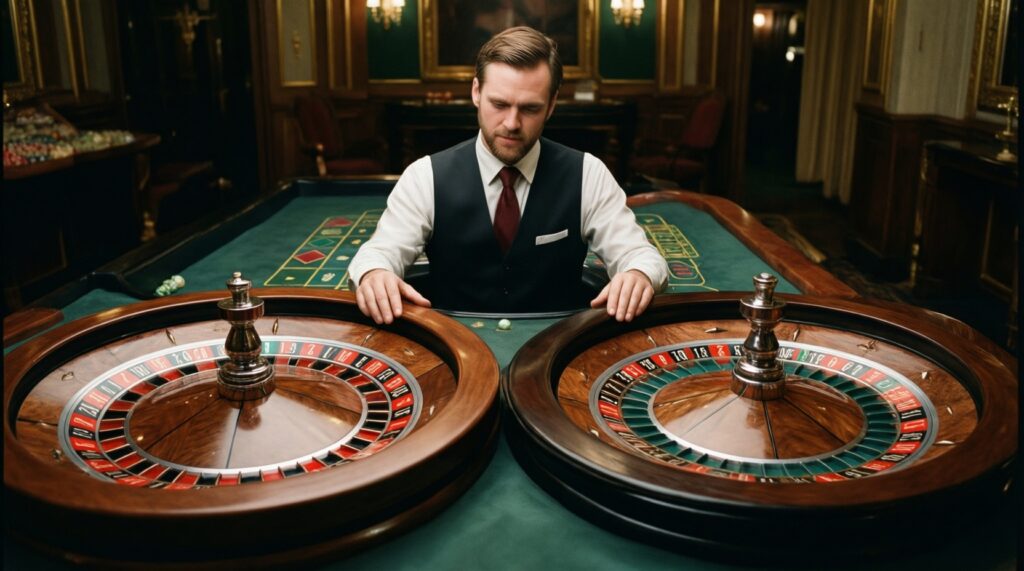
- If your main play is even-money (Red/Black, Odd/Even), favor European with La Partage or En Prison; it directly improves expected return on those bets.
- If you must choose between wheels only, single-zero European is typically preferable to double-zero American due to fewer losing zero outcomes.
- For inside-bet heavy styles (straights/splits/streets), La Partage/En Prison usually won't help; wheel type (single vs double zero) matters more.
- Conservative players should optimize for lower house edge and smoother sessions; analytical players should optimize for rule fit by bet type; aggressive players should optimize for volatility with strict stop rules.
- Use short EV contrasts: on a 1-unit even-money bet, European baseline EV ≈ -0.027; with La Partage/En Prison EV ≈ -0.0135; American EV ≈ -0.0526.
European vs American Roulettes: wheel layout, double zero impact and house edge
If you're searching "โต๊ะรูเล็ตยุโรป vs อเมริกา" or "รูเล็ตยุโรปกับอเมริกาต่างกันยังไง", the decision is mostly about how many zero pockets exist and how table rules treat them. Use these criteria to choose quickly:
- Number of zero pockets: European has 0; American has 0 and 00. More zeros means more ways for most bets to lose.
- House edge (wheel-only, no special rules): European ≈ 2.70% (1/37), American ≈ 5.26% (2/38).
- Whether La Partage or En Prison exists: These can reduce the effective edge on even-money bets (they do not usually improve inside-bet returns).
- Zero handling on even-money bets: Check if the casino uses full loss on 0/00, or the half-loss/"imprison" mechanics.
- Your bet mix: Outside-heavy (even-money, dozens/columns) benefits more from European + special rules than inside-heavy.
- Volatility tolerance: American and inside bets generally produce bigger swings; European with even-money play is typically smoother.
- Table limits vs bankroll: Minimums and maximums can matter more than small edge differences if they force overbetting.
- Game speed and distractions: Faster spin rates increase variance per hour; choose a pace that matches your discipline.
La Partage and En Prison explained: mechanics and how they change expected returns
Players often ask "กฎ La Partage รูเล็ต คืออะไร" and "กฎ En Prison รูเล็ต คืออะไร". Both mainly target even-money bets (Red/Black, Odd/Even, High/Low). In short: instead of losing the full stake when zero hits, you either lose only half (La Partage) or you "park" the bet for one more spin (En Prison).
| Variant | Who it fits | Pros | Cons | When to choose |
|---|---|---|---|---|
| European (single-zero), standard rules | Balanced players mixing outside and inside bets | Lower baseline edge than American; simple to evaluate | No extra relief on zero for even-money bets | When you can't find La Partage/En Prison but can choose wheel type |
| European + La Partage (even-money only) | Conservative, session-focused outside-bet players | On even-money bets, expected loss is roughly halved vs standard European (effective edge ≈ 1.35%) | Usually does not apply to dozens/columns or inside bets; availability varies by table | When your core plan is Red/Black (or similar) and you want smoother EV drag |
| European + En Prison (even-money only) | Analytical players who can follow the rule precisely | Similar EV improvement to La Partage on even-money; sometimes feels less "lossy" psychologically | Rules can differ by venue (e.g., what happens if zero repeats); can slow decision-making | When you want even-money optimization and you've confirmed the exact house procedure |
| American (double-zero), standard rules | Aggressive players seeking higher volatility and who accept higher cost | Often more tables available; familiar layout in some venues | Higher house edge; extra zero increases the frequency of "unavoidable" losses for most bets | When limits, availability, or promos matter more than long-run cost-and you cap session loss tightly |
| French/European table with "special zero rules" posted (verify scope) | Any intermediate player willing to read signage and ask the dealer | Can be excellent value if rules apply broadly and consistently | Ambiguity risk: rule may apply only to certain bets; edge can change if misread | When you can confirm in advance exactly which bets qualify and how disputes are resolved |
Quick EV contrast (1 unit stake): Even-money bet EV is approximately -0.027 on standard European, about -0.0135 with La Partage/En Prison, and about -0.0526 on American. This is the cleanest way to interpret "เล่นรูเล็ตโต๊ะแบบไหนได้เปรียบที่สุด" for outside-bet strategies: fewer zeros and zero-relief rules are the primary advantage drivers.
How common bets (outside vs inside) perform under different rule sets
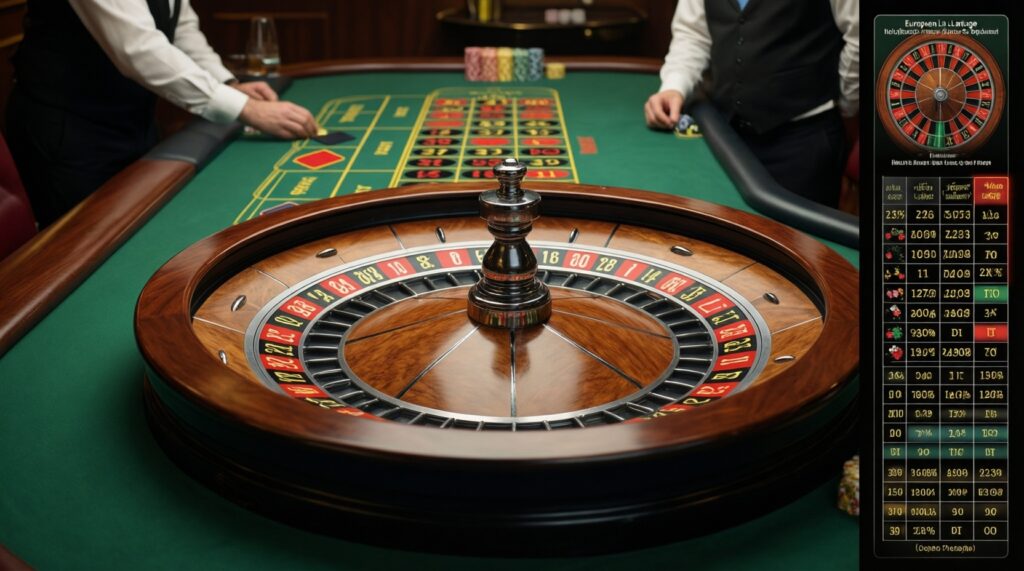
Use these practical "if..., then..." scenarios to map your style to a table:
- If you mostly bet Red/Black, Odd/Even, or High/Low, then prioritize European with La Partage or En Prison; these rules specifically improve those bets' expected returns.
- If you mainly play inside bets (straight up, split, street), then choose single-zero European over American first; La Partage/En Prison usually won't apply to your bet types.
- If you mix dozens/columns with occasional inside bets, then verify whether any special zero rule applies to dozens/columns (often it does not); otherwise treat the game as standard European vs American.
- If you are an aggressive, volatility-seeking player who "hunts big hits" via inside bets, then keep the wheel single-zero if possible and control variance with smaller unit sizing, not by moving to higher-edge tables.
- If you are analytical and tracking results, then separate evaluation by bet class: even-money sessions can justify hunting La Partage/En Prison, while inside-bet sessions should focus on single-zero availability and limits.
When to prioritize European tables: situational advantages and exceptions
- Confirm wheel type: single-zero (European) vs double-zero (American).
- If single-zero exists, check signage or ask the dealer whether La Partage or En Prison is offered and which bets qualify.
- Match to persona:
- Conservative: prefer European + La Partage/En Prison for even-money; keep units small and steady.
- Aggressive: still prefer single-zero, but express aggression via bet selection/volatility-not via paying a higher edge.
- Analytical: choose the table where rules align with your highest-volume bets; document the rule text to avoid "false assumptions."
- Check table minimums/maximums against your bankroll; avoid a table that forces you to bet too large.
- Verify zero procedure live (first zero outcome you see): observe how the dealer settles even-money bets.
- Exception handling: if only American tables are available, reduce session length or unit size to manage faster expected loss and bigger swings.
Adapting staking plans to rule variations and edge differentials
- Assuming La Partage/En Prison applies to all bets: in many rooms it's even-money only; if you're playing dozens/columns or inside bets, your EV may not improve.
- Using progression systems to "compensate" for a higher edge: progressions change variance and risk of ruin, not the underlying house advantage.
- Switching from European to American due to "hot/cold" narratives: wheel layout drives the long-run cost; pattern chasing doesn't reduce the edge.
- Overbetting because the table feels "better": a lower edge doesn't justify pushing unit size beyond bankroll tolerance; variance still dominates short sessions.
- Ignoring speed: faster tables create more decisions per hour, which can increase bankroll drawdowns even if the edge is lower.
- Failing to predefine stop rules: especially for aggressive personas, set a session stop-loss and stop-win to prevent tilt-driven overexposure.
- Not separating strategies by bet class: even-money optimization (La Partage/En Prison hunting) is a different game plan than inside-bet hunting.
- Misreading En Prison resolution: houses can vary on what happens after zero (e.g., whether a repeat zero is an immediate loss); confirm before relying on it.
Bankroll sizing and variance management by table type
For conservative play, European with La Partage/En Prison is typically the best fit when you focus on even-money bets and want steadier sessions. For aggressive play, single-zero European is generally the better base, with volatility coming from inside bets and strict stop rules rather than from a higher-edge American wheel. For analytical play, the best table is the one whose posted rules match your highest-volume bets and limits.
Practical clarifications players commonly need
Is European roulette always better than American roulette?
By baseline math, single-zero has a lower house edge than double-zero. Practical exceptions can occur when limits, availability, or qualifying rules for your bets make the "better" table unusable for your bankroll or strategy.
Does La Partage reduce the house edge for all bets?
Usually no; it is commonly applied to even-money bets only. Always confirm the bet types covered at that specific table.
Does En Prison have the same value as La Partage?
For standard implementations on even-money bets, the expected value improvement is broadly similar. The difference is procedural: half-loss is immediate (La Partage), while En Prison defers resolution to the next spin.
What's the quickest way to decide "เล่นรูเล็ตโต๊ะแบบไหนได้เปรียบที่สุด" for my style?
Start with wheel type (single-zero first), then check for La Partage/En Prison if you play even-money. Finally, ensure table limits match your bankroll so you can keep a consistent unit size.
If I mostly play straight-up numbers, should I hunt La Partage/En Prison?
Typically no, because those rules usually don't apply to straight-ups. Your priority should be single-zero availability and manageable limits.
How do I verify the table's rule without slowing down the game?
Read the posted placard and ask one direct question: which bets qualify and what happens on zero. Then observe one zero outcome to see actual dealer procedure.
Why do players still choose American tables?
Availability, preferred limits, or casino layout often drive the choice. If you must play American, reduce unit size and/or session duration to control downside.