

European roulette usually gives you the better deal because it has one zero, so the house edge is lower than American roulette with two zeroes. To choose the most favorable table, confirm the wheel type, the rule set, and the bet menu (avoid "special" side bets). Then size stakes to survive variance.
House Edge Snapshot
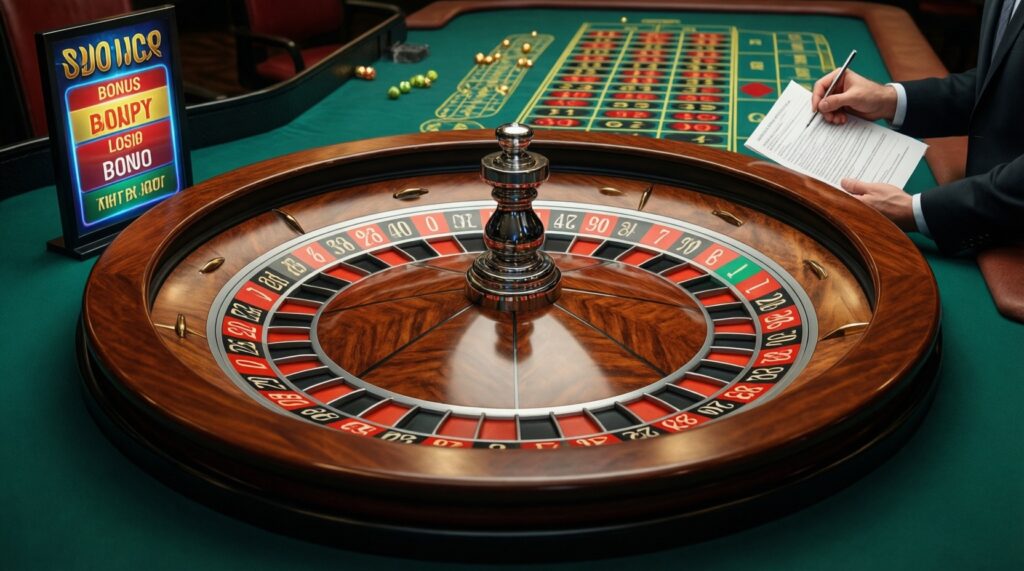
- Best default choice: European (single-zero) tables when the rules are standard.
- Why it wins: fewer zero pockets means lower built-in cost per spin.
- Key check: confirm the wheel layout (single 0 vs 0 and 00), not just the table sign.
- Most expensive traps: "bonus", "jackpot", and novelty side bets often raise the effective cost.
- Bankroll-friendly approach: flat, small unit sizing beats chasing losses.
Fundamental Difference: European vs American Roulette Wheels
If you're searching รูเล็ตยุโรป vs อเมริกัน ต่างกันอย่างไร, these are the practical selection criteria that change your long-run cost and session experience:
- Number of zero pockets: European has a single 0; American has 0 and 00.
- Total pockets on the wheel: fewer pockets generally means a lower built-in house advantage for standard bets.
- Rule variations: some European tables apply "La Partage" or "En Prison" on even-money bets; many do not-ask or read the felt/rules card.
- Bet menu complexity: more "special" bets often means more high-cost options that look exciting but drain faster.
- Table limits: the minimum bet determines how long your bankroll can withstand variance; the maximum matters for progression systems (usually best avoided).
- Dealer procedure & pace: faster spins increase variance exposure per hour, which can shorten a session even with the same edge.
- Wheel condition & transparency: clearly visible wheel, consistent spin, and no unusual "house rules" posted late.
- Live vs RNG: live wheels let you verify the layout; RNG games require you to inspect the info panel for wheel type and rules.
How House Edge Is Calculated: Zeroes, Probabilities and Payouts
The clean way to compare tables is to calculate expected value from wheel probabilities and fixed payouts. For a standard "even-money" bet (pays 1:1):
- European (single-zero): win probability = 18/37, lose probability = 19/37 → expected value per $1 = (18/37) − (19/37) = −(1/37).
- American (double-zero): win probability = 18/38, lose probability = 20/38 → expected value per $1 = (18/38) − (20/38) = −(2/38).
Those negative fractions are the built-in cost for standard bets. This is the substance behind queries like House Edge รูเล็ตยุโรป เท่าไหร่ and House Edge รูเล็ตอเมริกัน เท่าไหร่: the edge comes directly from the extra zero pocket(s), not from how you "feel" a table is running.
| Variant | Who it suits | Pros | Cons | When to choose |
|---|---|---|---|---|
| European roulette (single-zero), standard rules | Most players optimizing cost per spin | Lower built-in cost than double-zero; simple bet set | Still negative expectation; variance can be harsh | Default pick when you want the most favorable baseline |
| European roulette with La Partage (even-money relief) | Budget-focused players leaning on even-money bets | Softens losses on even-money when the ball lands on 0 | Not always available; rules must be confirmed | Choose when playing long sessions with small, flat stakes |
| European roulette with En Prison (even-money relief) | Intermediate players comfortable with rule nuance | Can reduce the effective cost on even-money outcomes | Pushes resolution to later spins; adds complexity | Choose when you accept slower "final" outcomes to reduce drag |
| American roulette (double-zero), standard rules | Players prioritizing availability over price | Common in some venues; familiar layout for some players | Higher built-in cost than single-zero for standard bets | Choose only when no suitable single-zero table exists |
| Any roulette with "bonus/jackpot/side bets" attached | Entertainment-first players accepting higher cost | More action; occasional large payouts | Often increases the effective cost; adds volatility | Choose only with a separate, small side-budget you can lose |
Bet Types Ranked by Cost: Which Wagers Shrink Your Bankroll Fastest
On a given wheel type, most standard inside/outside bets share the same underlying expected loss rate; what changes is volatility (how swingy results are). The fastest bankroll killers are usually high-volatility bets and non-standard side bets. Use these scenario rules, with an explicit budget-first vs premium-play accent:
- If you're budget-first and want longer sessions, then stay on even-money bets (red/black, odd/even, high/low) and avoid any side-bet panels.
- If you're budget-first but want occasional bigger hits, then cap straight-up/inside bets to a small fraction of your total stake per spin and keep the rest on even-money.
- If you're playing a premium session (larger bankroll, you accept swings), then you can add more inside bets for excitement-but keep the wheel single-zero and the rules clean to avoid overpaying for that excitement.
- If the table advertises "bonus", "multi-ball", "jackpot", or "extra payout" mechanics, then treat it as a different (usually pricier) game and only play with a separate entertainment allocation.
- If you catch yourself raising stakes after losses, then switch to a fixed unit size immediately or change tables; progression pressure is how edge turns into fast ruin.
So when you ask รูเล็ตแบบไหนได้เปรียบที่สุด, the practical answer is: pick the wheel/rules with the lowest structural cost first, then choose bet volatility based on your budget tolerance.
Side-by-Side Comparison Table: Expected Loss per $100 for Common Bets
- Identify the wheel: confirm single-zero (European) vs double-zero (American).
- Refuse hidden-cost add-ons: skip side bets unless you intentionally fund them as entertainment.
- Pick a base bet family: even-money for smoother swings; inside bets only if you accept sharp variance.
- Compute your expected loss per $100 wagered: use the wheel fraction (below) and multiply by $100.
- Translate to your unit size: if your unit is $u, expected loss per spin ≈ $u × (wheel fraction).
- Lock session rules: set a stop-loss and a stop-win before you place the first chip.
| Common bet (standard payouts) | European single-zero: expected loss per $100 wagered | American double-zero: expected loss per $100 wagered | What actually changes for players |
|---|---|---|---|
| Even-money (Red/Black, Odd/Even, High/Low) | $100 × (1/37) | $100 × (2/38) | Variance is moderate; wheel choice dominates cost |
| Dozens / Columns (2:1) | $100 × (1/37) | $100 × (2/38) | More swing than even-money; same wheel-driven cost structure |
| Straight-up (35:1) | $100 × (1/37) | $100 × (2/38) | Very high volatility; long losing streaks are normal |
Budget-First Table Selection: Practical Rules for Low‑Risk Play
Most players don't lose "because roulette is roulette"; they lose faster because they choose the wrong table conditions for their bankroll. Avoid these mistakes:
- Not verifying the wheel type and accidentally sitting at double-zero when a single-zero option exists.
- Assuming all "European" labels are equal without checking for rule notes (and whether any relief rules apply to even-money).
- Choosing a minimum bet that's too large for your bankroll, forcing shorter sessions and emotional decisions.
- Funding side bets from the main bankroll instead of using a separate, limited entertainment allowance.
- Playing faster than your decision-making (autopiloting chips on the layout) which increases total exposure per hour.
- Chasing losses with progressions that can collide with table limits or bankroll limits quickly.
- Ignoring volatility: inside bets can feel "close" but can produce long droughts that break budget plans.
- Picking a table for vibes, not rules: music, dealers, and crowd don't change the math.
If you're specifically asking แนะนำโต๊ะรูเล็ตยุโรป เล่นที่ไหนดี, the actionable answer is: pick a single-zero table with clearly posted standard rules, no mandatory side bets, and a minimum stake that lets you keep unit size flat for the full session you planned.
Short- and Long-Term Impacts: Volatility, Session Length and Bankroll Drain
For cost-sensitive play and longer sessions, European single-zero tables (especially with even-money relief rules when available) are typically the best fit; for maximum availability or familiarity, American double-zero can be a fallback when single-zero isn't offered. For excitement-focused premium sessions, inside bets add volatility, but the wheel/rule selection still matters more than "bet patterns."
Players' Top Edge Questions Answered
Is European roulette always better than American roulette?
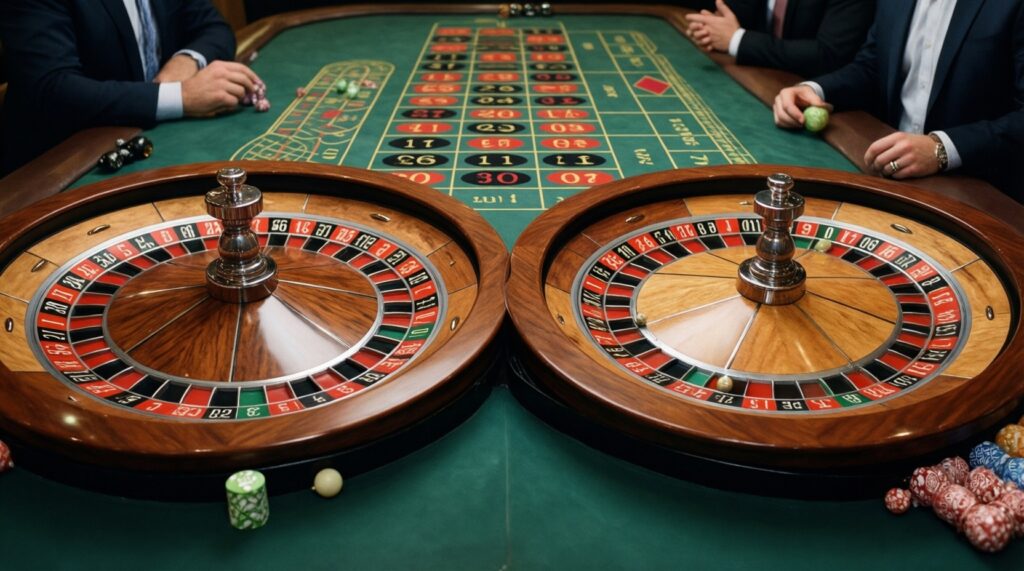
For standard bets, the single-zero wheel has a lower built-in cost than the double-zero wheel. "Better" still depends on table limits, rules, and whether side bets are involved.
Do different standard bets have different house edge on the same wheel?
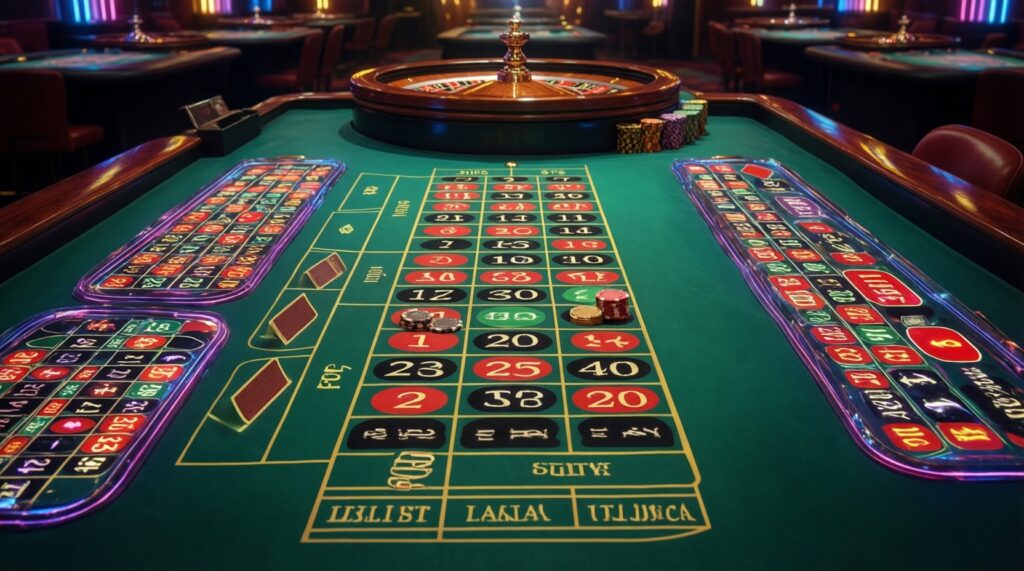
On standard roulette with standard payouts, most common bets share the same underlying expected loss rate; what changes is volatility. Side bets are the main exception because they can have a different (often worse) pricing structure.
How can I verify wheel type quickly at a live table?
Look for a single 0 versus both 0 and 00 on the wheel and layout, then confirm the rules card. Don't rely only on the table name.
What's the simplest way to estimate expected loss for my session?
Multiply your total amount wagered by the wheel's loss fraction (single-zero uses 1/37; double-zero uses 2/38). This gives an expectation, not a guaranteed outcome.
Are La Partage and En Prison worth seeking out?
They can reduce the effective cost on even-money bets by changing what happens when 0 hits. They're most valuable for budget-first players staying mostly on even-money bets.
Should I use a betting system to "beat" the house edge?
No staking system removes the built-in negative expectation; it only reshapes risk. Flat, small unit sizing is the most bankroll-stable approach.