

To reduce your long-run losses in roulette, the decision that matters most is wheel type: single zero roulette (European/French) mathematically halves the baseline disadvantage versus double zero roulette (American). After that, manage the roulette house edge by choosing rules (La Partage/En Prison), limiting bet size to your bankroll, and avoiding high-volatility staking systems.
Practical summary: how wheel type and edge change outcomes
- If you can choose, prioritize a single-zero wheel; it is the core "edge control" lever.
- Prefer La Partage or En Prison on even-money bets when available; they reduce expected loss versus plain European rules.
- Use flat betting or proportional sizing; staking systems don't change the underlying expectation.
- Pick bets for volatility (session swings), not for "better odds"; the wheel edge is the same across standard bets on a given ruleset.
- For online roulette real money, verify wheel type and rule set in the game info before depositing.
Single-zero vs double-zero: exact odds and expected loss per bet
Decision node: if your goal is lower expected loss, choose the wheel with fewer zero pockets.
- Number of pockets (core driver): 37 pockets (0-36) vs 38 pockets (0, 00, 1-36).
- Zero count: 1 zero vs 2 zeros; more zeros increases the built-in disadvantage.
- Even-money rules: check if the casino uses La Partage/En Prison (usually only on single-zero variants).
- Bet limits vs bankroll: higher minimums force larger variance relative to bankroll even on the same wheel.
- Game speed: faster games increase loss rate per hour for the same edge (more decisions per hour).
- RNG vs live: fairness and rules transparency matter more than "feel"; read the paytable/rules.
- Side bets / "special" bets: they typically carry a higher effective edge than standard inside/outside bets.
- Table-specific rules: confirm how zero outcomes settle even-money bets; wording differs by provider.
Numeric example (expected loss per even-money bet): Let stake = 100 THB, payout = 1:1. Expected loss comes from the zero pockets.
European (single zero): EV = 100 × (18/37) − 100 × (19/37) = −100 × (1/37) ≈ −2.70 THB.
American (double zero): EV = 100 × (18/38) − 100 × (20/38) = −100 × (2/38) ≈ −5.26 THB.
Crunching the numbers: house edge, payout structure, and effective RTP
Decision node: if two games pay the same odds on wins, the only sustainable difference is how often you lose to zero (and whether half-loss rules apply).
| Variant | Who it fits | Pros | Cons | When to choose |
|---|---|---|---|---|
| European roulette (single-zero) | Most intermediate players optimizing cost per spin | Lower baseline edge than American; widely available | No extra protection on even-money bets unless special rules exist | Choose when you can't find La Partage/En Prison but can pick the wheel |
| French roulette with La Partage (single-zero) | Even-money focused players (red/black, odd/even, high/low) | Half-loss on zero for even-money bets reduces expected loss | Less common; rule applies only to even-money bets | Choose when your plan uses mostly outside even-money wagers |
| French roulette with En Prison (single-zero) | Even-money players comfortable with "imprisoned" resolution | On zero, stake is held for the next spin; similar goal as La Partage | Mechanics can vary by casino; can complicate session tracking | Choose if rules clearly state how the imprisoned bet resolves |
| American roulette (double-zero) | Players who accept higher cost for availability or specific tables | Common in some live venues; familiar layout for many | Higher built-in disadvantage from 00 | Choose only if single-zero isn't available or promos offset your personal cost tolerance |
| European RNG (single-zero) for online play | Players prioritizing rule transparency and steady pace | Often clear rules/payout tables; easy to verify wheel type | Fast decision rate can amplify losses per hour if you overbet | Choose when playing online roulette real money and you can confirm it is single-zero with standard payouts |
Numeric example (house edge as a formula, even-money):
Let Z = number of zero pockets, N = total pockets, stake = 1 unit.
EV = (18/N)·(+1) + ((18+Z)/N)·(−1) = −Z/N.
So roulette house edge = Z/N: for single zero, 1/37; for double zero, 2/38.
Variance and bankroll: volatility profiles for European and American roulette
Decision node: if your goal is "survive swings," manage variance with bet type and sizing; if your goal is "pay less over time," manage the wheel edge first.
- If you have a small bankroll and want longer sessions, then use single-zero and favor even-money bets; keep stake per spin at 1% or less of bankroll.
- If you insist on American/double-zero tables, then reduce stake per spin further (e.g., 0.5% or less) to control drawdowns from the higher edge and faster bankroll drift.
- If you are tempted by high payouts (single numbers, splits), then expect larger session swings; cap stake to 0.25%-0.5% of bankroll per spin to avoid early ruin.
- If you are chasing losses with progression systems, then stop and switch to flat/proportional sizing; progressions increase the chance you hit table limits or your own stop-loss first.
Numeric example (simple bankroll risk check):
Bankroll = 10,000 THB. If you bet 200 THB per spin, stake fraction = 200/10,000 = 2%.
Operational rule: if stake fraction > 1%, reduce bet size until (stake ÷ bankroll) ≤ 0.01.
Bet choice and staking: which wagers reduce relative edge impact
Decision node: if you want a "best roulette strategy" that actually matters, treat betting as risk control (variance), not as edge creation.
- Pick the wheel first: choose single-zero before choosing any bet type.
- Confirm even-money handling on zero: if La Partage/En Prison exists, align your plan to even-money bets.
- Choose volatility band: outside bets for lower variance; inside bets for higher variance (same underlying edge on that wheel).
- Set stake fraction: start at 0.5%-1% of bankroll per spin; go lower for inside bets or double-zero.
- Use flat or proportional sizing only: next bet = fixed amount, or next bet = bankroll × target fraction.
- Define stop-loss and stop-win: stop-loss = 10%-20% of session bankroll; stop-win = optional, but treat it as quitting while ahead, not a mathematical advantage.
- Remove side bets: if the game offers add-ons, ignore them unless you've checked their rules and accept higher cost/variance.
Numeric example (proportional staking):
Target fraction = 0.75%. Current bankroll = 8,000 THB.
Next bet = 8,000 × 0.0075 = 60 THB (round down to table minimum if needed).
Comparison table: side-by-side metrics, formulas and quick references
Decision node: if your results don't match expectations, the cause is usually a selection or tracking error-not a "bad system." Use the table above for variants, and avoid these mistakes.
- Confusing wheel type: assuming European while you're on double zero roulette (American) in a live room or app lobby.
- Ignoring rule text: "French" styling without La Partage/En Prison is often just European rules with different graphics.
- Counting outcomes incorrectly: using 1/36 instead of 1/37 for single zero roulette edge calculations.
- Believing bet selection changes edge: outside vs inside changes variance, not the underlying expectation on standard payouts.
- Progression math fallacy: assuming Martingale (or any progression) alters EV; EV per unit remains tied to Z/N.
- Overbetting relative to bankroll: stake fraction above 1% makes normal losing streaks feel like "impossible variance."
- Measuring by short sessions: judging a "best roulette strategy" by 30-50 spins rather than by disciplined process (wheel + sizing + rules).
- Not accounting for speed: playing faster increases expected loss per hour even if per-spin edge is unchanged.
Numeric example (formula sanity check):
House edge (even-money, standard rules) = Z/N.
If your spreadsheet shows European edge = 1/36, it is wrong; correct denominator is 37 pockets.
Decision flowchart: selecting wheel type and betting plan by player goals
- If you can pick the wheel type → choose single zero roulette; if not available → play lower stakes on American or don't play.
- If you mainly bet red/black, odd/even, high/low → prioritize La Partage or En Prison when offered.
- If your goal is steadier sessions → stay on outside bets and keep stake ≤ 1% of bankroll.
- If your goal is occasional large hits → allow inside bets, but cut stake to ≤ 0.5% (and accept bigger swings).
- If you are playing online roulette real money → verify wheel (single vs double zero), then verify even-money zero rules, then set stake fraction.
Best fit for cost-sensitive play is European/French single-zero (especially with La Partage/En Prison for even-money). Best fit for availability-first play is American double-zero, but only with tighter bet sizing and clear limits. Best fit for "structured discipline" is any single-zero game where you can apply fixed/proportional staking and avoid progressions.
Concise answers to pivotal decision questions
Is single zero roulette always better than double zero roulette?
Mathematically, yes in expected-loss terms because the disadvantage is proportional to the number of zero pockets (Z/N). "Better" for you still depends on limits, rules clarity, and whether you can keep stakes small.
What is the roulette house edge on European vs American wheels?
For standard even-money bets, edge = Z/N: European is 1/37 and American is 2/38. You can compute expected loss per stake as stake × (Z/N).
Do outside bets reduce the house edge?
No-on standard payouts, the edge is the same across bets on the same wheel. Outside bets mainly reduce volatility (smaller swings), which can help bankroll control.
Is there a best roulette strategy that beats the game?
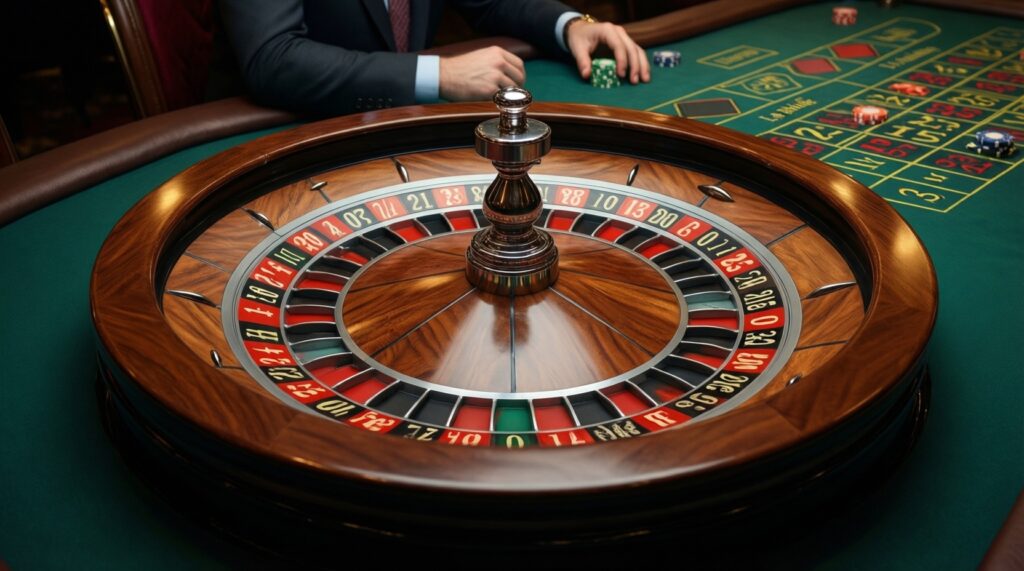
No strategy changes the built-in expectation of the wheel. The practical "best roulette strategy" is choosing single-zero (preferably with La Partage/En Prison) and using bankroll-based sizing.
How should I size bets for online roulette real money play?
Start with 0.5%-1% of bankroll per spin for outside bets, less for inside bets or double-zero. If the table minimum forces you above 1%, pick a lower-minimum table or don't play.
Does Martingale work better on single zero roulette?
It doesn't change EV on any wheel; it only changes risk distribution. Single-zero reduces the long-run cost per unit bet, but Martingale still risks rapid bankroll depletion and table-limit failure.