
"Slot strategies" do not change outcomes because each spin is generated by software (an RNG) and is statistically independent of previous spins. If you change timing, bet patterns, or button presses, then you change only your wager size and variance-not the underlying slot machine odds or long‑run expectation, online or in Thailand.
Core conclusions and practical summary
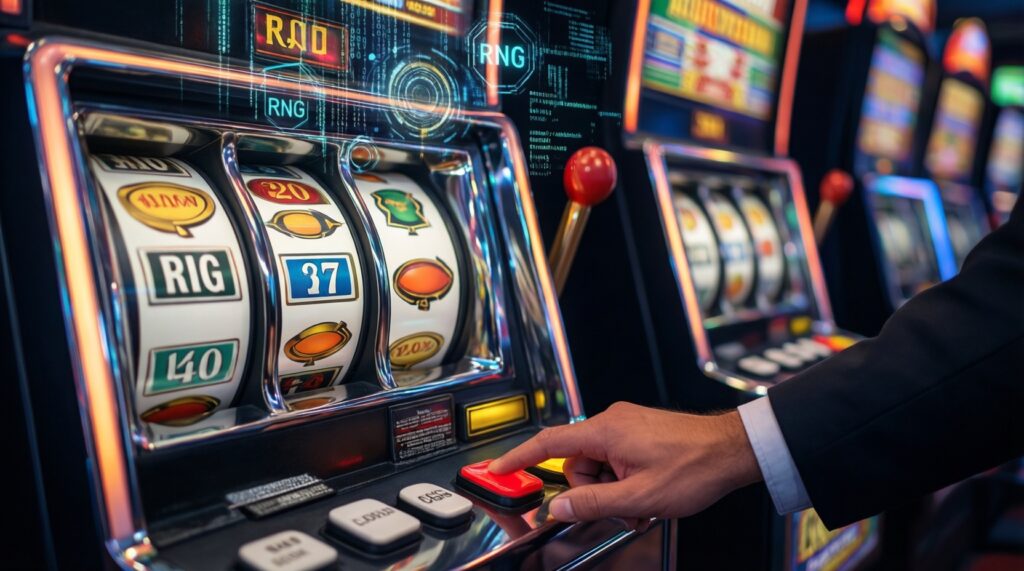
- If a tactic claims it can "influence" results (timing, stop buttons, pattern betting), then treat it as entertainment, not a change in probability.
- If you want to understand outcomes, then focus on how do slot machines work rng: the RNG selects results, not the player's rhythm.
- If you see winning or losing streaks, then interpret them as normal variance, not a signal that slot machine odds have shifted.
- If someone promises "best online slots real money" by using a special method, then separate game selection and budgeting from claims of odds manipulation.
- If you're comparing games, then look for published info such as online casino slots payout percentage (when provided), not "systems."
- If you're tempted by "guaranteed" slot machine strategies, then ask what physical or software mechanism would make past spins affect the next-usually there is none.
Common myths about influencing slot outcomes
Many popular "strategies" imply that a slot remembers outcomes and can be nudged into paying. In modern slot design (online and most electronic cabinets), that assumption is wrong: the next result is determined by a random process, not by a player-controlled sequence.
Myths persist because humans are pattern-seekers. When a win follows a ritual (change stake, switch lines, hit spin at a "lucky" moment), it feels causal even when it's just coincidence-similar to thinking a coin is "due" to land heads after several tails.
Practical boundary: if your action does not change the game's rules or the RNG's selection process, then it cannot change probability. It may change your experience (pace, stake, session length), but not the underlying chance structure.
How random number generators produce each spin
To grasp why patterns don't work, start with what an RNG does in practice. A simplified model looks like this:
- The RNG continuously produces numbers, even when you are not spinning.
- When you press spin, the game takes (samples) the current RNG value.
- That sampled value is mapped to an outcome (e.g., a virtual reel stop or a symbol combination).
- The outcome is then translated into what you see on the reels; animations are presentation, not the selection step.
- If you change bet size or enabled features, then you change the payout table and variance for that spin-but the RNG sampling step remains the core selector.
- If you press stop, then you typically stop the animation; in most implementations it does not retroactively change the already-selected result.
So when people ask "how do slot machines work rng," the key point is: the RNG sampling decides the spin outcome, and your timing is not a controllable way to steer the sampled value.
Statistical independence: what it means for consecutive spins
Independence means the probability distribution of the next spin is the same regardless of what happened before. If the chance of a particular event on one spin is p, then the chance it happens twice in a row is p × p = p², not "higher because it's hot" or "higher because it's due."
Where this shows up in real play:
- If you lost many spins, then the next spin is not more likely to win "to balance out."
- If you just hit a bonus, then the next spin is not less likely to hit a bonus "because it already paid."
- If you change coin size after a loss (a classic progression), then you change your exposure, not the next spin's probability.
- If you switch games after a streak, then you're switching distributions (different rules), not "resetting luck."
- If you believe a machine is "warming up," then you are describing variance, not a mechanism that alters independent draws.
This is why most "slot machine strategies" fail as probability hacks: they rely on dependence that the model does not provide.
Why streaks and near-misses don't change long‑term odds
Streaks and near-misses are expected features of random sequences. A long run of tails can happen in fair coin flips; seeing it does not make the next flip more likely to be heads. Slot outcomes behave similarly under independence.
- If you see a losing streak, then interpret it as clustering that can happen in random sequences, not as evidence the game is "tightening."
- If you see a winning streak, then interpret it as clustering, not as a "hot cycle" you can ride by speeding up or raising bets.
- If you see repeated near-misses, then treat them as presentation and outcome frequency-near-miss display does not imply you are "close" in a way that affects the next draw.
- If you try to use streaks as signals, then you will often overfit noise (you react to randomness as if it were information).
- If you increase stakes because you feel "due," then you increase volatility and potential loss size without improving expectation.
- If you chase a bonus because you saw many teasing symbols, then you may simply be responding to design intended to heighten engagement.
Exceptions: malfunctions, intentional manipulation, and biased designs
There are exceptions, but they are not "strategies" in the usual sense. They are situations where the system is not operating as assumed or where the design differs from your expectations.
- If a game is malfunctioning (display glitches, inconsistent credits, repeated error states), then stop-technical faults are not reliable edges and can invalidate play.
- If an operator or platform is untrustworthy, then the risk is not "beating odds," it is that outcomes or payouts may not match published rules.
- If a game has a feature that explicitly changes probabilities (rare in regulated contexts and must be disclosed), then the rules-not your timing-explain changes.
- If you are comparing "best online slots real money," then the meaningful differences are game rules, volatility, and transparency-not secret methods.
- If you rely on online casino slots payout percentage claims, then remember: it describes the game's long-run behavior (when accurate), not a lever you can pull mid-session.
What this means for player behavior and bankroll management
If you want a practical way to apply the theory without turning it into gambling "advice," then translate it into guardrails: if your action cannot change the RNG sampling, then it cannot change slot machine odds; it can only change how fast you experience wins/losses and how large they are.
Mini-case (decision logic you can apply):
- If you feel compelled to change bet size because you are "due," then pause and label it: gambler's fallacy (independence still holds).
- If you choose to change bet size for budgeting reasons, then do it deliberately (comfort and session control), not as a probability play.
- If you are choosing among games, then compare disclosed mechanics (features, volatility notes, and any stated online casino slots payout percentage), not "slot machine strategies."
- If you want to reduce surprises, then set limits before play; limits affect exposure, not the RNG.
Concise technical clarifications and short answers
Do "stop buttons" or tapping patterns change results?
If the outcome is chosen at spin start by the RNG, then stopping or tapping only affects the animation speed, not the already-determined result.
Are slots "due" after many losses?
No. If spins are independent, then previous losses do not increase the chance of a win on the next spin.
Does switching games reset your luck?
If you switch games, then you switch to a different rule set, but you do not "reset" probability in a way that depends on your prior outcomes.
What does slot machine odds mean in practice?
It refers to the probability structure defined by the game's design. If you change your behavior without changing the rules, then those odds stay the same.
Is online casino slots payout percentage a per-session guarantee?
No. If a payout percentage is accurate, then it describes long-run average behavior over many plays, not what you will see in a short session.
Can I find best online slots real money by using a system?
If "best" means better fit to your preferences, then look at transparent game mechanics; if it means beating expectation, then a "system" will not change the RNG-driven probabilities.
Are any slot machine strategies legitimate?
If "strategy" means changing the mathematical chance of outcomes, then no for standard RNG slots; if it means managing pace and spending, then it can affect your exposure, not the odds.