

A responsible winning mindset means treating gambling as paid entertainment, not a way to earn income, while using clear limits and stop rules to protect your money, time, and wellbeing. You plan your budget in advance, expect variance, regulate emotions after wins/losses, and know exactly when to stop gambling-before decisions become impulsive.
Core Principles for a Responsible Winning Mindset
- Play for entertainment value; any win is a bonus, not a plan.
- Decide limits first (money, time, and loss/win caps), then follow them without renegotiation.
- Expect swings; short-term outcomes do not prove skill or guarantee repeats.
- Use simple stop triggers to prevent chasing and tilt.
- Separate emotions from decisions with short reset routines.
- Review sessions to learn, not to justify "one more try."
Frame Play as Entertainment, Not Income
This approach fits people who want occasional fun, social time, or a structured hobby-and who can afford the spend like any other leisure expense. It is also the foundation of responsible gambling because it removes the pressure to "get back" losses or to "make rent" from wins.
Do not gamble (or pause immediately) if you are using it to cover bills, repay debt, cope with anxiety, numb stress, or if it is creating conflict at home or work. If you are already hiding play, lying about losses, or borrowing to continue, treat it as a safety issue first and seek gambling addiction help.
Template (one sentence rule): "I'm paying for entertainment tonight; my maximum spend is fixed, and I will leave on time regardless of the result."
- Entertainment budget mindset: money spent is the cost of the activity, like a concert ticket.
- Outcome-neutral mindset: you can enjoy the experience even if you lose.
Set and Maintain Realistic Outcome Expectations
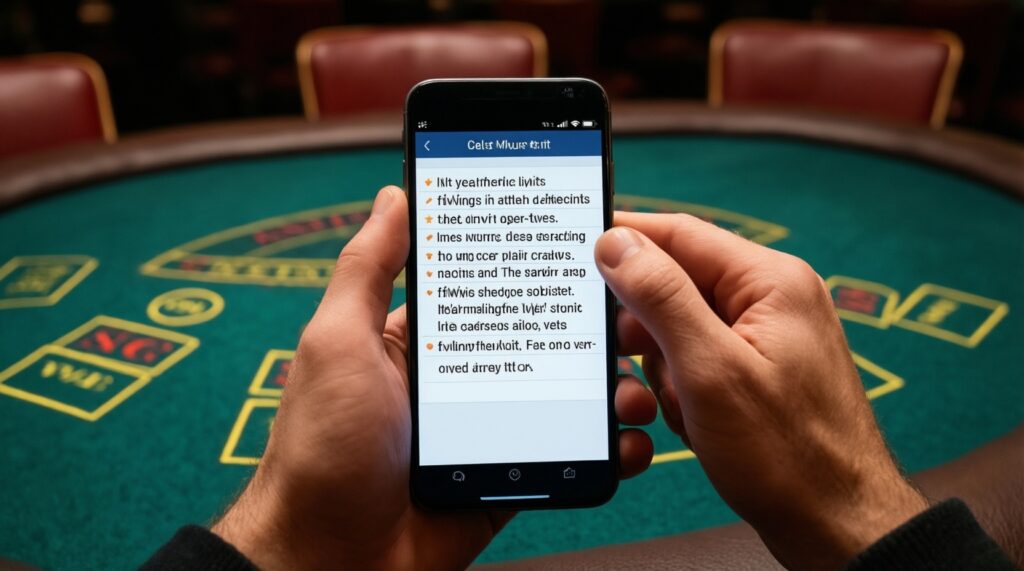
What you need is a small "pre-play kit" that makes expectations concrete, not emotional. Use tools you already have on your phone so you can apply responsible gambling tips consistently in real environments (bars, casinos, at home).
- Notes app: a saved limit statement (budget, time, stop rules) you can re-read before starting.
- Timer/alarm: one alarm for a mid-session check and one hard stop.
- Separate wallet or e-wallet pocket: only the session amount, no access to extra funds.
- Simple tracking method: a quick log line (date, game, start/end, amount in/out, mood).
- Optional support control: platform limits (deposit caps, reality checks) if you gamble online.
Expectation script (repeat before play): "Any result can happen today. I'm not owed a win. If I win, I still stop on schedule." This is especially important after a big win, when overconfidence can quietly override limits.
Design Practical Bankroll and Time Limits
-
Choose a fixed session budget (cash you can lose)
Decide the exact amount you are comfortable spending for entertainment, with zero impact on bills, savings, or obligations. This answers how to set a gambling budget in a way you can follow under pressure.- Keep it small enough that losing it does not change tomorrow's plans.
- Do not include "expected wins" in the budget.
-
Set a hard time box
Pick a start and end time and use alarms. Time limits prevent the slow drift from "just a bit" into an all-night chase.- Add a mid-session alarm for a 60-second check: money left, mood, and whether you're still having fun.
-
Define loss limit and win limit (both)
Loss limit prevents chasing; win limit prevents "giving it back" through overplay. Both are part of responsible gambling.- Loss limit: stop when you reach it, even if you feel close to a win.
- Win limit: stop when you hit it, even if you feel "hot."
-
Lock in the money boundary
Bring only the session amount or move the rest out of reach (leave cards at home, separate account, or companion holds extra funds). If you can top up easily, your limit is not real. -
Write your stop rules before you start
One short note you can't rationalize around: "Stop at (time), or at (loss), or at (win), whichever comes first." This reduces in-the-moment bargaining. -
Use a "one-decision" re-entry rule
If you stop, you are done for the day. No cooling-off "maybe later." If you want to play again, it must be a new day with a new pre-committed budget.
Fast-track mode: the 60-second limit setup
- Pick your spend: one fixed amount you can lose comfortably.
- Set two alarms: a mid-check and a hard stop time.
- Write one stop line: "Stop at time X or amount Y or win Z."
- Remove top-up access: only carry the session amount.
- Exit rule: once you stop, you're done for today.
Emotional Regulation Techniques for Losses and Wins
Use this quick checklist during the mid-session alarm and whenever your mood shifts. The goal is not to "stay calm" perfectly-it's to notice risk states early and switch from impulse to plan.
- I can clearly state my remaining budget and time without checking.
- I am not trying to "get even" or prove something after a loss.
- I would make the same next bet if I were watching someone else play.
- My breathing and body feel normal (no tight chest, shaking, tunnel vision).
- I am not increasing stake size because I'm bored, angry, or excited.
- After a win, I am not thinking "I can't lose today."
- I can stop right now without feeling panicked or irritated.
- I am still enjoying the activity; it hasn't turned into a job.
Micro-reset (30 seconds): stand up, look away from the game, take five slow breaths, then re-read your stop line. If the urge to ignore limits remains, that is a stop signal, not a challenge.
Decision Triggers: Clear Criteria for Stopping
Most harm comes from predictable mistakes that feel "reasonable" in the moment. Use the triggers below as non-negotiable criteria for when to stop gambling.
- Chasing starts: you feel a strong need to recover losses today.
- Budget renegotiation: you think "just one top-up" or "I'll borrow and repay."
- Time slip: you ignore or snooze the hard-stop alarm.
- Stake escalation: you raise bet size to speed up results.
- Emotional override: anger, shame, or euphoria is driving decisions.
- Secrecy behavior: hiding play, lying, or deleting history.
- Life impact: skipping work, sleep, meals, or responsibilities to continue.
- Win-induced overconfidence: "I'm on a streak, I must keep going."
Practical stop script: "This is my stop point. I'm ending while I can still choose." If stopping feels impossible, prioritize gambling addiction help and add stronger barriers (self-exclusion, account limits, or a trusted person holding funds).
Post-Play Review: Extract Lessons Without Chasing
A short review turns gambling into a controlled activity rather than an emotional loop. Keep it brief so it doesn't become a justification to play again.
- Two-minute session debrief (best for most people): write: start/end time, budget used, biggest emotion, and whether you followed stop rules. Use one sentence: "Next time I will ____."
- Entertainment swap (when urges stay high): replace the post-session dopamine chase with a neutral activity (walk, shower, food with friends, gym). This is most useful after near-misses or big wins.
- Accountability check-in (when rules are slipping): message a trusted friend: "I stopped on time / I'm struggling with urges." If you can't be transparent, treat that as a risk flag.
- Barrier upgrade (when you broke limits): add friction immediately-lower deposit limits, remove stored payment methods, or take a planned break. This is not punishment; it's prevention.
Common Concerns and Quick Clarifications
Is it still responsible gambling if I sometimes win?
Yes. Responsible gambling is defined by control and limits, not by outcomes. Wins do not validate chasing or removing safeguards.
What's the simplest way to follow responsible gambling tips in real life?
Pre-commit to a budget and a hard stop time, carry only that amount, and leave when either limit hits. If you can top up easily, your limits will fail under stress.
How do I handle the urge to win back losses?
That urge is a stop trigger. Take a short reset, re-read your stop line, and end the session; chasing is the fastest path to breaking limits.
How to set a gambling budget if my income changes month to month?

Tie your session budget to a conservative "can lose without impact" amount for that week, not to best-case income. If you're unsure, set it lower and increase only after several sessions of perfect limit compliance.
When to stop gambling if I'm on a hot streak?
Stop at your pre-set win limit or hard stop time, whichever comes first. Continuing because you feel unstoppable is a common way to give winnings back.
When should I seek gambling addiction help rather than just "more discipline"?
Seek help if you hide gambling, borrow money, can't stop when you try, or gambling is harming work, relationships, sleep, or finances. Adding barriers and professional support is appropriate and practical.