

Choose European roulette when your priority is the lowest built-in disadvantage and the cleanest fit for most "systems"; choose American roulette only when it is the only wheel available or when you specifically accept a higher cost for the same bet structure. The extra zero changes long-run results more than any staking pattern can realistically offset.
Snapshot: How Edge Differences Drive Outcomes
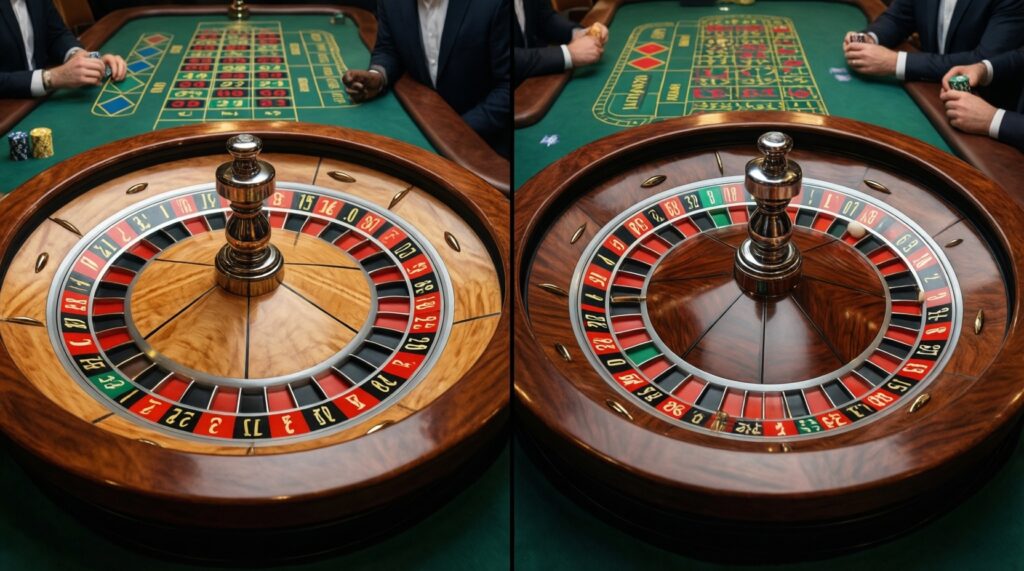
- European wheels generally produce a lower long-run cost than American wheels for the same bet types.
- Most roulette "systems" change volatility and bankroll pacing, not the underlying expectation.
- Rules like la partage or en prison can improve outcomes on even-money bets compared with standard European rules.
- Short sessions can look "system-friendly" due to variance; long sessions converge to the wheel's built-in disadvantage.
- The more often your system forces you onto higher-risk bets, the more swingy your results become without improving the math.
Wheel Anatomy and Relevant Bet Types
- Zero layout: single-zero (European) versus double-zero (American) is the main driver of expectation differences.
- Even-money rules: check whether the table uses la partage or en prison, because these affect red/black, odd/even, and high/low.
- Bet menu you actually use: inside bets (straight, split, street, corner) versus outside bets (dozens, columns, even-money).
- Payout schedule consistency: confirm standard payouts; avoid "bonus" side payouts that quietly change return profiles.
- Table limits and bankroll fit: your staking plan must survive losing streaks within minimum and maximum bets.
- Spin speed and session length: faster play increases how quickly expectation shows up in results.
- Rule transparency online: an online european roulette casino should clearly display wheel type and special rules before you stake.
- RNG versus live wheel: both can be fair, but you should verify published rules, bet settlement, and how voids/disconnects are handled.
Calculating House Edge: European vs American
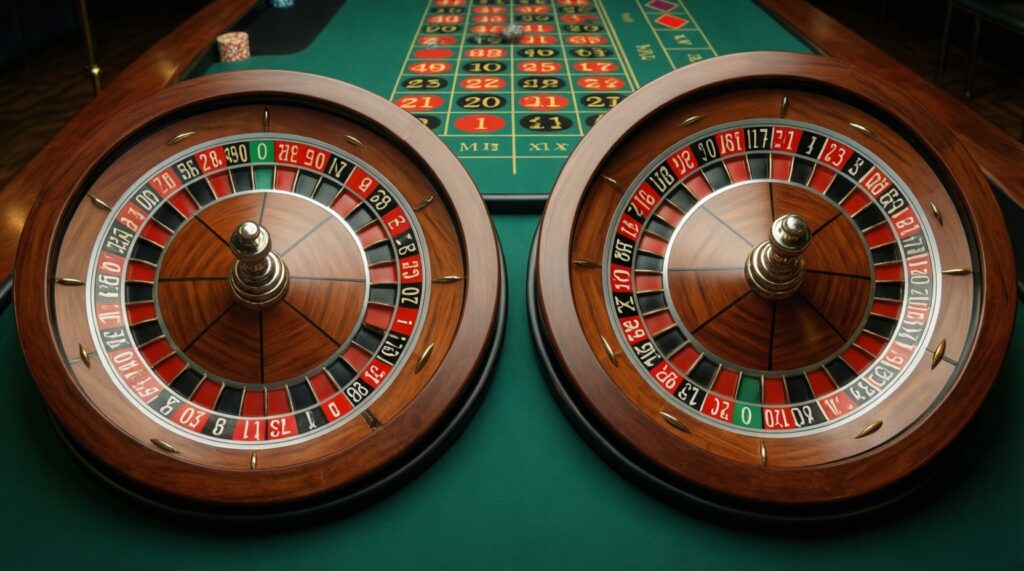
In european vs american roulette, the calculation logic is the same: expected value equals the probability-weighted payout minus the stake. What changes is how many losing outcomes exist relative to the payouts offered. Adding an extra zero increases the built-in disadvantage on every standard bet, so staking patterns cannot "average it out."
| Variant | Who it suits | Pros | Cons | When to choose |
|---|---|---|---|---|
| European single-zero (standard rules) | Most players who want lower long-run cost with familiar bets | Lower built-in disadvantage than double-zero; systems lose more slowly | Still negative expectation; streaks can be punishing on progression staking | Default pick when you can choose the wheel type |
| American double-zero (standard rules) | Players with no wheel choice, or those prioritizing availability over cost | Widely available; same bet types and rhythms | Higher built-in disadvantage; faster bankroll decay for the same session style | Only if the table is otherwise ideal (limits, speed) and alternatives are absent |
| European single-zero with la partage (even-money relief) | Outside-bet players (red/black, odd/even, high/low) | Improves return profile on even-money bets; reduces the penalty of the zero | Does not apply to dozens/columns/inside bets; not always offered | If your plan focuses on even-money bets and you want smoother drawdowns |
| European single-zero with en prison (even-money relief with carryover) | Players comfortable with a delayed resolution on zero | Similar benefit to la partage on even-money; can feel less "taxing" psychologically | Ties up bankroll for one extra spin on affected bets; rule details vary by table | When you accept slower bet settlement to improve even-money outcomes |
| European single-zero, French-style call bets (if offered) | Players using structured sector coverage rather than random singles | More disciplined coverage patterns; can simplify decision-making | Often higher total stake per spin; still negative expectation | If you want repeatable patterns without aggressive progressions |
Where "edge" shows up in practice: The european roulette house edge is lower than the american roulette house edge, so for the same bet size and time played, European outcomes usually leave you with more bankroll remaining. Your "system" mainly changes how choppy the ride feels.
Short-Term Variance vs Long-Term Expectation
- If you play short sessions and stop early after a small win, then variance dominates and many systems appear to "work," but this does not generalize to longer play.
- If you play long sessions or high spin volume, then expectation dominates and the wheel choice matters more than your staking pattern.
- If your system uses progressions after losses, then you should optimize for lower built-in disadvantage (European) because the progression magnifies bankroll exposure during bad runs.
- If you rely on flat betting with strict stop-loss and stop-win, then you still benefit from European rules, but your main lever becomes discipline rather than bet structure.
- If your system frequently shifts to inside bets to "recover," then expect larger swings without a better long-run outcome; choose the wheel that reduces cost per spin.
Role of Single and Double Zero in Return Profiles
- State your goal in one line: lower long-run cost, smoother swings, or pure entertainment.
- Confirm wheel type first: single-zero beats double-zero for long-run efficiency.
- If you mostly play even-money bets, look specifically for la partage or en prison.
- Match your system to limits: ensure your worst-case progression still fits table maximums.
- Decide your session rules before betting: fixed stop-loss, fixed stop-win, and a maximum session length.
- Only after the above, choose bet coverage (outside, dozens/columns, or selective inside) that you can execute consistently.
Assessment of Common Betting Systems and Their Limits
- Assuming a progression can "flip" negative expectation into positive; it mainly reallocates risk across time.
- Ignoring table limits, which is the most common reason progressions fail in practice.
- Switching bet types mid-session to chase losses, which usually increases variance and emotional errors.
- Overestimating hot/cold streak interpretation; streaks occur naturally without changing underlying odds.
- Using dozens/columns as if they were even-money bets; they have different hit rates and drawdown patterns.
- Not accounting for zero-rule differences; la partage/en prison can materially change even-money performance relative to standard rules.
- Choosing American wheels for "system testing" and then attributing faster losses to bad luck rather than the higher built-in disadvantage.
- Confusing "break-even over a short sample" with a repeatable advantage.
- Searching for the best roulette system for european roulette instead of selecting the lowest-cost wheel and enforcing bankroll controls.
Practical Comparison Table: Which Wheel Fits Your Objective
- If your priority is lowest cost per spin: choose European single-zero, preferably with even-money relief rules when relevant.
- If your priority is even-money play with calmer drawdowns: choose European with la partage or en prison.
- If your priority is availability or a specific venue: you may accept American double-zero, but reduce session length and avoid aggressive loss progressions.
- If your priority is testing a staking plan: test it on European first; the wheel gives you more "runway" to observe variance.
For most intermediate players trying to "pick the best option," European single-zero is usually the better baseline because it embeds a lower long-run cost, which makes any staking approach degrade more slowly. American double-zero is mainly a choice of convenience, not performance, and it makes system-based play feel harsher over time.
Player Concerns and Clarifications
Is European roulette always better than American roulette?
For long-run cost on standard bets, European single-zero is typically better. "Better" still does not mean profitable; it only means less negative expectation.
Does a betting system overcome the house advantage?
No system changes the built-in disadvantage of the wheel. Systems mostly change variance, bet sizing, and how quickly you reach table limits.
Which bets benefit most from la partage or en prison?
Even-money bets benefit: red/black, odd/even, and high/low. Dozens, columns, and inside bets generally do not receive that relief.
Why does the extra zero matter so much?
It adds an additional losing outcome without increasing standard payouts. That worsens expectation on every common bet type.
Should I prefer live dealer or RNG for European roulette?
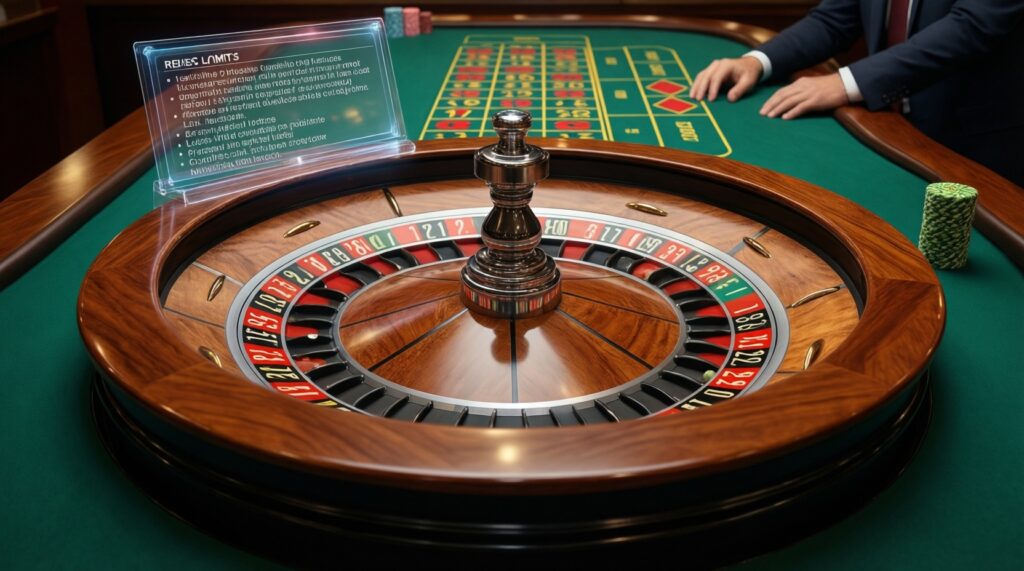
Prefer whichever clearly discloses wheel type and rules and has limits that fit your bankroll. Fairness is about rule transparency and correct settlement, not the presentation.
What should I check before joining an online table?
Confirm wheel type, special rules on zero, min/max limits, and how disconnected bets are handled. If the rules are unclear, skip the table.