
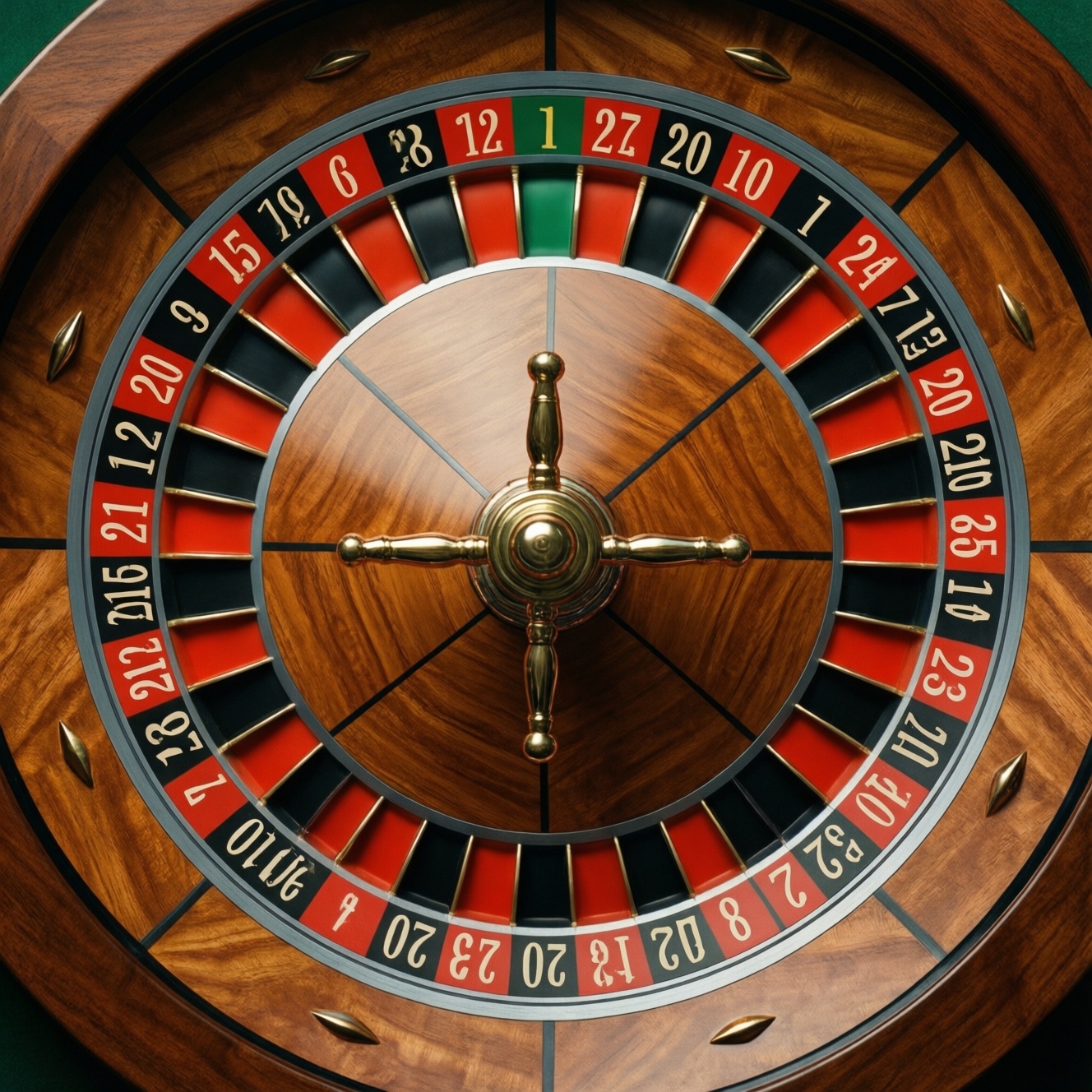
A roulette "streak" is simply a run of the same categorized outcome (e.g., red, black, even, odd) across consecutive spins. It feels meaningful, but under a fair wheel each spin is independent, so a long run does not make the opposite result "due." You can verify this with a quick simulation and a simple run-count check.
Core conclusions on roulette streaks
- A streak is a descriptive label (a run), not a force that changes future probabilities.
- Independence means the next spin's odds are the same whether the last 10 spins were red or mixed.
- Streaks are expected to occur naturally; rare-looking sequences appear regularly over many spins.
- Most "streak systems" repackage variance management, not an edge over the house.
- Chasing runs (or fading them) changes risk-of-ruin, not the underlying expected value.
- A basic simulation plus run-length counting is enough to test your intuition against probability.
What a 'streak' really means in roulette
In roulette, a "streak" (run) is a sequence of the same event occurring consecutively: for example, red appearing 6 spins in a row, or even repeating 4 times. The key is that you must define the event first: color, parity, high/low, dozens, columns, or a single number.
Streaks are not limited to wins; they can be losing streaks relative to your chosen bet. If you bet black and red hits 7 times, you experienced a 7-loss streak even though "red streak" is the observed run on the layout.
Also separate streak from trend: a streak is consecutive repetition; a trend is a broader impression (e.g., "more reds than blacks lately") that can exist without long runs.
Mathematical foundations: independence, Bernoulli trials and memorylessness
- Model a simple bet as a Bernoulli trial: pick an event (e.g., red) with probability p each spin; outcome is "success" (red) or "failure" (not red).
- Independence: if spins are fair, then for any history H, P(next is red | H) = P(next is red) = p.
- Memorylessness (practical meaning): a run of reds doesn't "consume" reds or increase blacks; it only updates your story, not the wheel.
- Run probability (simple form): the probability of exactly k consecutive reds starting at a given spin is pk (ignoring boundary conditions like what happens right before/after the run).
- Why long runs appear: in many spins, you have many chances for a run to start; even if pk is small, "many opportunities" makes occurrences unsurprising.
- House edge stays: independence does not remove edge; payouts are set so expected value remains negative for standard roulette bets.
| Even-money event | European wheel (single zero) | American wheel (double zero) | Notes for streak talk |
|---|---|---|---|
| Red (or Black) | p = 18/37 | p = 18/38 | Runs depend on p; both wheels can show long streaks without implying bias. |
| Not-Red | 1 − p = 19/37 | 1 − p = 20/38 | "The opposite is due" is the gambler's fallacy; the next spin still uses the same p. |
Expected run lengths and distribution of streaks
Streak thinking shows up in a few common intermediate-level situations. Use these as "where streaks matter" without pretending they create an edge:
- Color chasing: after 6 reds, players switch to black because it "must" come soon.
- Trend riding: players keep betting red because red is "hot," expecting the run to continue.
- Session storytelling: remembering only the most extreme run ("12 blacks!") and ignoring normal alternation.
- System packaging: selling วิธีเล่นรูเล็ตให้ได้เงิน by framing a streak trigger ("enter after 3 same colors") even though triggers don't change expectation.
- Progressions tied to runs: "press during streaks, reset on break" variants that look like สูตรรูเล็ตได้เงินจริง but mainly reshape volatility.
Why players perceive patterns: gambler's fallacy and the hot‑hand misconception

- Gambler's fallacy (negative recency): after a long streak of red, believing black is now more likely.
- Hot-hand misconception (positive recency): after a long streak of red, believing red is now more likely.
- Clustering illusion: humans underestimate how "clumpy" randomness looks in small samples.
- Selective memory: unusual runs are recalled; boring alternation is forgotten.
- What pattern-reading can do: help you describe what happened (run length, frequency) and choose a risk profile you can tolerate.
- What it cannot do: turn roulette into a กลยุทธ์รูเล็ตที่ได้ผลจริง that beats the wheel on expectation.
- When patterns might matter: only if the wheel/RNG is biased or the procedure is flawed; that's a detection problem, not a "streak method."
Practical implications for betting: variance, house edge and bankroll impact
- Run-chasing changes risk, not odds: betting bigger because a run is "strong" increases variance and bankroll drawdowns.
- Run-fading doesn't create value: betting the opposite because "it's due" is still paying the same negative expectation.
- Martingale is a streak amplifier: ระบบมาร์ติงเกลรูเล็ต depends on eventually ending a losing streak, but table limits and finite bankroll make the rare long loss run catastrophic.
- "Trigger systems" are not proofs: "enter after 4 reds" is just a stopping/starting rule; independence means the next spin is unchanged.
- Online context adds pacing risk: in คาสิโนออนไลน์ออนไลน์รูเล็ตได้เงินจริง pitches, fast spin speed can produce more decisions per hour, making variance hit the bankroll sooner even when the math is identical.
How to test streaks yourself: simple simulations and correct interpretation
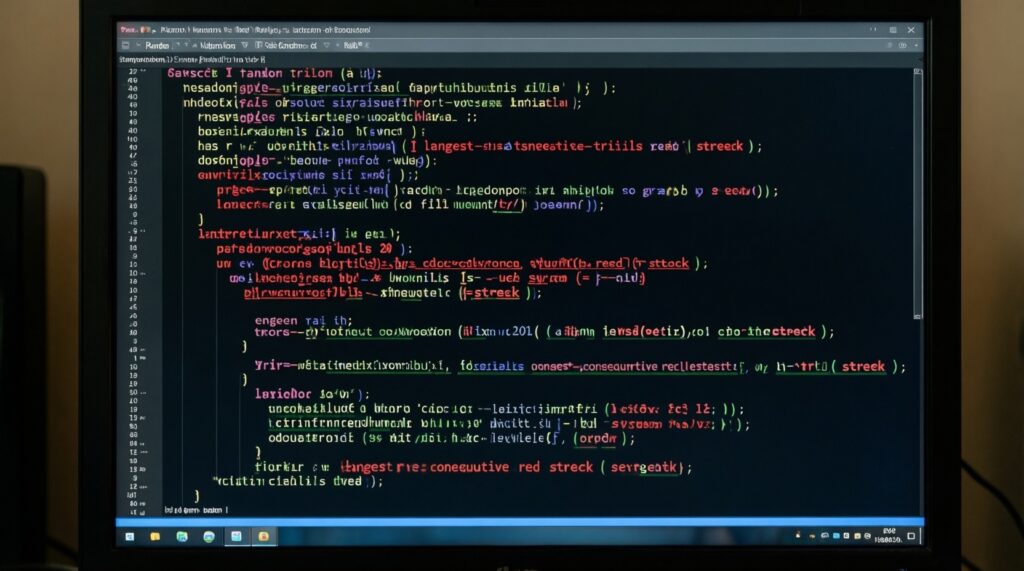
If you want to sanity-check your intuition, simulate spins, measure runs, and compare what you see to repeated trials. The goal is not to "prove a winning สูตรรูเล็ตได้เงินจริง," but to verify that long streaks appear naturally under independence.
A short algorithm to check streak claims (run-length test)
- Define the event: choose red vs not-red (or your bet type). Set p accordingly (e.g., European red p = 18/37).
- Simulate N spins: generate outcomes with probability p for "red."
- Compute run lengths: scan the sequence and record the maximum run of reds, maximum run of not-red, and counts of runs of length ≥ k.
- Repeat M times: rerun the whole experiment many times to see the distribution of max-run and run-count metrics.
- Interpret correctly: if "long" streaks show up regularly across repeats, they are not evidence of a special pattern-just a normal feature of randomness.
Minimal pseudo-code (language-agnostic)
function one_trial(N, p):
  max_run = 0
  current_run = 0
  for i in 1..N:
    x = (rand() < p)  // true = red
    if x == true:
      current_run += 1
      max_run = max(max_run, current_run)
    else:
      current_run = 0
  return max_run

function experiment(N, p, M):
  results = []
  for t in 1..M:
    results.append(one_trial(N, p))
  return results  // analyze histogram/percentiles visually
Short practical questions players often ask
After 8 reds in a row, is black more likely next?
No. On a fair wheel, the probability of black on the next spin is unchanged by previous spins; a long red streak does not make black "due."
Does betting with the streak (trend riding) improve results?
No. Riding a run changes the path of wins and losses but not the expected value; payouts still embed the house edge.
Is there any วิธีเล่นรูเล็ตให้ได้เงิน that is mathematically reliable?

For standard roulette bets, no betting pattern removes the house edge. The only "reliable" improvements are about limits: bankroll sizing, stop-loss, and avoiding progressions that can blow up.
Why do so many สูตรรูเล็ตได้เงินจริง mention entering after a certain streak length?
Because it feels selective and "smart," but it's just a trigger rule. Under independence, the next-spin probability remains the same regardless of the trigger.
Is ระบบมาร์ติงเกลรูเล็ต safe if I use small base bets?
It reduces the frequency of small losses but concentrates risk into rare, very large losses. Table limits and finite bankroll are the practical failure points.
Are there any กลยุทธ์รูเล็ตที่ได้ผลจริง for online roulette?
Not for beating expectation with standard bets. In คาสิโนออนไลน์ออนไลน์รูเล็ตได้เงินจริง contexts, the practical "strategy" is choosing reputable operators and managing decision speed and bankroll, not reading streaks.
What is one quick metric I can track during play to avoid streak bias?
Track your maximum losing streak for the bet type and compare it to what you simulated for similar session lengths. If your bankroll can't survive typical losing streaks, the plan is too aggressive.