

To avoid costly mistakes in roulette, treat every spin as mostly independent, ignore stories about streaks, and focus on the house edge and bankroll control. Most roulette myths-including roulette gambler's fallacy, roulette hot numbers, and the roulette patterns illusion-come from how the brain searches for meaning, not from reliable winning mechanics.
Core myths shaping roulette misconceptions
- After a long run of red, black is not "due" (classic roulette gambler's fallacy).
- "Hot" numbers don't become more likely because they appeared recently.
- Visual clusters on scoreboards create a roulette patterns illusion, not a predictive map.
- Betting systems change variance and pacing, not the underlying house edge.
- Wheel "memory" is mostly marketing; physics effects are real but hard to exploit ethically and consistently.
Understanding randomness in roulette outcomes
In roulette, "randomness" means you should not expect short-term sequences to balance out on your schedule. Even when a wheel is fair, streaks and repeats naturally appear because randomness is lumpy: it produces clusters, droughts, and coincidences without any hidden message.
Practically, each spin is a fresh event driven by the ball release, rotor speed, bounce behavior, and small physical variations. For most players-especially online-your best working assumption is near-independence: past results don't reliably improve your next prediction.
A useful boundary: randomness doesn't mean "anything can be beaten." It means patterns you "see" in short histories are usually not stable enough to base a plan on, particularly if your goal is how to win at roulette through prediction rather than bankroll discipline and game selection.
Why the gambler's fallacy fails mathematically
The gambler's fallacy is the belief that deviations from an expected average must soon "correct." In roulette, that intuition fails because the game does not track what you're owed.
- Independence heuristic: on a reasonably fair wheel, the next outcome is not adjusted to compensate for previous outcomes.
- Short histories are noisy: a 10-30 spin "sample" is too small to treat as evidence of a true shift.
- Regression isn't a timer: "reverting to average" (over very long horizons) doesn't specify when a reversal must happen.
- Negative progression trap: chasing a "due" color often escalates stakes quickly, increasing bankroll risk without changing expected value.
- Expected value stays anchored: changing bet size changes volatility, not the house edge embedded in payouts and zero(s).
- Example (no math required): if red hits several times, that sequence can continue-your belief that black is now "more likely" is exactly the roulette gambler's fallacy.
Debunking 'hot' and 'cold' number narratives
Roulette hot numbers are usually a storytelling layer on top of random clustering. Casinos and apps reinforce this with leaderboards and "last results" panels because it encourages action, not because it improves forecasts.
- Scoreboard chasing: you see one number repeat and start covering it plus neighbors, assuming momentum.
- Cold-number hunting: you bet "missing" numbers believing they are due to appear soon.
- Sector folklore: you shift to a wheel segment after a few hits there, treating it like a "zone" that's turned on.
- Social proof: a table group labels a number hot, and the narrative feels confirmed when it hits again (selective memory).
- System dressing: a staking plan is presented as a "hot-number method," but the selection rule is still backward-looking.
Resource-limited alternative: instead of paying for prediction tools, use "hot/cold" displays only as a discipline trigger-a reminder to cap session length and avoid impulsive coverage expansion.
How wheel design and physics affect spins
Physics can affect outcomes on a specific physical wheel, but turning that into an edge is difficult, time-consuming, and often restricted by casino rules. For most intermediate players, the practical value is knowing what can matter and what is mostly noise.
What can matter (in live, physical play)
- Mechanical biases: wear, tilt, or frets can slightly favor certain sectors over long observation.
- Dealer signatures: consistent release style may cluster outcomes, but casinos rotate dealers and monitor anomalies.
- Ball and rotor conditions: ball type, wheel speed, and maintenance can change bounce behavior.
What limits exploitability (especially with limited resources)
- Sample size burden: you need extensive, clean tracking to separate real bias from random clustering.
- Environmental variability: small changes in speed, launch point, and deflectors disrupt repeatable forecasts.
- Online RNG roulette: wheel physics is irrelevant; you're analyzing a display, not a mechanical process.
- Operational constraints: observation time, table minimums, and attention fatigue punish "edge hunting."
Resource-limited alternative: if you can't track thousands of spins, skip bias-hunting and focus on controllables-game rules (single zero vs double zero where available), bet types, and session discipline.
Cognitive biases that create false patterns
- Apophenia: seeing structure in randomness-core driver of the roulette patterns illusion.
- Confirmation bias: remembering hits that match your story (hot numbers) and forgetting the misses.
- Recency bias: overweighting the last few spins as if they describe the "current state" of the wheel.
- Clustering illusion: assuming runs are abnormal when they are normal features of random sequences.
- Sunk cost fallacy: continuing a losing chase because you've "invested" too many spins already.
Practical rules: bankroll, edge, and realistic goals
If your aim is how to win at roulette in a realistic sense, define "win" as executing a controlled plan (not discovering a predictive pattern). That means budgeting loss tolerance, choosing lower-volatility bets when appropriate, and stopping on schedule.
A minimal-resource session rule set (works without tools)
- Set a fixed session bankroll you can lose without stress; never reload during the session.
- Pick one bet family (e.g., outside bets only) to reduce decision churn and impulse switching.
- Use a stop rule (time-based or profit/loss-based) and end the session when it triggers.
- Avoid progression chasing tied to "due" logic; if you vary stakes, do it pre-planned, not reactive.
Mini-pseudocode for discipline (not prediction)
bankroll = session_limit
unit = chosen_base_unit
stop_loss = predefined_loss_cap
stop_win = predefined_profit_cap

while session_active:
  place_bet(unit, predefined_bet_type)
  bankroll = bankroll + result
  if bankroll <= session_limit - stop_loss: stop
  if bankroll >= session_limit + stop_win: stop
Self-check before you place the next bet
- Am I reacting to a streak (roulette gambler's fallacy) or following a pre-written rule?
- Did I label something as roulette hot numbers just because it repeated on the board?
- Am I "seeing" a roulette patterns illusion that disappears when I zoom out?
- If I had to stop now, would I accept the result without trying to recover it immediately?
Concise answers to recurring roulette misunderstandings
Is the next spin more likely to be black after many reds?
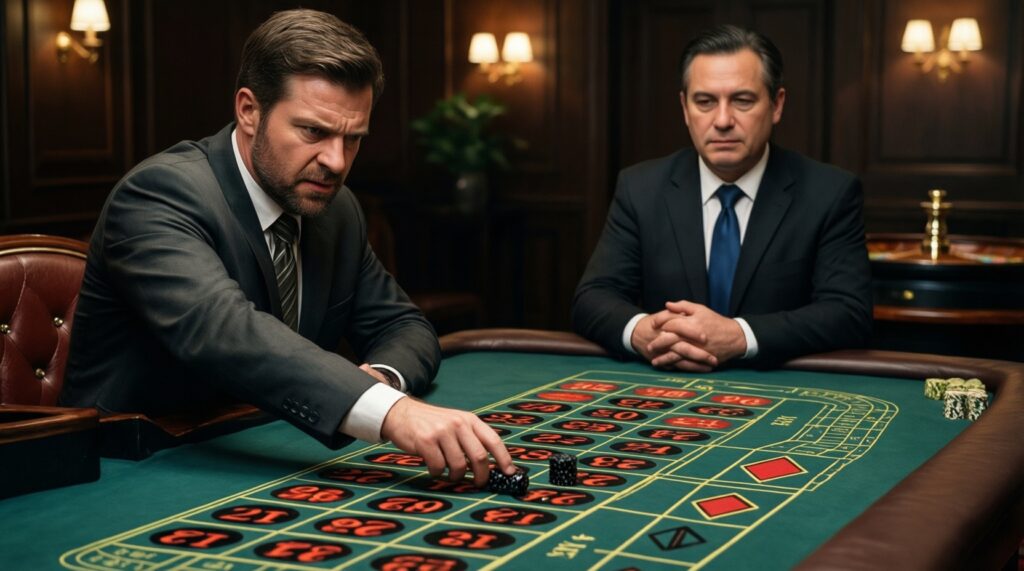
No. That belief is the roulette gambler's fallacy: prior reds don't make black "due" on a fair or near-fair wheel.
Do roulette hot numbers exist in a way I can profit from?
They exist as short-term clustering, not as a stable advantage. Treat "hot" labels as entertainment, not a forecasting signal.
Are patterns on the results board useful predictors?
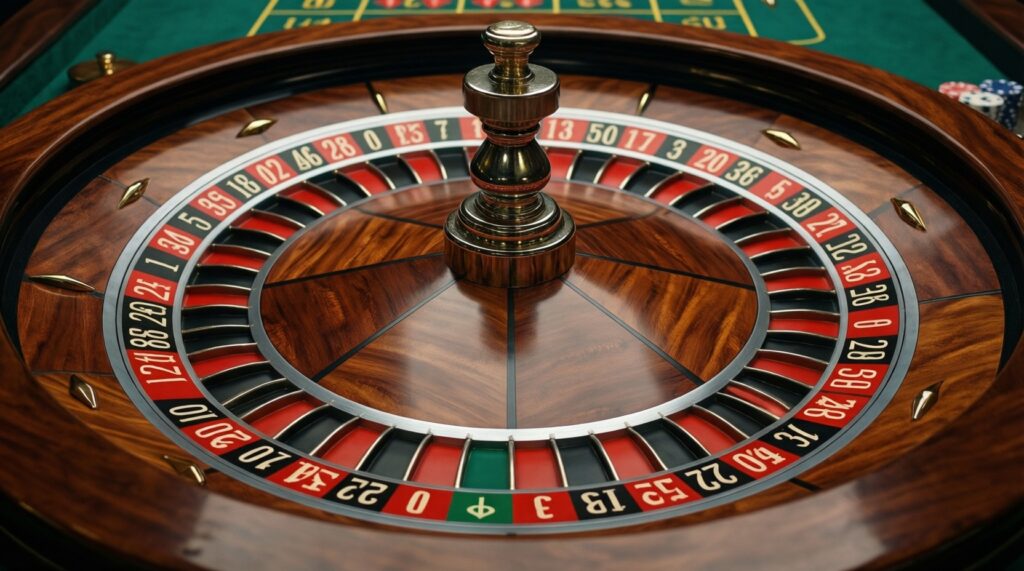
Usually not; this is the roulette patterns illusion. Boards summarize the past, and randomness naturally creates runs that look meaningful.
Can I beat roulette by switching bet types during streaks?
Switching changes variance and your emotional comfort, not the underlying house edge. Reactive switching often increases impulsive risk.
Is wheel bias a real thing?
It can be, in physical wheels, but it's hard to verify and exploit with limited time and data. Online RNG roulette removes wheel physics from the equation.
What is the safest "system" for beginners and intermediates?
A stop-rule and fixed-stakes plan is safer than progression chasing. It won't flip the edge, but it can prevent catastrophic sessions.