

For most players, European roulette is the better choice because its single-zero wheel creates a lower house edge than American roulette, so you lose less per baht wagered over time. That difference compounds across spins and overwhelms any betting system. If your goal is to maximize playtime on a budget, pick single-zero (or better) rules first.
Quick conclusions for budget-minded players
- In European vs American roulette, the wheel layout (one zero vs two) is the main reason one game costs less to play.
- European roulette house edge is lower than American because fewer zero pockets dilute every bet's payout fairness.
- American roulette house edge is roughly about double European for standard rules, so bankroll drains faster at the same stake size.
- The more spins you play, the more the edge dominates; systems change variance, not expectation.
- For online play, filtering for single-zero is usually the quickest way to find the best roulette online European roulette tables for value.
How wheel design produces different house edges
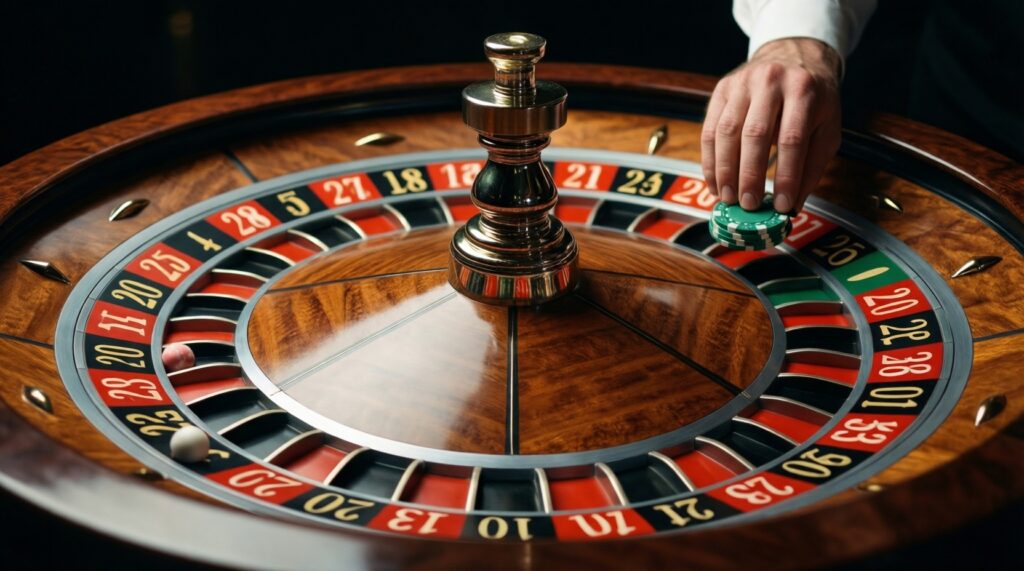
- Number of zero pockets: single-zero (0) vs double-zero (0, 00) is the primary driver of cost per spin.
- Total pockets on the wheel: 37 (European) vs 38 (American) changes true probabilities behind identical-looking payouts.
- Rule on zero for even-money bets: "La Partage" or "En Prison" reduces the effective edge versus standard "lose on zero."
- Table minimums: a lower minimum stake often matters more for budget control than small differences in side-bet variety.
- Spin speed / rounds per hour: faster games multiply expected loss; slower pace can be a practical bankroll tool.
- Bet types available: side bets and "call bets" often carry higher edges; sticking to core bets keeps costs predictable.
- Dealer and wheel bias controls: reputable live tables minimize exploitable irregularities (good for fairness, not for beating the edge).
- RNG vs live: both can be fair; what matters is transparent rules, clear limits, and the exact wheel variant offered.
Probability and expectation: single-zero vs double-zero explained
Roulette payouts are mostly identical across wheels, but probabilities change with the number of pockets. That's why European roulette vs American roulette odds look the same on the felt (e.g., 1:1 on red/black) yet cost different amounts to play over many spins.
| Variant | Who it suits | Pros | Cons | When to choose |
|---|---|---|---|---|
| European (single-zero, 0) | Most budget-minded and value-focused players | Lower built-in cost per bet; broad table availability online | Still negative expectation; faster tables can still drain bankroll | Default pick when you can choose between European vs American roulette |
| American (double-zero, 0 and 00) | Players prioritizing availability in some venues or specific layouts | Common in some casinos; familiar betting layout for some players | Higher cost per bet; losses accumulate faster at equal stakes | Only when European isn't available or you accept higher cost for convenience |
| European + La Partage (even-money rule) | Budget players focused on red/black, odd/even, high/low | Cuts losses on zero outcomes for even-money bets | Does not improve non-even-money bets | When you mainly play even-money bets and can select table rules |
| European + En Prison (even-money rule) | Players comfortable with slightly more complex rule flow | Similar value improvement on even-money bets | Rule handling varies by casino/table; can be misunderstood online | When rules are clearly stated and you want better value on even-money bets |
| French Roulette (single-zero with French rules) | Value seekers who prefer classic rule sets | Often includes La Partage/En Prison; generally best value among common formats | Not always available; rule presentation can differ by operator | When available at a reasonable minimum and you want the most efficient even-money play |
Concrete bankroll impact: expected loss per hour/session
Use a one-step estimate: Expected loss ≈ Total amount wagered × house edge. Total amount wagered is your average bet per spin multiplied by the number of spins. This is why the edge difference matters more than any system: the more you bet in total, the more the math asserts itself.
- If you play flat stakes: If you wager 100 THB per spin for 100 spins (total 10,000 THB wagered), then expected loss is about 10,000 × 2.70% ≈ 270 THB on European (single-zero) versus 10,000 × 5.26% ≈ 526 THB on American (double-zero).
- If you increase table speed: If you move from a slower live table to a fast RNG table and double your spins while keeping the same stake, then your expected loss approximately doubles too-wheel type still sets the loss rate.
- If you use progressions (higher total wagering): If your system causes you to place more and larger bets over a session, then total amount wagered rises, and expected loss rises proportionally-often faster than you expect during choppy streaks.
- If you are on a tight budget (budget-first): If your bankroll is small relative to table minimums, then choose single-zero with the lowest comfortable minimum and cap spins per session; lower edge plus fewer total wagers preserves playtime.
- If you are playing "premium" stakes (high rollers): If you're betting large amounts, then the same edge difference becomes large in absolute THB; prefer European/French rules and avoid double-zero tables because the extra cost scales directly with stake size.
Why progression and betting systems fail mathematically
- Identify the wheel and rules first: confirm whether it is single-zero, double-zero, and whether La Partage/En Prison applies.
- Compute or note the house edge: for standard rules, European ≈ 1/37 and American ≈ 2/38; your system cannot change these underlying odds.
- Estimate your total wagering: average bet size × expected spins; progressions typically inflate this number during losing runs.
- Translate to expected loss: Total wagering × house edge; this is your "cost of entertainment" baseline regardless of pattern spotting.
- Check constraints that break systems: table limits, bankroll limits, and time limits prevent indefinite doubling and force stop-outs.
- Decide with risk, not hope: choose a bet style (flat, small oscillations) that fits your bankroll volatility tolerance rather than chasing recovery.
- Keep side bets optional: treat them as higher-variance add-ons, not as a path to overcome expectation.
Side-by-side comparison table of odds, payouts and expected loss
Common mistakes when comparing roulette types are usually about confusing payouts with true probabilities, or ignoring how quickly expected loss accumulates with more spins and higher stakes.
- Assuming identical payouts mean identical value across wheels; probabilities differ with 37 vs 38 pockets.
- Choosing American tables for convenience without pricing in the higher long-run cost.
- Comparing "win rate" in short sessions instead of expected loss over total wagering.
- Relying on recent color streaks; outcomes are independent even if sequences look patterned.
- Using aggressive progressions that increase total amount wagered and hit table/bankroll limits.
- Adding high-edge side bets while believing you are still "playing European value."
- Ignoring minimum bets and session length; both can matter more than minor rule details for budget control.
| Bet type (standard payouts) | Payout | Win probability (European, 37) | Win probability (American, 38) | Expected loss per 100 THB bet (European) | Expected loss per 100 THB bet (American) |
|---|---|---|---|---|---|
| Even-money (Red/Black, Odd/Even, High/Low) | 1:1 | 18/37 | 18/38 | ≈ 2.70 THB | ≈ 5.26 THB |
| Dozen / Column | 2:1 | 12/37 | 12/38 | ≈ 2.70 THB | ≈ 5.26 THB |
| Straight up (single number) | 35:1 | 1/37 | 1/38 | ≈ 2.70 THB | ≈ 5.26 THB |
Practical table selection and low-cost play strategies
Best for maximizing playtime on a budget: single-zero European (ideally French rules on even-money bets) at the lowest minimum you can comfortably sustain, with a spin/time cap. Best for convenience in venues where options are limited: American roulette, but treat it as a higher-cost entertainment choice and lower your stake or session length to compensate.
Practical player questions
Is European roulette always better value than American roulette?
For standard rules, yes: the single-zero wheel lowers the built-in cost per wager. The difference is large enough that it typically dominates all other considerations for value.
What exactly is the European roulette house edge?
With standard rules it comes from 1 zero pocket out of 37 total outcomes. In practical terms, expected loss scales with total amount wagered at about 1/37 of that amount.
What exactly is the American roulette house edge?
With standard rules it comes from 2 zero pockets out of 38 outcomes. That increases the expected loss rate to about 2/38 of total wagering.
Do betting systems change the European roulette vs American roulette odds?
No. Systems can change how volatile your results feel, but they do not change the underlying probabilities or the expected loss rate set by the wheel and rules.
How do I find the best roulette online European roulette tables?
Filter for single-zero wheels and read the rule line for La Partage/En Prison on even-money bets. Then compare minimum bets and game speed so your total wagering stays within budget.
Should I prefer La Partage or En Prison if I mostly bet red/black?
Either is generally better than standard "lose on zero" for even-money bets. Choose the table with the clearest rule description and comfortable minimums.
If I like straight-up number bets, does European still matter?
Yes, because the wheel still changes your true probability per spin while the payout stays 35:1. Single-zero reduces expected loss per unit wagered even for straight-up bets.