
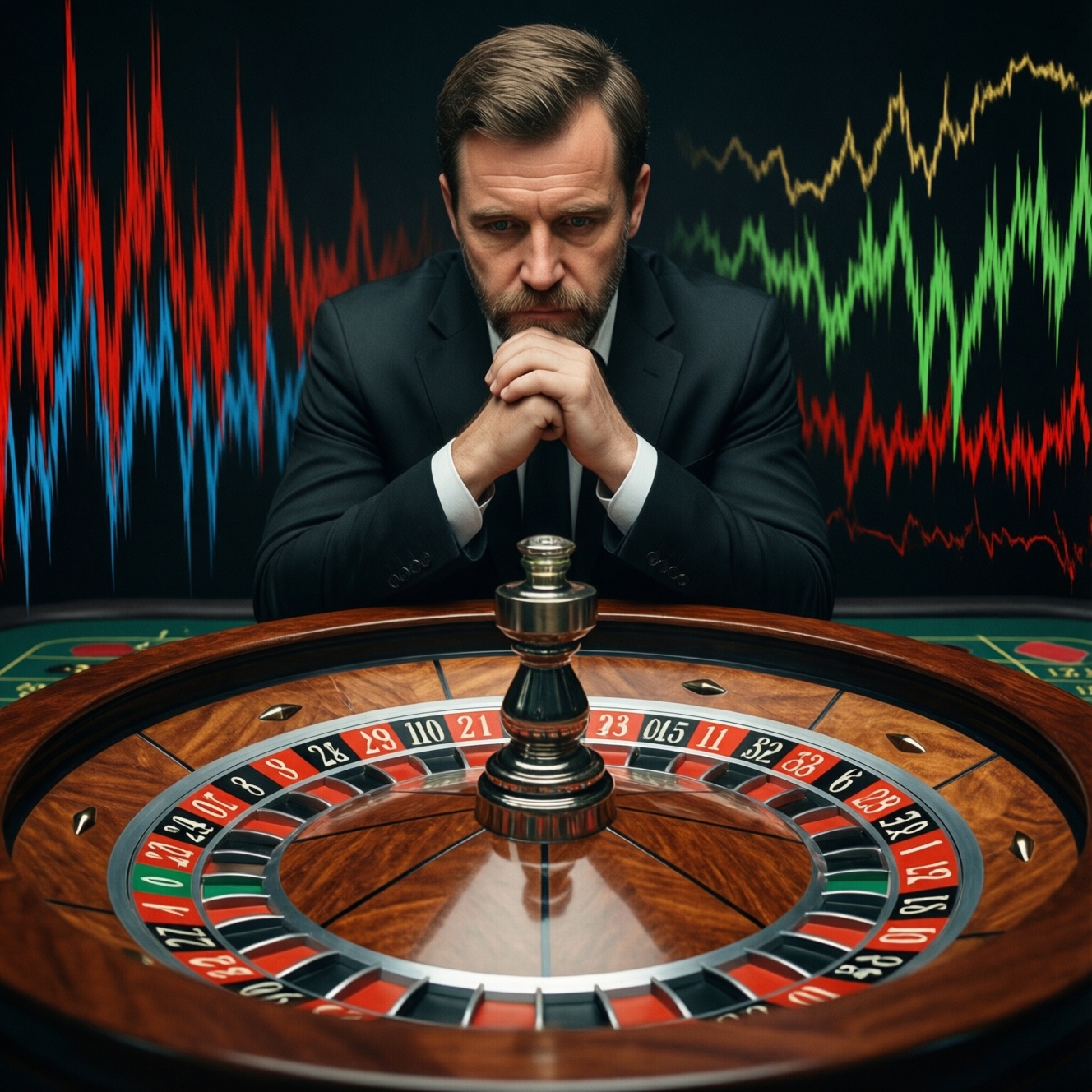
Most "patterns" players see in casino games are mental shortcuts, not signals you can profit from. "Due numbers," hot/cold streaks, and near misses don't change the next spin or deal in independent games; they mainly change how you feel and bet. Understanding randomness, variance, and the gambler's fallacy helps you avoid expensive mistakes and set practical limits.
Evidence at a Glance

- Independent events (many roulette spins, many slot spins) don't "remember" what happened previously.
- Streaks are expected in random sequences; noticing them doesn't create an advantage.
- Near misses are designed to feel informative, but they don't increase your odds next time.
- The gambler's fallacy casino error is believing losses make a win "due" (or wins make a loss "due").
- "Online casino strategies that work" are usually about risk control (limits, game choice), not prediction.
Due Numbers: Why Randomness Doesn't Owe You

The "due numbers" idea claims that if an outcome hasn't appeared for a while, it becomes more likely to appear soon. In games with independent trials (many roulette variants, many slot spins, many RNG-based online casino games), that intuition is wrong: the underlying probability for the next trial stays the same regardless of recent history.
This is the core of the roulette due numbers myth: after a long run of red, players feel black is "owed." But if each spin is independent, the next spin is not "compensating" for the past. What changes is your perception-long gaps are memorable, so they feel like evidence, even when they are a normal byproduct of randomness.
Illustrative example: if an event has a 1-in-2 chance on each trial, then after ten trials without it, the next trial is still 1-in-2. The probability of "ten misses in a row" might feel rare, but once you're already living through it, the next trial's chance does not improve.
- Ask: is the game an independent-trials process (RNG, roulette spins, shuffled deals)?
- Separate "unlikely sequence happened" from "next outcome becomes likelier."
- Refuse "catch-up" betting systems that raise stakes because something is "due."
Practical takeaway: Treat each spin/deal as a fresh trial; never increase bets just because an outcome hasn't appeared recently.
Hot and Cold Streaks: Separating Pattern from Probability
Streak talk is about clustering: random sequences naturally produce runs. Players then label a table "hot," a dealer "cold," or a slot "ready to pay," and they change behavior-often by betting more or chasing losses. That behavior shift, not the streak itself, is what usually increases risk.
Illustrative example: in a fair 50/50 process, sequences like H-H-H or T-T-T will appear sooner or later. Seeing three identical outcomes does not make the fourth outcome "more likely" to flip; it only feels that way because humans expect randomness to "alternate" more than it really does.
- Selection bias: you notice streaky sessions and forget quiet, average ones.
- Re-labeling noise: you assign meaning to ordinary clusters ("this table is hot").
- Escalation: streak belief drives larger bets, raising variance and drawdown risk.
- Outcome chasing: you extend session length to "catch the next swing."
- Misreading independence: you assume the game state changes when it often doesn't (RNG, fixed paytables).
- Define what would count as evidence beyond "it happened a few times."
- Decide bet size before the session, not after observing a run.
- Use time limits to prevent "one more" streak-chasing extensions.
Practical takeaway: If your "streak strategy" requires bigger bets or longer sessions, it's a risk amplifier, not an edge.
Near Misses: Psychological Hooks, Statistical Illusions
A near miss is an outcome that looks close to a win (e.g., two jackpot symbols and a third just above the payline). The slot machine near miss meaning is mostly psychological: it can increase excitement and persistence, even though it provides no reliable information about what will happen next.
Illustrative example: if each spin is an independent draw from many symbol combinations, "two-of-three" visuals can be common simply because the design allows many near-win configurations. That can make near misses frequent without implying the next spin has a higher chance of paying.
Typical scenarios where near misses influence behavior:
- Slots: the reels stop with a "just missed" alignment that feels controllable or predictive.
- Roulette: the ball lands adjacent to your number, creating a sense of "almost."
- Sports/virtual betting: a last-minute reversal feels like you were "on the right track."
- Bonus features: "one symbol short" of triggering a feature nudges you to keep feeding the game.
- UI effects online: animations and sound cues magnify closeness more than probability warrants.
- Translate "almost won" into "it was a loss with the same next-trial odds."
- Notice urge spikes after near misses; pause before the next bet.
- Use fixed stop rules (loss limit or time cap) that ignore near-miss emotion.
Practical takeaway: Treat near misses as design-driven feedback, not a signal to continue or increase stakes.
Gambler's Fallacy Explained: Where Intuition Breaks Down
The gambler's fallacy is believing that departures from expectation must quickly "correct." In a gambler's fallacy casino mindset, long runs feel wrong, so players bet on reversal ("black is due") or continuation ("hot hand"), even when the process is independent and neither inference is justified.
Illustrative example: if a roulette wheel produces 8 reds in a row, that sequence can happen by chance. The next spin is still governed by the same wheel probabilities; your observation changes your confidence, not the wheel.
- Benefit (when used correctly): it pushes you to ask whether the process is truly independent or whether there is a real state change (e.g., a known mechanical issue or a rule change).
- Better thinking habit: it encourages you to separate "probability of the past sequence" from "probability of the next event."
- Limitation: it cannot turn independent games into predictable ones; "due" logic remains wrong.
- Risk: it fuels progression systems (martingale-like chasing) that can create large drawdowns quickly.
- Constraint: even where small biases exist, detecting them reliably in live play is typically non-trivial.
- State your claim precisely: "next outcome probability changes" vs "I feel it should change."
- Reject any plan that depends on "rebalancing" after runs.
- Prefer controls (limits, smaller unit size) over prediction narratives.
Practical takeaway: Use the concept to stop "due" betting, not to search for reversals.
House Edge and Variance: The Mathematics Behind Outcomes
House edge describes a structural disadvantage built into rules and payouts; variance describes how widely outcomes can swing around the average in the short run. Many pieces of "casino myths debunked" content miss that both can be true at once: you can win short-term while still facing a long-term disadvantage.
Illustrative example: if a game is slightly unfavorable on average, a small sample can still produce a profit because variance dominates in the short run. That short-run profit does not prove the game became favorable; it only shows that random deviation happened.
Common errors and myths:
- Confusing variance with edge: "I'm up, so my method works."
- Progression logic: "If I double long enough, I must recover." (Bankroll and table limits break this.)
- Outcome-based validation: judging a strategy by one session instead of by its assumptions.
- Misreading "low volatility": smaller swings do not automatically mean better expected value.
- Ignoring costs: time, fees, and bonuses with conditions can change real results without changing randomness.
- Ask: does this claim change expected value, or only change the path (variance) of results?
- Track decisions (rules followed), not only outcomes (wins/losses).
- Assume short runs are noisy; avoid drawing conclusions from a few sessions.
Practical takeaway: Evaluate claims by mechanism (how it changes odds), not by a lucky streak.
Practical Risk Management: Betting, Bankroll, and Limits
If you want "online casino strategies that work," the reliable layer is risk management: fixed unit sizing, predefined stop rules, and session discipline. This doesn't create an edge; it limits damage from variance and from cognitive traps like "due numbers," streak chasing, and near-miss persistence.
Illustrative example: suppose you can tolerate losing 20 units in a session. If you bet 1 unit per round, you have more decision points (and more time to cool off) than if you bet 5 units per round. The odds per round didn't change-your exposure rate did.
Mini playbook (pseudo-rules):
- Set SessionBankroll (money you accept losing) and Unit (e.g., 1/50 to 1/100 of SessionBankroll).
- Set StopLoss = SessionBankroll and StopWin = a modest target you will actually respect.
- Loop rounds: bet Unit; if loss limit hit or time limit hit, exit; never increase Unit because something is "due."
Alternatives for limited resources (low bankroll, little time, minimal tools) in Thailand context:
- Low bankroll: choose the smallest stake tables/modes; shorten sessions to reduce exposure rather than raising unit size.
- Low time: set a hard timer (e.g., one short session) and avoid "recovery sessions."
- No tracking app: use a simple note on your phone: starting amount, current amount, and a single stop-loss number in THB.
- Low self-control days: switch to free-play/demo mode or watch-only; treat it as a zero-risk alternative.
- Define unit size and stops before you place the first bet.
- Keep bet size flat; do not "correct" after runs or near misses.
- Prefer shorter, repeatable sessions over long, emotional marathons.
Practical takeaway: Your best controllable variable is exposure (unit size × time), not prediction.
- I can explain why the next trial's odds don't improve after "misses."
- I do not change stake size based on streaks, "due" feelings, or near misses.
- I have a written stop-loss and time limit for every session.
- I can tell the difference between short-run variance and long-run disadvantage.
Player Doubts Resolved
Is the "roulette due numbers myth" ever true if I track results long enough?
Not for independent spins: tracking history doesn't make the next spin more likely to land on an overdue outcome. Tracking can still help you notice your own betting behavior, which is the controllable part.
How do I spot the gambler's fallacy casino thinking in myself?
If you hear "it has to happen soon" or "it can't keep happening," you're projecting correction onto an independent process. Replace it with "the next trial has the same base odds."
Do hot tables exist, or are streaks always meaningless?
Streaks are meaningful as descriptions of what already happened, not as predictors by themselves. If nothing in the game mechanism changes, the streak does not create an edge.
What is the slot machine near miss meaning in practical terms?
A near miss is a loss presented as "close," which can increase your urge to continue. It doesn't provide a reliable signal that the next spin is more likely to win.
Are there any online casino strategies that work consistently?
Consistent strategies are about controlling spend and exposure: fixed unit size, session limits, and avoiding progression chasing. They can reduce harm but do not convert negative expectation into positive.
Does switching games after losses help avoid streaks?
Switching can reduce emotional chasing, but it doesn't reset probabilities in independent RNG games. Use switching as a stop cue, not as a prediction method.
If I'm winning, should I press the bet to capitalize on a streak?
Pressing increases variance and can turn a good run into a rapid drawdown. If you press, do it via a prewritten rule, not because the game feels "hot."