

Tilt control is a practical, rule-based way to keep casino decisions stable when emotions spike and mental energy drops. Use early warning signs, a fast reset, and strict session rules to prevent decision fatigue in gambling from turning into impulsive bets or chasing losses. The goal is not to win it back, but to keep choices consistent and losses contained.
Essential strategy summary
- Define stop conditions before you start: time, money, and emotional triggers.
- Use a 60-180 second reset whenever you detect tilt signals (urge, anger, panic, one more bet).
- Reduce decision fatigue by limiting options: fewer games, fewer bet sizes, fewer side bets.
- Run your session like a checklist: short blocks, scheduled breaks, and a hard stop.
- Prevent chasing with rules you cannot renegotiate mid-session.
- Use responsible gambling tools to control losses (limits, cool-offs, self-exclusion) when willpower is unreliable.
Mechanics of tilt: recognition and early signs
Who this fits: intermediate players who notice emotions or autopilot affecting bet sizing, game choice, or speed. It's especially useful if you already know the basic odds but still make avoidable mistakes under stress.
When not to use (stop playing instead): if you're drinking/using substances, playing to pay bills, hiding play from family, or feeling unable to stop once you begin. In those situations, switch to a no-play plan and use operator-level limits or self-exclusion.
- Early tilt signals: raising stakes to fix it, rushing decisions, blaming the dealer/app, replaying losses in your head, or needing action to feel normal.
- Body cues: tight jaw, shallow breathing, sweaty palms, tapping, shoulder tension, or tunnel vision.
- Thought cues: I'm due, I can't end down, one big hit solves this.
Use these as your personal casino tilt control tips: the moment you can label the signal, you can trigger a reset before your bets change.
Practical tilt-reset techniques for immediate recovery
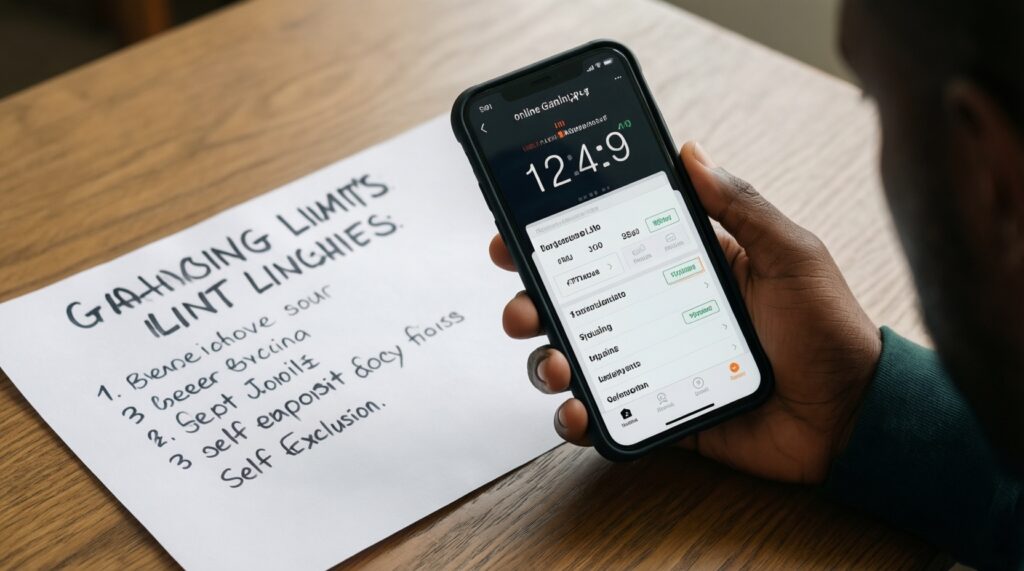
What you'll need: a timer on your phone, a notes app (or paper), and pre-written limits. If you play online in Thailand, also know where your site/app keeps deposit limits, loss limits, time limits, cool-off, and self-exclusion settings.
- Timer: for a forced pause (60-180 seconds) so you can't snap-bet.
- Limit card (notes app): Today: max session time, max loss, max stake, break schedule, stop triggers.
- One reset script: a short sentence you repeat verbatim (example below) so you don't negotiate with yourself.
Simple reset script: I'm noticing tilt. I pause for 2 minutes. If I still want to raise stakes, I stop for today. This supports the best strategies to stop tilt in casino games because it forces a decision under calm, not heat.
Decision fatigue in casino play: cognitive costs explained
-
Pre-commit to fewer choices
Decision fatigue in gambling shows up when you make many small choices (games, lines, side bets, stake jumps) and your standards drop. Reduce options before play: pick one primary game, one stake range, and one session length.
- Choose a single default bet you can repeat without redesigning every round.
- Avoid adding side bets mid-session; they multiply decisions.
-
Run play in short blocks
Use blocks (for example, a fixed number of minutes) and end each block with a break. Breaks restore attention and reduce impulsive clicking/tapping online.
- During the break: stand up, sip water, look at your limit card.
- Do not review what you could have won; review only whether rules were followed.
-
Use a single tilt trigger to force a reset
Pick one trigger that automatically pauses play: any urge to raise stakes, any urge to chase, or any anger spike. When the trigger hits, you must run the same reset every time.
- Set a timer for 2 minutes.
- After the timer, choose only: continue at default bet, or stop the session.
-
Audit one variable only
When you're tired, fixing everything becomes an excuse to keep playing. Audit just one variable: pace, stake, or game choice. If you can't keep it stable, you stop.
-
Lock in a no-chase rule
To learn how to avoid chasing losses gambling, you need a rule you cannot edit while emotional. Example: If I'm down X (your planned loss limit), I end the session-no exceptions.
- Never increase stakes to return to even.
- Never extend time to return to even.
Fast mode: 4-step anti-tilt algorithm
- Label it: say tilt out loud (or in your head) the moment you feel the urge to change stakes or pace.
- Pause: start a 2-minute timer; hands off the screen/chips.
- Choose only A or B: A) return to your default bet for one short block, or B) end the session.
- Lock the exit: if you choose to stop, close the app/cash out immediately; do not take one last shot.
Session design to preserve focus and reduce errors

- I wrote my limits before play (time, loss, max stake) and can read them in one line.
- I have a default bet and I'm not improvising new patterns each round.
- I scheduled breaks and I actually took the last one on time.
- I can name my current emotional state in one word (calm / bored / irritated / anxious).
- I have not increased stakes after a loss.
- I have not sped up my pace to get it back.
- I can stop right now without feeling panic or urgency.
- I'm still following the same game plan I started with.
- If I'm playing online, my limit tools are set (deposit/time/loss where available).
Rule-based systems to avoid chasing losses

- Negotiating mid-session: changing your stop-loss because it's close. Treat any renegotiation attempt as a stop signal.
- Stake laddering after losses: raising bets to recover faster. Replace with a fixed stake only rule.
- Time extension: staying longer because momentum will turn. Replace with a hard end time.
- Switching games to reset luck: hopping tables/slots when down. Switching usually adds decisions and fuels tilt.
- Counting near-misses as progress: interpreting almost as due. Near-misses are not a bankroll plan.
- Playing to erase emotion: using play to stop feeling regret/anger. That's the fastest path into chase behavior.
- Rewarding the chase: telling yourself you were disciplined because you didn't chase further, even though you chased a little. Track only rule compliance.
- Trying to out-think randomness while tired: when decision fatigue is high, complexity feels like control. Simplify or stop.
If you want a one-line rule for how to avoid chasing losses gambling: Losses only change what I do by making me stop, never by making me bet more.
Environmental and behavioral controls for consistent discipline
- Pre-set platform limits: use responsible gambling tools to control losses such as deposit limits, loss limits, time limits, cool-offs, or self-exclusion. Best when you tend to renegotiate with yourself.
- Cash-only session envelope: bring only the session budget; leave cards and extra cash away. Best for in-person play when easy top-ups trigger chasing.
- Account friction: log out after each block, remove saved payment methods, or keep the bankroll in a separate account. Best for online play when speed is the enemy.
- Buddy rule: message a trusted person your stop time and stop-loss before you play, then confirm when you stop. Best when tilt makes you isolate.
Troubleshooting common play scenarios
I feel fine, but I keep clicking faster and faster. Is that tilt?
Often yes: pace increases are a common early sign. Run a 2-minute reset and return to your default bet for one short block; if speed creeps up again, end the session.
After a bad beat, I want to double my stake just once. What do I do?
Treat the urge to raise stakes as your tilt trigger. Use your script, pause for 2 minutes, and choose only: default bet or stop-no third option.
What if I am not emotional, just tired and making small mistakes?
That's decision fatigue in gambling. Stop adding choices (no side bets, no game switching), take a break, and if mistakes continue, end the session.
I already broke my rule once today. Should I keep playing to finish properly?
No-rule breaks are evidence your control is compromised. Stop for the day and add more friction next time (limits, cash-only, or shorter blocks).
My stop-loss feels too tight; I keep hitting it quickly. What should I change?
Don't widen it mid-session. Recalibrate before the next session by reducing stake size or reducing session length so your planned loss limit fits your pace.
I won early and now I'm playing looser because it feels like house money. How do I reset?
That's still tilt risk, just positive tilt. Lock back to your default bet and end at the planned stop time; do not upgrade stakes because you're up.
Which casino tilt control tips matter most when I'm already triggered?
Only two: pause (timer) and simplify (default bet). If you can't do both immediately, the best strategy to stop tilt in casino games is to stop the session.