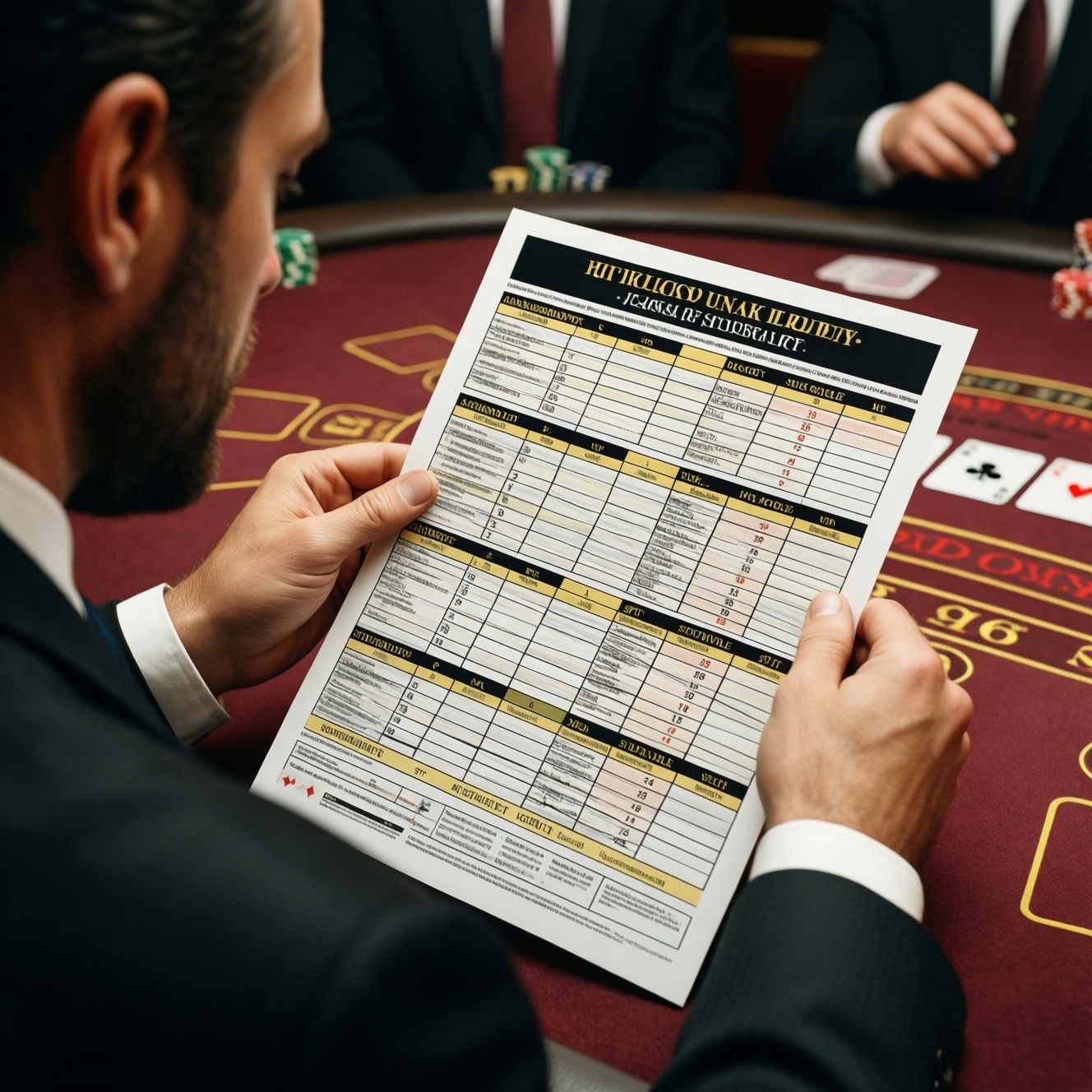

Build a sustainable casino session plan by setting a hard loss limit first, then adding a modest win goal as an optional stop. Use a fixed session bankroll, choose conservative stakes per game, and pre-commit to time and drawdown triggers. This approach clarifies loss limits vs win goals and reduces impulsive chasing across roulette, blackjack, and slots.
Core session metrics for sustainable play
- Session bankroll: a fixed amount you can fully lose without affecting essentials.
- Hard loss limit: the maximum acceptable loss for the session (your primary stop).
- Win goal (optional): a small, pre-set profit target that ends the session when hit.
- Stake unit: the standard bet size that keeps variance survivable for your profile.
- Time cap: a pre-set end time to prevent fatigue-driven decisions.
- Drawdown trigger: a stop based on peak-to-trough drop, not just starting bankroll.
Defining session objectives: loss limits versus win goals
Use a loss limit to control downside; use a win goal only to prevent "giving it back" after a good run. In practical planning, loss limits vs win goals is not a trade-off: the loss limit is mandatory, the win goal is optional and should be smaller than the loss limit.
Who this fits: intermediate players who want repeatable casino session bankroll management, can follow a written plan, and switch games without changing rules mid-session.
When not to do it: if you are tired, tilted, intoxicated, borrowing money, trying to "get even," or you cannot stop when the plan says stop. Also avoid adding side bets or increasing stakes after losses; that breaks the session model.
Bankroll allocation and per-game staking for roulette, blackjack, and slots
You need a simple setup that you can execute without mental math during play. This supports a consistent roulette blackjack slots session strategy across games with different volatility.
What you need before you start

- One fixed session bankroll: example 3,000 THB (illustrative).
- Tracking method: notes app or paper for start balance, peak balance, and time.
- Chosen games and rules: decide roulette variant, blackjack table rules, and slot denomination before sitting down.
- Pre-set unit size: one base bet per game (no improvisation).
- Stop triggers written in one line: loss limit, drawdown stop, time cap, and optional win goal.
Three risk profiles (illustrative numbers you can scale)
- Conservative: session bankroll 3,000 THB; hard loss limit 600 THB; optional win goal 300 THB.
- Moderate: session bankroll 3,000 THB; hard loss limit 900 THB; optional win goal 450 THB.
- Aggressive: session bankroll 3,000 THB; hard loss limit 1,200 THB; optional win goal 600 THB.
Quick pre-session template (copy/paste)
- Session bankroll: ____ THB
- Hard loss limit: ____ THB (stop immediately)
- Peak-to-trough drawdown stop: ____ THB from peak
- Time cap: ____ minutes (stop even if up)
- Optional win goal: ____ THB (cash out)
- Games allowed today: roulette / blackjack / slots (circle)
Designing loss limits: absolute caps, relative drawdowns, and time-based stops
Risks and limitations (read before applying):
- Loss limits reduce harm; they do not change the house edge or guarantee any outcome.
- Volatility can exceed your expectations; a "normal" downswing can hit limits quickly, especially in slots.
- Chasing losses, raising stakes, and adding side bets are the fastest ways to break a plan.
- Fatigue and alcohol reduce discipline; keep sessions short and rules simple.
-
Pick a fixed session bankroll (not your total funds).
Separate it mentally and physically. If you bring 3,000 THB for the session, treat it as the only money that exists today.- If online, use a separate wallet balance or deposit cap for the session.
-
Set the absolute hard loss limit (primary stop).
Choose a maximum loss you will accept, then commit to leaving when reached. Example: Conservative 600 THB; Moderate 900 THB; Aggressive 1,200 THB (on a 3,000 THB session bankroll).- Write it as: "Stop at -____ THB from start."
- This is how to set loss limit casino session in a way you can actually follow.
-
Add a peak-to-trough drawdown stop (secondary stop).
This prevents giving back a big upswing. Example: stop if you drop 400 THB (conservative), 600 THB (moderate), or 800 THB (aggressive) from your highest balance during the session.- Write it as: "If balance falls ____ THB from peak, cash out."
-
Set a time-based stop to protect decision quality.
Choose a time cap you can keep even when winning. Example: 45 minutes (conservative), 60 minutes (moderate), 90 minutes (aggressive).- Time caps are especially useful when you hop between games.
-
Define allowed stake moves (usually none).
To keep the plan stable, allow only one unit size per game for the whole session. If you insist on flexibility, limit changes to one step down after losses, never up to "recover."- Rule: no martingale, no progressive systems, no "one big hand/spin."
Setting realistic win goals: edge, variance, and target sizing

A win goal is a stop condition, not a promise. The best win goal strategy for casino sessions is usually a small target you can hit sometimes without extending play into fatigue or tilt.
- Win goal is optional: if win goals make you overplay, skip them and rely on time + drawdown stops.
- Win goal is smaller than your loss limit: otherwise you risk staying too long for a "big number."
- Target fits the game's volatility: smaller for slots, moderate for roulette, potentially modest for blackjack.
- Target fits your stake unit: if your unit is 20 THB, a 1,000 THB goal may push you into long sessions.
- You have a cash-out rule: when the win goal hits, you stop-no "one more round."
- You pre-define what counts: net profit after tips/fees; don't move the goalpost.
- You avoid "double goals": no raising the target after you get close.
- You accept variance: a win goal is not a daily income plan; it's a session hygiene tool.
In-session adjustments: triggers, pacing, and disciplined stop-loss execution
Adjustments should protect the plan, not rescue a losing session. The most common mistakes happen when players blur session boundaries in their casino session bankroll management.
- Raising stakes after losses: converts a controlled session into a recovery chase.
- Moving the loss limit: "Just 200 THB more" is how the hard cap stops being hard.
- Counting wins as "house money": it encourages riskier bets and larger swings.
- Switching games to change luck: game-hopping usually increases mistakes and extends time-on-device.
- Adding side bets in blackjack: side bets often increase volatility; they can invalidate your stop triggers quickly.
- Playing faster when down: pace increases variance and reduces decision quality.
- Ignoring the peak balance: without tracking the peak, drawdown stops can't work.
- Trying to finish "even": treating break-even as mandatory keeps you playing past your time cap.
Post-session review and iterative tuning with a comparative metrics table
Review quickly and change one variable at a time. Below is a practical comparison to align stake size and stop triggers with each game's typical feel of volatility (qualitative, not a promise).
| Game | Practical volatility (qualitative) | Suggested base stake unit (Conservative / Moderate / Aggressive) | Primary stop triggers to prioritize |
|---|---|---|---|
| Roulette | Medium to high (depends on bet type) | 0.5% / 1% / 2% of session bankroll per spin (e.g., 15 / 30 / 60 THB on 3,000 THB) | Hard loss limit first; time cap; avoid progression systems |
| Blackjack | Medium (skill and rules matter, swings still happen) | 0.5% / 1% / 2% of session bankroll per hand (e.g., 15 / 30 / 60 THB on 3,000 THB) | Hard loss limit; avoid side bets; take breaks to prevent tilt decisions |
| Slots | High (payouts are spiky; long dry spells possible) | 0.25% / 0.5% / 1% of session bankroll per spin (e.g., 7.5 / 15 / 30 THB on 3,000 THB) | Time cap + hard loss limit; strict drawdown stop after a run-up |
Short post-session review template
- Start / End balance: ____ / ____ THB
- Peak balance: ____ THB (did drawdown rule trigger?)
- Stops respected: loss limit (yes/no), time cap (yes/no), win goal (yes/no)
- Main mistake (pick one): raised stakes / chased / played too long / game-hopped / other
- One change for next time: lower unit / shorter time / remove win goal / tighter drawdown
Alternatives that can be better than a win goal
- Time-only sessions: useful if win goals tempt you to extend play; set a strict end time and keep stakes small.
- Two-stage cash-out: stop half the session when up (bank a portion), then continue with a reduced bankroll under the same hard loss limit rules.
- Game-specific sessions: one game per session (only roulette or only blackjack or only slots) to reduce decision errors and simplify tracking.
- No-profit-target policy: rely on hard loss limit + drawdown + time cap; best when targets make you chase "just a bit more."
Common practical concerns about limits, goals, and risk
Should I always set both a loss limit and a win goal?
Always set a hard loss limit. A win goal is optional and should only be used if it helps you stop earlier, not play longer.
What's a simple ratio for loss limit vs win goal?
Keep the win goal smaller than the loss limit so you don't stay in action for a bigger number. If you notice you keep raising goals mid-session, remove the win goal and use time + drawdown stops.
How do I set loss limit casino session rules when I'm switching between games?
Use one shared session bankroll and one shared hard loss limit across all games. Keep separate unit sizes per game, but do not increase units after switching.
Which is safer for a short session: roulette, blackjack, or slots?
For many players, slots tend to feel the most volatile per minute, so smaller units and tighter time caps help. Blackjack and roulette can still swing, so the same hard stop discipline applies.
What if I hit my win goal in the first 10 minutes?
Cash out and end the session; that is the point of the goal. If you continue, treat it as a new session on a different day, not "bonus time."
What if I'm down but close to break-even?
Ignore break-even and follow your loss limit and time cap. "Finishing even" is a common trigger for chasing and extending sessions.
Is it okay to change stakes during the session?
Changing stakes usually increases risk and weakens discipline. If you must change, only step down (not up) and only once, pre-defined before you start.