

A common TH "winning strategy scam" sells a supposed edge (a pattern, bot, or secret method) that cannot be independently reproduced and is protected by high-pressure tactics, controlled proof, or locked platforms. Troubleshoot by staying read-only first: verify data integrity, reproducibility, and incentives. If results vanish under basic checks, treat it as fraud-risk and stop funding.
Top Red Flags: How These Schemes Typically Present
- Results look "too smooth": near-linear equity curves, tiny drawdowns, and no losing streaks shown.
- Proof is non-auditable: screenshots, cropped statements, Telegram "signals," or private dashboards only.
- Rules are vague or shifting: the "pattern" changes after losses (classic pattern system scam behavior).
- Withdrawal friction appears after deposits: "verification," "tax," "liquidity," or "upgrade" fees.
- Access is gated: you must use their broker, their app, their exchange, or their "licensed" account manager.
- Pressure and exclusivity: limited seats, countdown timers, "last cohort," or threats to remove you from the group.
- Influencer-led funnel: a forex influencer scam pattern where content drives you to an affiliate broker or paid group.
Symptom Checklist: Pattern-System Scams in Trading and Betting
What you notice (symptoms):
- The "system" is based on easy-to-spot chart shapes (channels, triangles, "3-touch rules") but entries are subjective in hindsight.
- The creator shows only cherry-picked wins, never a full sequence of trades including losses.
- Rules expand after losses ("add one more filter," "avoid news," "use higher timeframe") without a logged change history.
- Backtests are presented without the raw data, settings, or a way to rerun them.
- Position sizing escalates after losses (martingale-like "recovery"), sometimes disguised as "risk layering."
- In betting variants, you're told to "double after a loss" or "follow the streak," then blamed for "not following perfectly."
Likely root causes: hindsight bias, curve-fitting, survivorship selection (only winners shown), and rule ambiguity that makes the method unfalsifiable.
Concrete read-only checks:
- Ask for a complete trade log (date/time, instrument, entry/exit, size, fees, slippage). If they can't provide it, treat it as a red flag.
- Request the exact rule set as a single versioned document. If it stays "verbal," it's not testable.
- Try to write the rules into a simple checklist yourself. If you can't, the "pattern" is likely narrative, not a system.
Detecting Bogus 'Edge' Software: Technical and Behavioral Signs
What you notice (symptoms): the app demands deposits, remote access, API keys with broad permissions, or insists on using "their" broker; performance is shown only inside a proprietary dashboard; losses are blamed on "latency" or "wrong VPS."
Fast read-only diagnostic checklist (prioritized by speed and impact):
- Permission creep: the tool requests withdrawal permissions, full-exchange API rights, or seed phrases. Legit tools don't need them.
- No independent audit trail: it can't export raw fills (CSV) or connect to a standard statement source. This is common in fake trading software.
- Broker lock-in: it only "works" on one obscure broker/exchange with aggressive bonuses or deposit matching.
- Non-reproducible backtests: strategy settings are hidden, data source is unspecified, or results can't be rerun on the same dates.
- "Magic" execution claims: promises of no slippage, guaranteed fills, or "institutional liquidity" without verifiable routing.
- Remote access push: they ask for AnyDesk/TeamViewer "setup help." Treat as a critical security threat.
- Unverifiable identity: no registered company details, no support ticketing trail, only chat admins.
- Strategy opacity: "AI" is used as a shield to avoid describing risk controls, stop logic, and failure modes.
- Behavior under loss: when drawdown happens, they push you to "top up," "switch pairs," or "upgrade to VIP."
- Unusual install/updates: sideload APKs, unsigned installers, or frequent "hotfixes" right after users report withdrawals.
Minimal safe evidence to collect (read-only): exported trade history, screenshots of permission requests, domain/app package name, wallet addresses, admin handles, and the exact promises (ads, landing pages, chat logs).
Influencer Red Flags: Narrative, Incentives, and Social Proof Abuse
What you notice (symptoms): an influencer shows lifestyle content and "student wins," pushes you into a broker link, and frames losses as mindset issues. This is a common forex influencer scam funnel even when the content looks educational.
| Symptom | Possible causes | How to verify (read-only first) | How to fix / respond |
|---|---|---|---|
| "Verified results" are screenshots or a private dashboard | Cherry-picking; editable images; controlled platform | Ask for broker-issued statements or raw fills export; check for missing dates and cropped balances | Stop deposits until independent statements exist; treat missing logs as disqualifying |
| They insist you must use their broker/exchange or referral link | Affiliate incentives; rebate-driven trading; deposit harvesting | Look for affiliate disclosures; check if "support" refuses other reputable brokers | Use your own regulated/known venue; if they refuse, exit the scheme |
| Community proof: Telegram/Discord wins, testimonials, "payout" photos | Astroturfing; selective posting; recycled media | Request full trade sequences; cross-check timestamps; search identical images/posts across accounts | Assume social proof is marketing; decide only on auditable records |
| Losses are blamed on you ("didn't follow exactly," "wrong mindset") | Unfalsifiable rules; moving goalposts; coaching upsell | Ask for a single fixed rule document and a pre-trade checklist; note if rules change after the fact | Freeze participation; require versioned rules and forward-tested logs |
| Pressure: limited seats, countdowns, "VIP upgrade" after drawdown | Sales funnel; sunk-cost exploitation | Compare messages over time; note if urgency repeats every week/month | Disengage; do not pay "release" fees; keep all communications as evidence |
| They promote a bot while claiming it's "set and forget" | Understated risk; martingale/grid; hidden leverage | Request max drawdown periods and risk controls; check if bot needs frequent "resets" | Assume high tail risk; do not grant withdrawal permissions; sandbox test only |
| They sell "signals" plus a paid course as the "real secret" | Monetization over performance; layered upsells | Trace revenue sources: course, signals, broker rebates, copy-trade fees | Separate education from execution; avoid pay-to-access trade calls |
Root causes you can act on: misaligned incentives (affiliate/IB rebates), proof that's not independently verifiable, and narratives designed to make you responsible for inevitable variance. Your remedy is to require reproducible records and to refuse locked ecosystems.
Financial and Emotional Harm: Immediate Symptoms and Long-Term Impact

What you notice (symptoms): escalating deposits to "recover," anxiety-driven overtrading, secrecy from family, and a shrinking ability to stop because you've already paid for a course/bot/VIP.
Step-by-step stabilization (safe to risky; prioritize speed):
- Stop new deposits and auto-renewals. Cancel subscriptions, copy-trade allocations, and recurring payments first.
- Switch to read-only posture. Remove trading permissions from any third-party connectors; keep access only to view statements.
- Revoke and rotate credentials. Regenerate API keys; change passwords; enable MFA; log out all sessions on broker/exchange accounts.
- Check withdrawal path without "extra fees." Attempt a standard withdrawal to your bank/wallet; document any new fee demands.
- Snapshot evidence. Save chat logs, emails, receipts, referral links, wallet addresses, and the exact marketing claims.
- Quantify the damage plainly. Export trade history and compute net P&L after fees; separate realized losses from unrealized positions.
- Close high-risk exposure deliberately. If a bot is actively trading, pause/disable it and reduce leverage/position sizes before closing.
- Escalate to your financial provider. Contact your bank/card issuer for chargeback options where applicable; report unauthorized access immediately.
- Get outside review. Ask a trusted, independent trader or security-aware friend to review the evidence and account permissions.
Why this order: it prevents further loss and credential abuse before you debate "is it real." In many trading bot scam cases, the biggest harm comes from ongoing access and repeated top-ups.
Verification Workflow: Step-by-Step Testing, Evidence, and Reproducibility
What you notice (symptoms): claims can't be replayed on your data; the vendor refuses logs; performance collapses when you reduce leverage or stop "compounding."
Read-only verification sequence you can run in hours, not weeks
- Define the claim precisely. Write down the promised instrument(s), timeframe, expected drawdowns, and rules (or bot settings).
- Collect raw records. Export broker/exchange trade history and funding/withdrawal records; keep original files unchanged.
- Reproduce on the same period. If it's a "system," apply rules to historical candles; if it's software, ask for deterministic backtest settings and data source.
- Stress basic assumptions. Add realistic fees/spread/slippage; if results collapse, the "edge" is fragile or fabricated.
- Forward-test in a sandbox. Use paper trading or the smallest allowable size; compare promised vs. actual execution and risk.
When to escalate to support, security, or professional help
- Immediate escalation: they requested remote access, seed phrases, or withdrawal permissions; you see unknown logins; withdrawals are blocked with new fees.
- Broker/exchange support: unauthorized trades, account takeover suspicion, API misuse, or abnormal order patterns you did not place.
- Professional cybersecurity help: you installed unknown software/APK, granted device admin permissions, or shared screen while logged in.
- Legal/consumer protection: you have receipts/contracts and the operator is identifiable; you're being extorted with "verification/tax" fees.
Remediation and Reporting: Practical Actions After Exposure
What you notice (symptoms): you're still in the group, still receiving "signals," and you're tempted to "win it back." Prevention here is operational: reduce attack surface and avoid repeat funnels.
- Cut access paths: revoke APIs, remove connected apps, and disable copy-trading links you didn't create.
- Harden accounts: MFA on broker/exchange/email, strong unique passwords, device security updates, and session review.
- Document and archive: keep a dated folder with marketing pages (PDF), chats, invoices, wallet addresses, and domain/app identifiers.
- Report to platforms: report the account/channel to YouTube, Facebook, TikTok, Telegram/Discord, and app stores with your evidence bundle.
- Report to your financial rails: bank/card issuer, exchange compliance, and the broker's fraud desk; provide transaction IDs and timestamps.
- Refuse "recovery" services. Many are a second-layer scam offering chargeback help for an upfront fee.
- Set personal guardrails: no strategy that can't provide raw logs; no deposits to venues you can't independently vet; no remote access, ever.
- Use a pre-trade due diligence checklist going forward: reproducible rules, disclosed incentives, auditable statements, realistic risk, and a clean withdrawal history.
If you suspect a winning strategy scam but aren't sure, treat uncertainty as risk: stop funding, verify with read-only checks, and escalate quickly if access or withdrawals are compromised.
Concise Answers to Immediate Concerns and Next Moves
Is every paid strategy a winning strategy scam?
No. The line is auditability and incentives: if performance can't be independently verified with raw records and clear rules, treat it as high risk.
What's the fastest way to spot a pattern system scam?
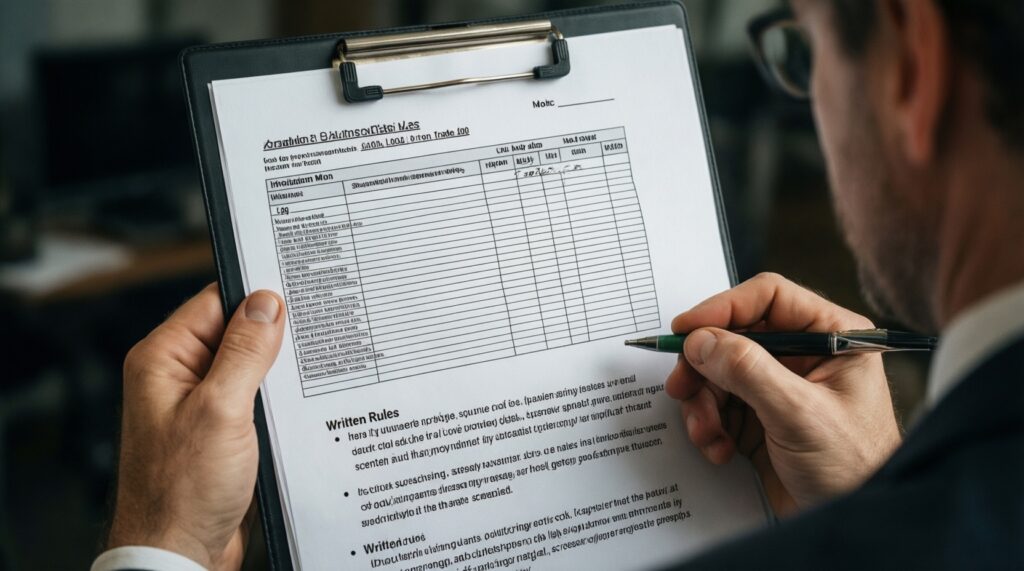
Ask for a complete trade log and a fixed written rule set. If you get only screenshots, testimonials, or "it's intuitive," it's not testable.
How can I tell fake trading software from a legitimate tool?
Legitimate tools don't ask for seed phrases, remote access, or withdrawal permissions. A lack of exportable fills and broker lock-in are strong indicators of fake trading software.
What should I do if I already shared API keys with a bot?
Revoke the keys immediately and rotate passwords/MFA. Then review account activity and withdrawals; treat it like an incident response.
Are "set-and-forget" bots usually a trading bot scam?
Often, because risk is hidden in leverage, martingale/grid behavior, or unrealistic fills. Require auditable logs and sandbox forward-tests before funding.
How do I evaluate a forex influencer without getting pulled into a forex influencer scam?
Follow the money: affiliate links, broker exclusivity, and paid signal groups are conflict signals. Only trust claims backed by broker-issued statements and reproducible methods.