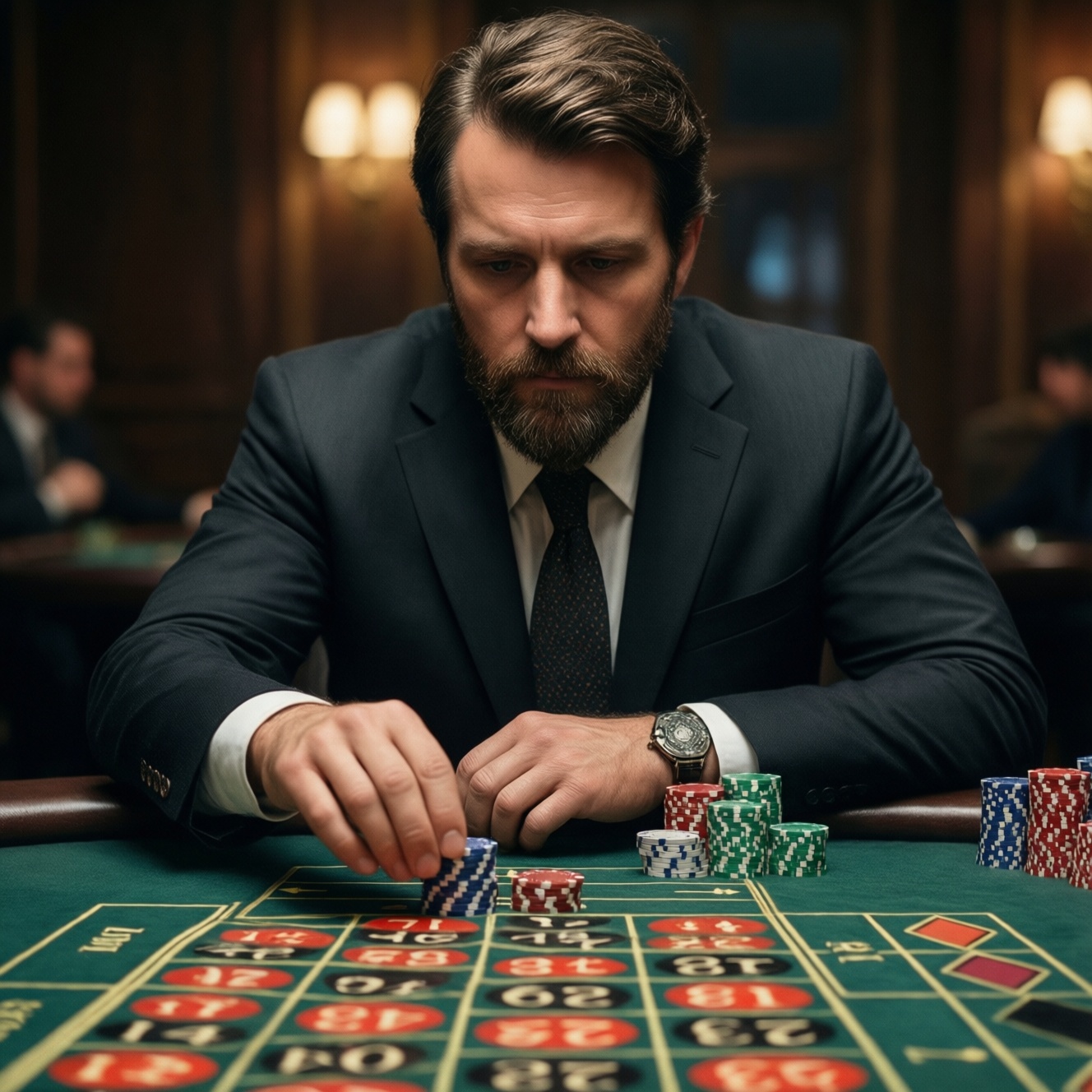

Casino "hot" and "cold" streaks are usually patterns your brain detects in normal variance, not a reliable signal that the next spin or hand is due to change. Once you understand casino randomness explained and the gambler's fallacy in casino games, you can replace streak-chasing with safer, repeatable bankroll rules and realistic expectations.
Essential concepts overview

- Streaks happen naturally: runs of wins or losses are expected even in perfectly random games.
- Independence is the default: many outcomes (slots, roulette spins) do not "remember" what just happened.
- Bias creates false causality: the gambler's fallacy in casino games turns randomness into a story of "due" outcomes.
- Tracking helps discipline, not prediction: logging results can control behavior, but rarely uncovers actionable edges.
- Risk control beats pattern hunting: bankroll sizing and stop rules reduce damage when variance turns against you.
- Design amplifies momentum: lights, near-misses, and win presentation make casino hot and cold streaks feel stronger than they are.
What 'hot' and 'cold' streaks actually represent
A "hot" or "cold" streak is a short run of outcomes that looks meaningful but is often just clustering in random sequences. In gambling, streak language compresses a complex distribution into a simple narrative: "I'm hot" (recent wins) or "the machine is cold" (recent losses).
Critically, a streak is a description of the past, not a proven predictor of the next trial. In independent games, yesterday's run does not alter today's probability-even if it feels like it should.
Example: flipping a fair coin, you can see 6 heads in a row. That looks "hot," but the next flip is still 50/50. The same intuition drives beliefs about casino hot and cold streaks, even when nothing in the mechanism has changed.
Rule of thumb: treat streaks as a variance report (what just happened), not as a control knob (what will happen next).
Mechanics of randomness in slots, roulette and card games
Randomness in casinos comes from either independent sampling (RNG or physical) or from a changing composition (decks/shoes). The key question is whether past outcomes mathematically affect the next one.
- Slots (RNG): each spin samples a random number; the mapping to symbols is fixed by the game's configuration. For most practical purposes, spins are independent, which is why "do slot machines have hot and cold streaks" is usually answered as "they can show runs, but not memory."
- Roulette: each spin is intended to be independent; a long run of red does not make black more likely on the next spin under normal conditions.
- Single-deck card games: without reshuffling, the remaining deck composition changes, so probabilities can shift after cards are removed.
- Shoe games with cut cards: composition effects exist, but dilution and reshuffle rules often reduce predictability unless you have a trained counting edge.
- Video poker: the deal is RNG-based, but strategy affects expected value; "streaks" in outcomes do not validate bad holds.
- Online vs land-based: online casino odds and randomness depend on the RNG and game rules; land-based adds physical variability, but independence is still the design goal for most games.
Example: in roulette, seeing 8 reds in a row feels like "black is due," but if the wheel is fair, the next spin probability does not change.
Rule of thumb: assume independence unless you can explain (and verify) a mechanism that changes the next probability.
Mini-scenarios: choosing a response by ease and risk
Different "streak responses" vary mainly in how easy they are to implement and how much they increase risk. The table below compares common approaches you'll see in both venues and forums discussing casino randomness explained.
| Approach | When players use it | Ease to implement | Primary risk | Better replacement |
|---|---|---|---|---|
| Streak-chasing (increase bets when "hot") | After a few wins on slots/roulette | Very easy | Volatility spike; fast drawdowns during reversals | Pre-set session budget + flat stakes |
| Martingale-style recovery (double after losses) | When a "cold" run starts | Easy | Table limits and bankroll blow-ups | Stop-loss + smaller base unit |
| Flat betting with time limits | Players who want simplicity | Easy | Still negative EV; can drift into long sessions | Flat betting + hard stop time and stop-loss |
| Tracking results (logs, screenshots) | To "prove" a machine is hot/cold | Medium | Overfitting; false confidence from small samples | Track only bankroll rules and session duration |
| Edge-seeking (rules/conditions-based) | Only when mechanics change odds | Hard | Skill errors; misreading conditions; heat/penalties | Use trained methods or avoid altogether |
Rule of thumb: if the method's "signal" is just recent outcomes, it's high risk and low evidence-prefer controls that cap losses instead.
How the Gambler's Fallacy and related biases distort judgment
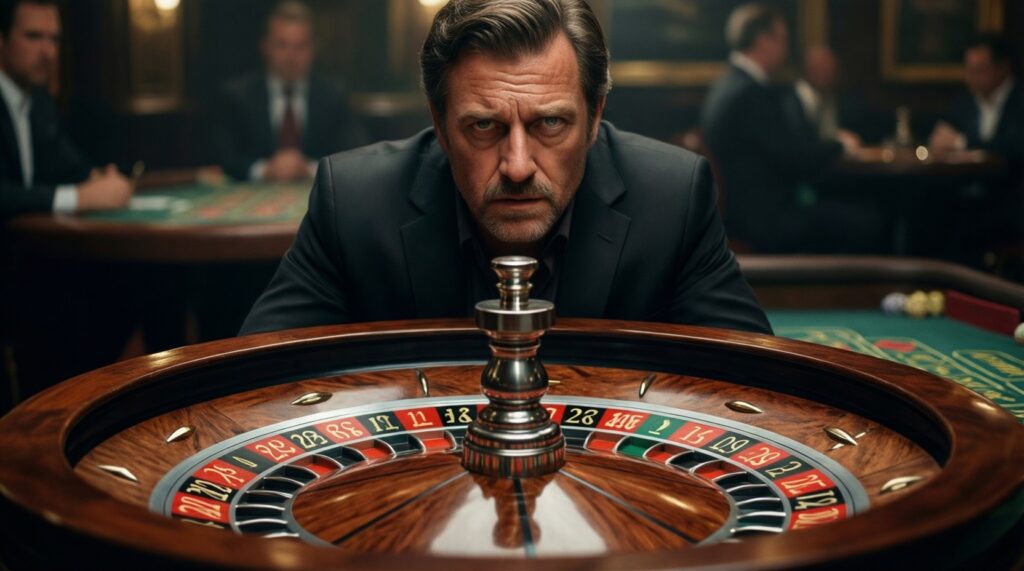
The gambler's fallacy is the belief that after a run, the opposite outcome becomes more likely, despite independence. It's the engine behind many streak myths in casino hot and cold streaks discussions.
- Roulette "due number" thinking: "Black hasn't hit in a while, so it must be next." Example: after 7 reds, players stack chips on black and increase size.
- Slot "machine temperature" myths: "This cabinet is cold; move to a hot one." Example: a player abandons a machine after 30 spins, assuming the next spins elsewhere are "fresher."
- Selective memory: you remember the rare times chasing worked and forget the many times it didn't.
- Hot-hand belief: after wins, you feel skill or "momentum" in games that are mostly chance, so you raise bets.
- Near-miss inflation: "Almost hit the jackpot" is treated as proof the jackpot is close, even when it's just a losing outcome dressed up.
Rule of thumb: whenever your justification contains "due," "must," or "can't keep happening," assume a bias is speaking and return to the base rate.
Empirical methods and simple statistics to detect non-randomness
You can test for suspicious patterns, but most player-level datasets are too small to separate chance clustering from true non-randomness. The goal is not to "prove a hot machine," but to avoid fooling yourself with weak evidence-especially when debating "do slot machines have hot and cold streaks."
Practical checks that improve decision quality
- Pre-commit to a test window: decide in advance you will observe, for example, 200 roulette spins before forming any conclusion (not after you see a run).
- Compare to a baseline: if a game claims independence, evaluate whether your observed hit rate is plausibly normal variance, not a story.
- Use simple run counting: count how many runs of length 3, 4, 5 you see; randomness naturally creates clusters.
- Separate outcome from stake: record results without changing bet size during data collection; changing stakes contaminates interpretation.
Hard limits and common pitfalls
- Small samples lie: a few dozen spins or hands can look extreme without being meaningful.
- Multiple testing: if you check many machines/tables, something will look "hot" by accident.
- Hidden changes are rare and hard to prove: true bias requires a mechanism (wheel defect, procedural error) and consistent evidence, not a single session.
- Online opacity: in online casino odds and randomness, you can't inspect hardware; your best defense is choosing reputable operators and focusing on risk controls.
Rule of thumb: if you can't state the mechanism and the pre-planned test, you don't have evidence-only a streak story.
Translating probability into bankroll and bet-sizing practice
Bankroll rules convert uncertainty into limits you can live with. They won't turn negative expectation games positive, but they reduce the damage caused by variance and by the gambler's fallacy in casino games.
- Mistake: raising bets to "press the hot streak." Example: doubling after two wins increases volatility without improving the underlying odds. Do instead: set a fixed base unit per session and keep it constant.
- Mistake: recovery systems that scale explosively. Example: doubling after each loss quickly hits table limits. Do instead: define a stop-loss in THB terms and end the session when reached.
- Mistake: changing games to chase momentum. Example: bouncing between slots to find a "hot" one wastes time and increases impulsive play. Do instead: pick one game, one stake plan, one time cap.
- Mistake: confusing "entertainment bankroll" with "investment." Example: treating a lucky run as proof of a method. Do instead: label gambling funds as spend, and withdraw windfalls on a rule (e.g., cash out a portion after a big hit).
- Mistake: interpreting short-term outcomes as skill feedback. Example: after a losing run, you abandon correct blackjack decisions. Do instead: evaluate decisions by strategy correctness, not by the last result.
Rule of thumb: the more your plan reacts to recent outcomes, the more it amplifies variance; prefer plans that are outcome-agnostic.
Operational design: how casinos amplify perceived momentum
Casino UX is built to make random sequences feel like progress, timing, and momentum. This is why casino hot and cold streaks can feel "obvious" even when the underlying process is unchanged.
Mini-case: a slot win of 40 credits after a 50-credit bet is a net loss, but celebratory audio/visuals can encode it as a "win," reinforcing the sense that the machine is heating up.
// Perception layer (player experience), not probability
if (payout > 0) {
  playCelebration();        // treats many net-loss outcomes as wins
  showNearMissAnimations(); // increases salience of "almost" outcomes
}
displayRecentWins();        // makes clustering look like momentum
Rule of thumb: judge outcomes by net result (payout minus stake) and pre-set limits, not by how "exciting" the last outcome looked.
Players' top concerns about streaks
Are casino hot and cold streaks real in a statistical sense?
Runs are real, but they usually reflect normal clustering in randomness, not a change in underlying odds.
Is the gambler's fallacy in casino games only about roulette?
No. It appears anywhere players think outcomes are "due," including slots, baccarat, and even sports-style betting streak narratives.
Do slot machines have hot and cold streaks that you can exploit?
You can observe streaky-looking sequences, but on typical RNG slots they don't provide a reliable predictive edge for the next spin.
How is casino randomness explained differently for cards versus slots?
Slots and roulette are typically treated as independent trials, while cards can change probabilities when the deck composition changes and isn't reshuffled every hand.
Does online casino odds and randomness behave differently from land-based casinos?
The concept is similar-rules define the odds-but online relies on RNG implementations you can't physically inspect, so selection of reputable operators matters more than "streak reading."
What's a simple rule to stop streak-chasing in the moment?
Use a fixed base unit, a stop-loss, and a hard end time; if you feel compelled to increase stakes because you feel "hot," take that as a cue to stop or reduce bets.
If I suspect a game is non-random, what should I do?
Pause play, document details (time, table, game ID), and avoid escalating stakes; without a clear mechanism and sufficient data, assume variance rather than a "rigged streak."