

A responsible play framework is a budget system that pre-decides what you can afford to spend for entertainment, then uses platform limits and personal rules to prevent chasing losses or treating gambling as income. You set a clear budget, enforce it with deposit/loss/wager caps, review behavior signals, and escalate to stronger controls like gambling self exclusion when needed.
Core Principles of Budget-Based Responsible Play
- Budget first, game second: decide spending limits before opening an app or website.
- Use layered controls: combine personal rules with responsible gambling tools provided by the operator.
- Separate money "for life" from money "for entertainment" using dedicated accounts or wallets.
- Automate enforcement: an online casino spending limit should stop you even when willpower drops.
- Review and adjust only when calm: changes should be planned, not made mid-session.
- Escalate early: if control slips, move from limits to cooling-off or gambling self exclusion.
Designing Spend Limits Aligned with Entertainment Goals
What to define
- Entertainment intent: what experience you're paying for (time, excitement, social play), not a profit target.
- Budget scope: per session, per week, or per month (choose one primary scope to avoid loopholes).
- Loss acceptance rule: the point where you stop because the entertainment value is no longer worth the cost.
Why this matters
Most harmful spending happens when players switch goals mid-stream: from entertainment to "recovering money." A framework keeps the goal stable so your budget is not negotiated under pressure.
How to set a realistic budget (without turning it into income planning)
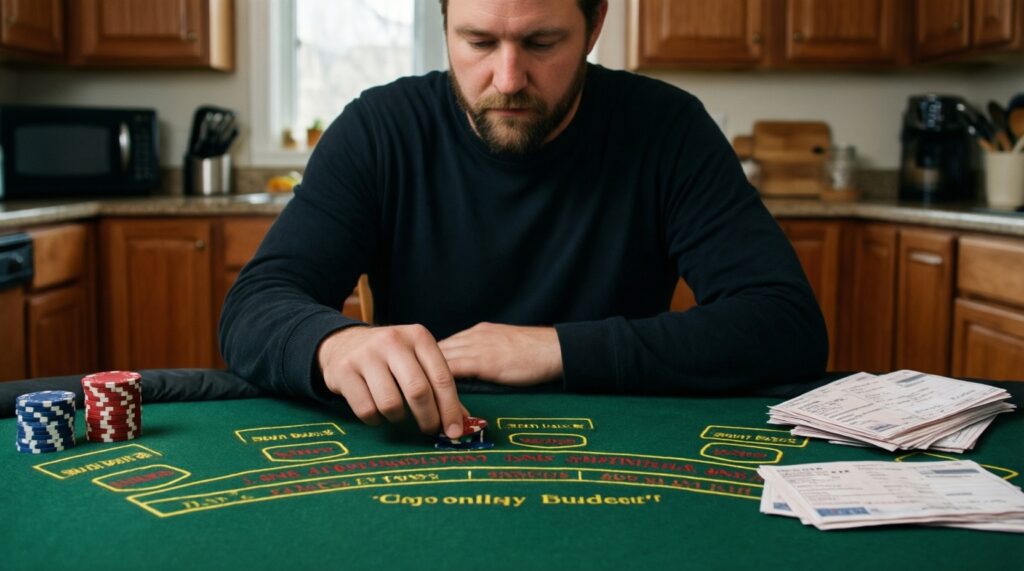
- Start from disposable leisure money only. Treat gambling like dining out or a show; never include rent, debt payments, or savings goals.
- Pick a single "cap you can live with." If you lost this amount, would tomorrow still be normal? If not, the cap is too high.
- Choose a friction method. Examples: a separate e-wallet, a dedicated bank sub-account, or a prepaid balance that can't be instantly topped up.
Who this approach fits (and when it doesn't)
- Fits: players who want predictability, prefer structure, and use gambling as occasional entertainment.
- Not a fit (use stronger measures now): if you borrow to play, hide gambling, feel unable to stop once started, or repeatedly break limits-skip "tweaks" and go straight to cooling-off or gambling self exclusion.
Micro-case (TH context): A player in Thailand using prompt-pay and e-wallet top-ups keeps "life money" in their main bank and moves only a pre-decided leisure amount into a separate wallet used for play. When the wallet hits zero, the session ends automatically.
Setting and Adjusting Session Budgets: Methods and Triggers
What you need
- Access to account controls: the operator's responsible gambling tools section (limits, cooling-off, account history).
- Spending visibility: transaction logs and game history (deposits, withdrawals, wagers, results).
- A neutral checkpoint: calendar reminders or notes for a post-session review (not during play).
- One "lock" channel: a bank/e-wallet rule that prevents instant additional deposits.
Why adjustment rules must be pre-written
Changing limits while emotional is the fastest way to erase guardrails. A preset rule makes changes deliberate and reversible.
How to define adjustment triggers (no mid-session changes)

- Increase only after a stable period: when you consistently stay within your cap and feel no urge to chase.
- Decrease immediately if limits are "tight only when you're winning." That pattern signals risk: you respect limits until losses appear.
- Freeze changes if you notice secrecy or guilt. Don't negotiate with those signals-tighten controls or take a break.
- Escalate if you try to bypass limits. Bypass attempts are a stronger indicator than the amount spent.
Micro-case: An intermediate player notices they repeatedly try to raise limits after a losing streak. They add a rule: any desire to change limits triggers a 24-hour cooling-off, and only then can limits be reviewed.
Deposit, Loss and Wager Caps: Implementation Best Practices
Step-by-step setup
-
Step 1: Decide your "stop conditions" before choosing limits.
Write down what ends a session: reaching your budget, feeling tilted, or trying to "get even." This keeps you focused on control, not outcomes.
- Use plain language: "If I feel pressure to recover, I stop."
- Keep the rule visible (notes app, printed card).
-
Step 2: Set gambling deposit limits as the outer gate.
Deposit limits are the first line of defense because they restrict new money entering the account. Set them at a level that matches your entertainment budget, not your bankroll fantasy.
- Prefer platform-enforced limits over self-promises.
- If multiple payment methods exist, align all of them to avoid a backdoor.
-
Step 3: Add a loss limit to prevent chasing.
A loss cap should stop play when the entertainment value is gone. Make sure it cannot be raised instantly during the same session.
- Use cooling-off rules for any limit increases.
- If the operator offers a "hard" (non-editable) option, prefer it.
-
Step 4: Add a wager cap to control intensity.
Wager caps reduce volatility and slow down spending speed. This is useful when fast games or live betting create rapid-fire decisions.
- Set caps per bet or per game round where available.
- Combine with session reminders to avoid autopilot play.
-
Step 5: Implement an online casino spending limit across your real ecosystem.
Operator limits help, but you also need payment friction: a dedicated wallet, transfer delays, or a rule that only preloaded funds are used.
- Use a separate account for gambling deposits.
- Disable stored cards where possible.
-
Step 6: Test your system with a "stress scenario" simulation.
Imagine a loss streak and check whether you can still deposit, raise limits, or switch to another site. Patch any bypass route now, not after a bad night.
- List all apps/sites you use and set consistent limits.
- If you can easily switch providers to escape limits, consider a longer break or exclusion.
Fast-track mode (3-5 moves)
- Set gambling deposit limits to match your entertainment budget and apply them to every payment method.
- Add a loss limit that ends the session when play stops being fun; block same-day increases.
- Set a wager cap to reduce speed and intensity in high-tempo games.
- Create payment friction with a separate wallet/account used only for gambling.
- Escalate quickly to cooling-off or gambling self exclusion if you attempt to bypass any limit.
Behavioral Signals and Automated Budget Interventions
Check your setup is working (operational checklist)
- Your limits are visible in-account and you can confirm they are active.
- You cannot increase limits instantly while logged in or mid-session.
- Deposits stop automatically at the set cap (no alternative payment backdoors).
- Loss limits actually prevent further wagering (not just notifications).
- You receive clear limit alerts before you hit the cap, not after.
- Your session ends when stop conditions occur (budget reached, tilt signs, chasing thoughts).
- Transaction history is easy to review and doesn't require manual reconciliation.
- You have a pre-decided escalation path (cooling-off, then exclusion if needed).
- You can keep entertainment spending separate from bills and savings in your banking setup.
Micro-case: A player discovers their operator sends notifications but does not block wagering at the "limit." They switch to a site with enforceable controls or decide not to play there, because alerts alone are not a budget system.
Transparency, Consent and Player Communication Strategies
Frequent failure modes to avoid
- Relying on reminders instead of enforcement: notifications don't stop deposits or bets.
- Allowing instant limit increases: this turns "limits" into a speed bump during emotional play.
- Hiding limits in menus: if players can't find them quickly, they won't use them consistently.
- Using confusing terminology: "net loss," "turnover," and "wagering" must be explained in plain terms.
- Mixing bonus mechanics with budgeting: promotions can pressure players to exceed the budget to "unlock value."
- Forgetting multi-channel deposits: card, bank transfer, e-wallet, and crypto each need aligned constraints.
- No consent clarity: players should understand whether a limit is reversible and what the change timeline is.
- Soft enforcement for high-risk patterns: when bypass behavior appears, offer cooling-off and exclusion prominently.
Micro-case: A player sets a deposit limit but then uses a different top-up method not covered by that limit. The fix is procedural: list every funding route and close the gaps, or choose an operator that enforces unified deposit controls.
Monitoring, Reporting and Continuous Policy Calibration
Alternatives when standard limits aren't enough
- Cooling-off breaks: best when you can usually control spending but occasionally spiral during stress; a timed pause prevents impulsive re-entry.
- Full gambling self exclusion: best when you repeatedly breach rules, hide activity, borrow funds, or feel unable to stop once you start.
- Spend separation by design: best when you struggle with "one more deposit" behavior; use a dedicated wallet with manual funding steps and no saved cards.
- Provider consolidation: best when you scatter play across many sites; reducing the number of accounts makes limits and monitoring realistic.
What to review and how to calibrate safely
- Review cadence: do reviews only when calm (e.g., the day after play), and never during a session.
- Change control: apply a waiting period to any limit increase; apply decreases immediately if you feel risk rising.
- Audit for bypass routes: new payment methods, new apps, new devices.
Common Practical Concerns About Budget Systems
How do I set gambling budget rules without overthinking it?
Write one cap (what you can afford to lose as entertainment) and one stop condition (what ends the session). Then enforce it using platform limits so you don't have to negotiate with yourself mid-play.
Which responsible gambling tools should I enable first?
Start with enforceable deposit limits, then add a loss limit and wager cap. If the operator only offers reminders, treat that as insufficient and add stronger friction via your payment method.
Are gambling deposit limits enough on their own?
No. Deposit limits stop new money entering, but they don't necessarily control bet intensity or prevent chasing. Combine deposit, loss, and wager controls for coverage.
What's the difference between an online casino spending limit and a loss limit?
An online casino spending limit is typically a broad cap on funding or spend, while a loss limit targets net losses. Use both if available, and ensure changes can't be made instantly.
When should I use gambling self exclusion instead of adjusting limits?
Use exclusion when you repeatedly try to bypass limits, hide play, borrow money, or feel unable to stop once you start. Exclusion is a safety control, not a punishment.
How do I avoid raising limits during a bad session?
Set a personal rule that any urge to raise limits triggers a cooling-off period. Also choose operator settings that delay or block increases.
What if I gamble on multiple sites and the limits don't "add up"?
Consolidate to fewer providers and apply consistent caps, or pause play until you can enforce one unified budget. A budget system fails if switching sites is your workaround.